


Hard to pin down, and awkward to talk about
Groin pain is one of those problems people often put off mentioning. It can feel embarrassing, and it is not always clear whether it is a pulled muscle, something to do with the hip, or something else entirely. The groin is a crowded area where muscles, tendons, the hip joint, nerves, lymph nodes, the abdominal wall and, depending on your body, the testicles or pelvic organs all sit close together.
Most groin pain comes from muscle strain and settles with time and sensible care. But a few causes need prompt attention, so it is worth knowing the patterns and the warning signs.
Where the pain is coming from
Muscles and tendons
A groin strain is a stretch or tear of the adductor muscles on the inner thigh. It is common in sports with quick changes of direction, kicking, or sprinting, such as soccer, hockey and tennis. Pain is usually felt on the inside of the thigh near the groin, worse when bringing the legs together, and may come with bruising or tenderness. Tendon irritation from repeated overload can cause a more gradual ache.
The hip joint
Hip problems often show up as pain deep in the groin rather than on the side of the hip. Possible causes include hip arthritis, a tear of the labrum (the rim of cartilage around the socket), and femoroacetabular impingement, where the bones of the hip rub abnormally. Typical signs are stiffness, a catching or clicking feeling, and pain putting on shoes and socks or getting in and out of a car.
Hernias
An inguinal hernia is when tissue pushes through a weak spot in the lower abdominal wall, creating a bulge in the groin that may be more noticeable when standing, coughing or lifting, and may disappear when lying down. They can ache or cause a dragging feeling. Femoral hernias, which sit slightly lower, are less common but more likely to cause complications.
Other causes
- Kidney stones, which can cause severe pain that spreads from the back or side down into the groin
- Swollen lymph nodes, often in response to an infection in the leg, foot or genital area
- Testicular problems, including infection, injury or torsion
- Gynecological causes, such as ovarian cysts or pelvic inflammatory disease
- Pubic bone stress (osteitis pubis) in athletes
- Nerve irritation or referred pain from the lower back
- Stress fractures of the hip or pelvis, particularly in runners
Easing a minor groin strain
For a mild strain without warning signs, many people find this approach helps in the first days and weeks:
- Relative rest. Avoid activities that clearly hurt, such as sprinting, kicking or wide lunges, while continuing gentle walking if comfortable.
- Cold early on. A wrapped cold pack for 15 to 20 minutes a few times a day can ease pain and swelling in the first couple of days.
- Gentle movement. After the first few days, comfortable range-of-motion exercises help prevent stiffness.
- Gradual strengthening. Simple exercises such as squeezing a soft ball between the knees, guided by a physical therapist if possible, help many people return to activity.
- Support. Compression shorts provide comfort for some people.
- Pain relief. A pharmacist can advise on over-the-counter options suitable for you.
Mild strains often improve over a few weeks, while more significant tears can take longer.
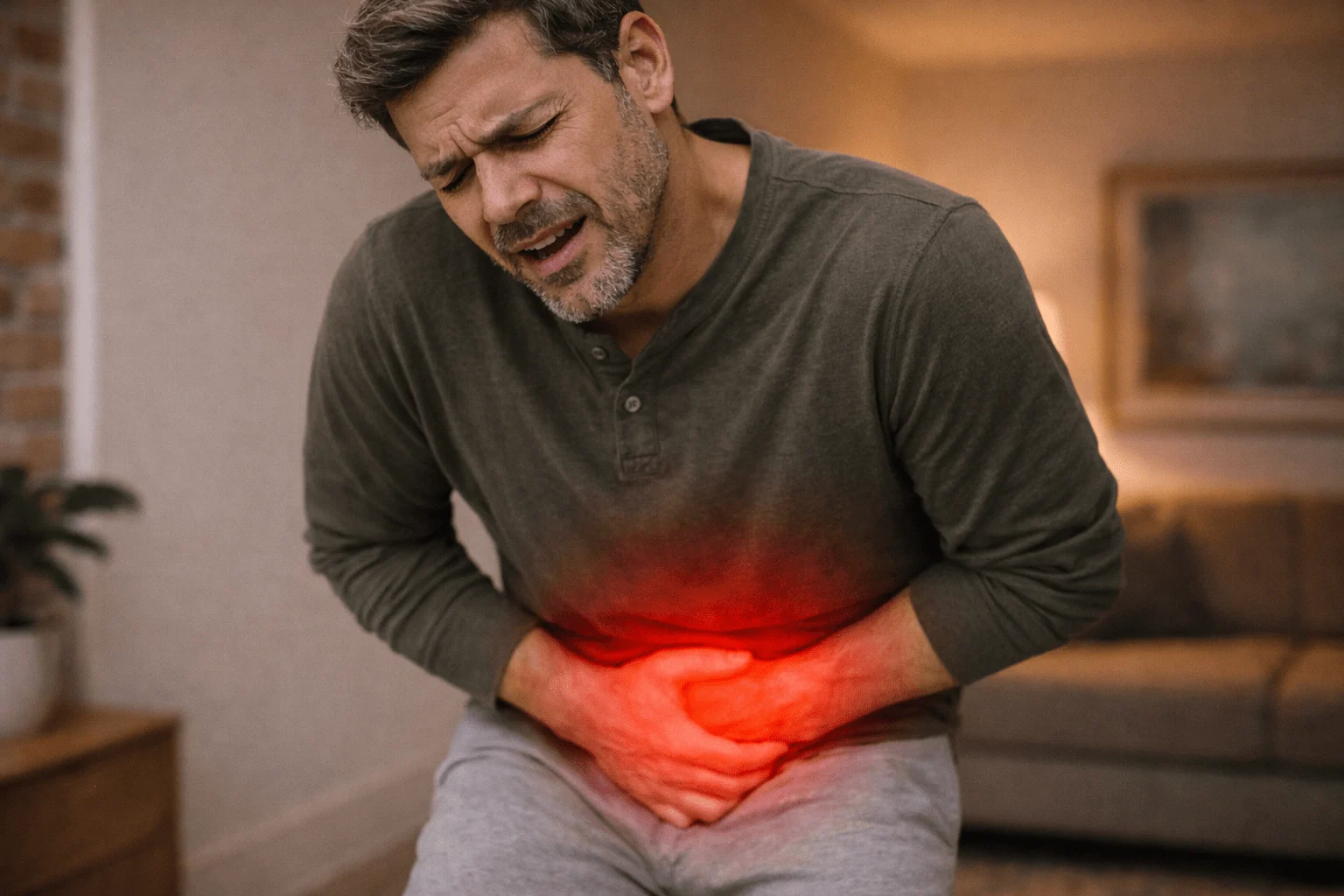
Warning signs that need prompt care
Call your local emergency number or go to an emergency department for:
- Sudden, severe pain in a testicle, especially with swelling, nausea or vomiting. This can be testicular torsion, which needs surgery within hours.
- A groin bulge that becomes firm, very painful, red or cannot be pushed back, especially with vomiting or not passing gas or stool. This may be a trapped hernia.
- Severe pain spreading from the back or side into the groin with fever, vomiting or inability to pass urine
- Inability to walk or bear weight after a fall or injury
- Pelvic pain with a possible pregnancy, especially on one side
Book a doctor's appointment if you notice a new lump or bulge, pain that is not improving after a couple of weeks, pain at night or at rest, swelling in a testicle, fever, unexplained weight loss, or burning when you urinate.
What to expect at an appointment
A doctor will usually ask how the pain started, what makes it worse, and about urinary, bowel and sexual health. They may examine the abdomen, hips and groin, and ask you to cough while checking for a hernia. Depending on what they find, they may suggest an ultrasound, X-ray or MRI, urine tests, or a referral to a sports medicine doctor, physical therapist or surgeon. It can feel uncomfortable, but being open about all your symptoms helps them narrow things down.
Getting back to sport and activity
Returning too soon is a common reason groin strains come back. Many people find it helpful to progress step by step: comfortable walking, then light jogging, then straight-line running, then changes of direction and kicking. Pain should not increase much during or after each stage. Warming up well, and including hip and core strengthening in a regular routine, may help reduce the chance of future strains.
Living with long-term groin pain
When groin pain lingers for months, it can affect sitting, driving, sleep, exercise and intimacy, and it can be frustrating if the cause has been hard to identify. Keeping a pain diary, asking for a referral if you are not making progress, and staying as active as you comfortably can are all reasonable steps. Many people also find relief in simply talking with others who understand.
In summary
Most groin pain is caused by strained muscles or tendons and improves with relative rest, gentle movement and gradual strengthening. Hip problems, hernias and conditions affecting nearby organs are other possibilities. Sudden testicular pain, a painful hard bulge, severe pain with fever or vomiting, or inability to bear weight need urgent care.
Not sure where your pain fits? The free Chronic Pain Check-Up can help you organize your symptoms. You can also visit the pelvic, hip and groin pain Chronic Pain Groups.
Sources
Questions Are Welcome Here
Members of our groin pain group share recovery stories, exercises and appointment tips.
Join the Groin Pain GroupReviewed by the ItHurts editorial team · Last reviewed 18 October 2026 · General information, not medical advice. If you are worried about your symptoms, talk to a doctor.