
United States
Afghanistan
Albania
Algeria
Andorra
Angola
Argentina
Armenia
Australia
Austria
Azerbaijan
Bahrain
Bangladesh
Barbados
Belarus
Belgium
Belize
Benin
Bhutan
Bolivia
Bosnia and Herzegovina
Botswana
Brazil
Brunei
Bulgaria
Burkina Faso
Burundi
Cambodia
Cameroon
Canada
Cape Verde
Central African Republic
Chad
Chile
China
Colombia
Comoros
Congo
Costa Rica
Croatia
Cuba
Cyprus
Czech Republic
Denmark
Djibouti
Dominican Republic
Ecuador
Egypt
El Salvador
Estonia
Ethiopia
Finland
France
Gabon
Gambia
Georgia
Germany
Ghana
Greece
Guatemala
Guinea
Guyana
Haiti
Honduras
Hungary
Iceland
India
Indonesia
Iran
Iraq
Ireland
Israel
Italy
Jamaica
Japan
Jordan
Kazakhstan
Kenya
Kuwait
Kyrgyzstan
Laos
Latvia
Lebanon
Lesotho
Liberia
Libya
Lithuania
Luxembourg
Madagascar
Malawi
Malaysia
Maldives
Mali
Malta
Mauritania
Mauritius
Mexico
Moldova
Mongolia
Montenegro
Morocco
Mozambique
Myanmar
Namibia
Nepal
Netherlands
New Zealand
Nicaragua
Niger
Nigeria
Norway
Oman
Pakistan
Panama
Paraguay
Peru
Philippines
Poland
Portugal
Qatar
Romania
Russia
Rwanda
Saudi Arabia
Senegal
Serbia
Singapore
Slovakia
Slovenia
South Africa
South Korea
Spain
Sri Lanka
Sudan
Sweden
Switzerland
Syria
Taiwan
Tajikistan
Tanzania
Thailand
Turkey
Turkmenistan
Uganda
Ukraine
United Arab Emirates
United Kingdom
United States
Uruguay
Uzbekistan
Venezuela
Vietnam
Yemen
Zambia
Zimbabwe
4 min read 647 words 473 views

Nutrition and Mental Health: Eating Your Way to a Calmer Mind

In the quest for better mental health, diet plays a crucial role that is often overlooked in favor of pharmaceutical interventions. However, emerging research continues to illuminate the profound impact that nutrition has on mental well-being. This article explores the connection between dietary choices and mental health, particularly focusing on how certain foods can either exacerbate or alleviate symptoms of anxiety, depression, and stress. It also delves into the role of nutrition in managing chronic pain through anti-inflammatory foods and highlights specific vitamins and minerals known for their mood-enhancing properties. With expert insights and practical advice, including simple health-boosting recipes, this piece aims to guide readers toward a calmer mind and a more balanced life.

The Link Between Diet and Mental Health

The gut-brain axis, a complex communication network linking the gastrointestinal tract and the brain, suggests that the stomach might rightly be considered a second brain. This connection implies that the gut’s health directly affects mental health, explaining why the food we eat can influence emotional and psychological well-being. Nutrients from food are key in the synthesis of neurotransmitters, such as serotonin and dopamine, which regulate mood, anxiety, and stress levels.

Foods That Exacerbate Mental Health Issues

Certain foods have been shown to aggravate symptoms of anxiety and depression. High-sugar diets, excessive caffeine, and processed foods can lead to fluctuations in blood sugar levels, which may trigger mood swings and anxiety. Additionally, these foods can increase inflammation, a bodily response linked to both chronic pain and mental health issues like depression.

Anti-inflammatory Foods for Mental Health

Chronic inflammation is a common denominator in many health issues, including chronic pain and mental health disorders. Incorporating anti-inflammatory foods into one’s diet can help mitigate these problems. Foods rich in omega-3 fatty acids, such as salmon and flaxseeds, are known for their anti-inflammatory properties. Antioxidant-rich fruits and vegetables, like berries, broccoli, and leafy greens, also combat inflammation and support brain health.

Vitamins and Minerals for a Calmer Mind

Specific vitamins and minerals play critical roles in mental health:

  • Omega-3 Fatty Acids: Essential for brain health, these fats are linked to decreased rates of depression.
  • Magnesium: Often called the ‘relaxation mineral,’ magnesium can improve sleep quality and reduce symptoms of depression.
  • Zinc: This mineral is crucial for neurotransmitter function and has been linked to lowered anxiety.
  • B Vitamins: Especially B12 and folate, these vitamins are vital for mood regulation and nerve health.

Nutritional Strategies to Combat Mental Health Issues

To harness the benefits of nutrition for mental health, consider the following strategies:

  • Increase intake of whole, unprocessed foods to stabilize blood sugar and improve mood.
  • Incorporate a variety of anti-inflammatory foods to help reduce chronic pain and depressive symptoms.
  • Ensure adequate intake of essential nutrients, particularly those known for supporting mental health.

Expert Tips and Practical Advice

Nutrition experts suggest starting small with dietary changes to ensure they are sustainable. Introducing one new anti-inflammatory food per week and reducing processed foods gradually can make the transition easier. Keeping a food diary can also help identify foods that impact mood and pain levels, allowing for more tailored dietary choices.

Simple, Health-Boosting Recipes

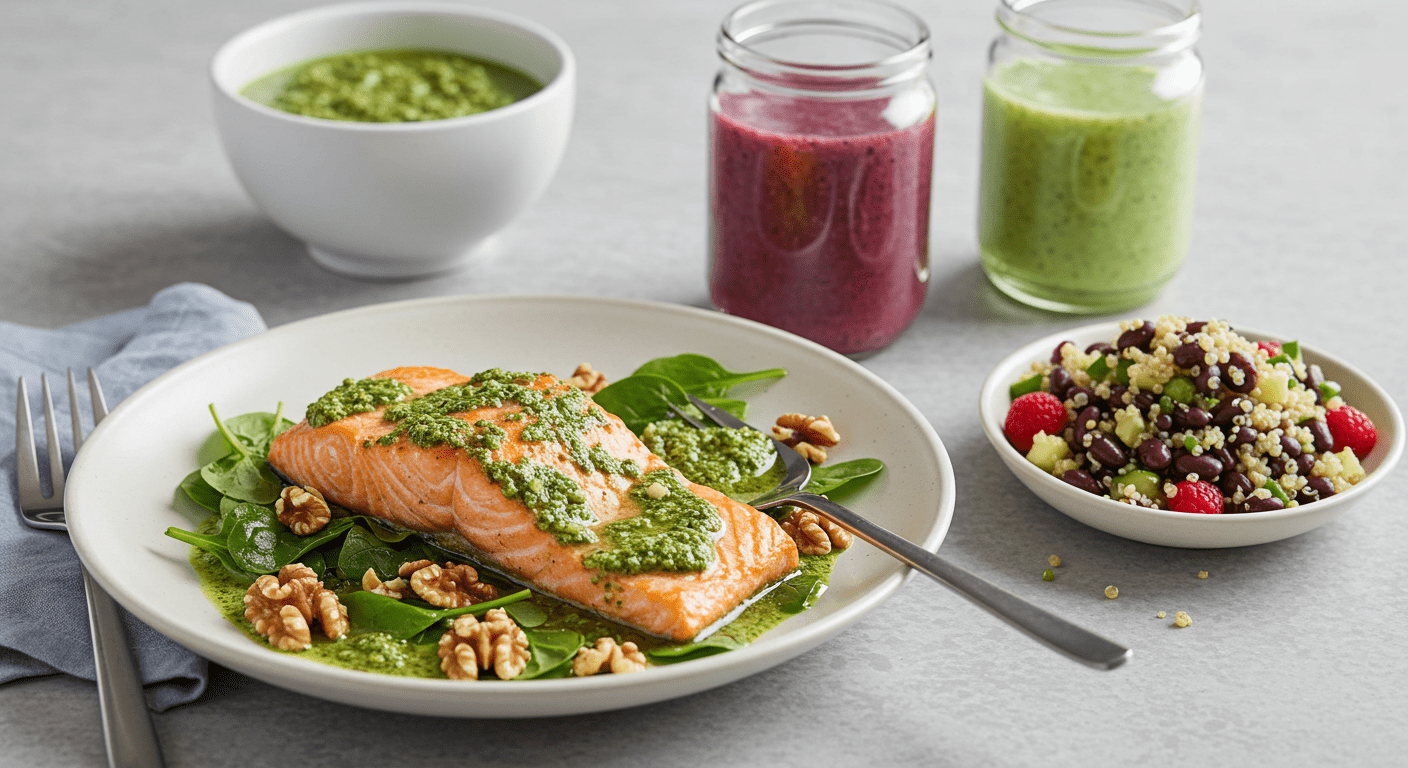
  • Salmon with Walnut-Pesto Sauce: Rich in omega-3 fatty acids and antioxidants, this dish is both anti-inflammatory and delicious.
  • Berry and Spinach Smoothie: A quick, nutrient-packed snack that provides antioxidants and mood-boosting nutrients.
  • Quinoa and Black Bean Salad: A high-fiber, magnesium-rich meal that supports gut health and stabilizes mood.

Conclusion

Eating your way to a calmer mind is not only possible but essential for maintaining overall health and well-being. By understanding the impact of nutrition on mental health and chronic pain, making informed dietary choices becomes a powerful tool for enhancing life quality. The journey to better mental health through nutrition starts with small, manageable changes that can profoundly affect how we feel both physically and emotionally.