
Burnout Is More Than “Being Tired”
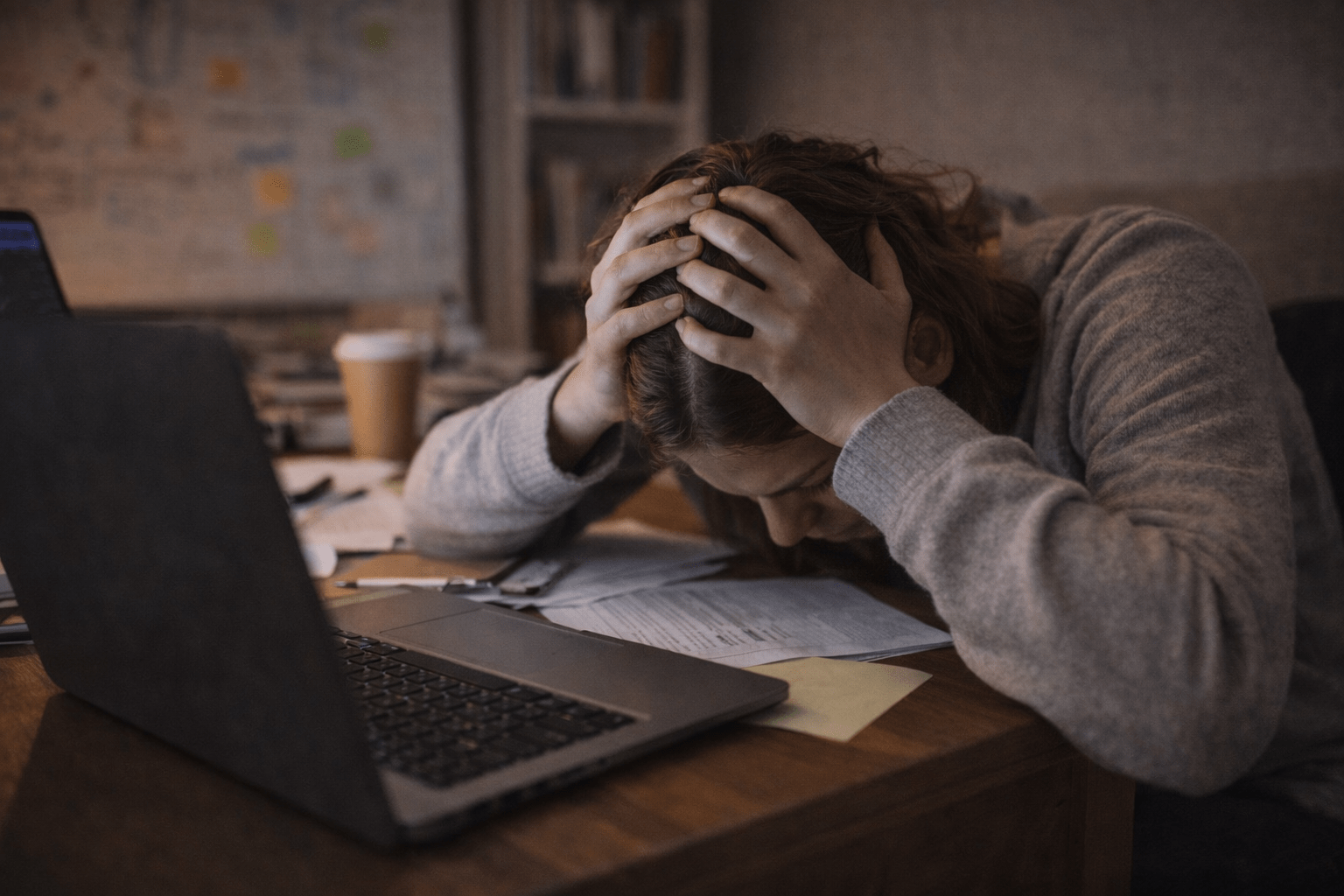
Burnout rarely arrives all at once. It builds quietly — turning motivation into exhaustion, confidence into doubt, and productivity into paralysis.
If your brain feels like it has checked out without warning, you’re not failing. You’re overloaded.
Burnout often affects people who care deeply, take on responsibility, and push themselves beyond sustainable limits for extended periods.
Quick note: This is not medical advice. Always consult a qualified professional for personal guidance.
What’s Actually Going On? 🧠
Burnout is a state of nervous system overload. When stress continues without enough recovery, the brain and body shift into protection mode — reducing energy, focus, and emotional capacity.
- Chronic stress without adequate recovery
- Emotional and mental overload
- High responsibility with limited support
- Perfectionism and overcommitment
- Lack of rest and boundaries
Why It Feels So Heavy 😤
Burnout affects concentration, memory, mood, sleep, and physical energy. Feeling numb, irritable, detached, or constantly tired is part of the stress response — not a personal flaw.
Your system is not broken. It’s depleted.
When to Seek Support ⚠️
- Exhaustion that does not improve with rest
- Loss of motivation or emotional numbness
- Severe anxiety, panic, or depression
- Thoughts of self-harm or hopelessness
- Physical symptoms like chest pain or dizziness
- Difficulty functioning in daily life
Supportive Strategies 🌱
- Take short, regular breaks during the day
- Set realistic boundaries and reduce overload
- Limit unnecessary commitments
- Eat and hydrate consistently
- Include gentle movement (walking, stretching)
- Prioritize rest without guilt
- Reach out for support instead of isolating
Recovery Takes Time 🌱
Burnout does not resolve overnight. Recovery is gradual and requires consistent rest, reduced pressure, and supportive environments.
Even small improvements are meaningful progress.
Outlook 💛
Burnout does not define your ability, your worth, or your future. With the right support and pacing, balance can be rebuilt.
Join the ItHurts Community 💬
Connect with people navigating burnout, overload, and the journey back to balance.
Join the CommunityThis content is for education and support only and does not replace professional mental health care.