

Not frostbite, but not nothing
Many people assume chilblains are a mild form of frostbite. They aren't. Frostbite happens when tissue actually freezes. Chilblains, also called pernio, develop in cold that is above freezing, often damp, chilly weather, and they are an inflammatory reaction in the small blood vessels of the skin.
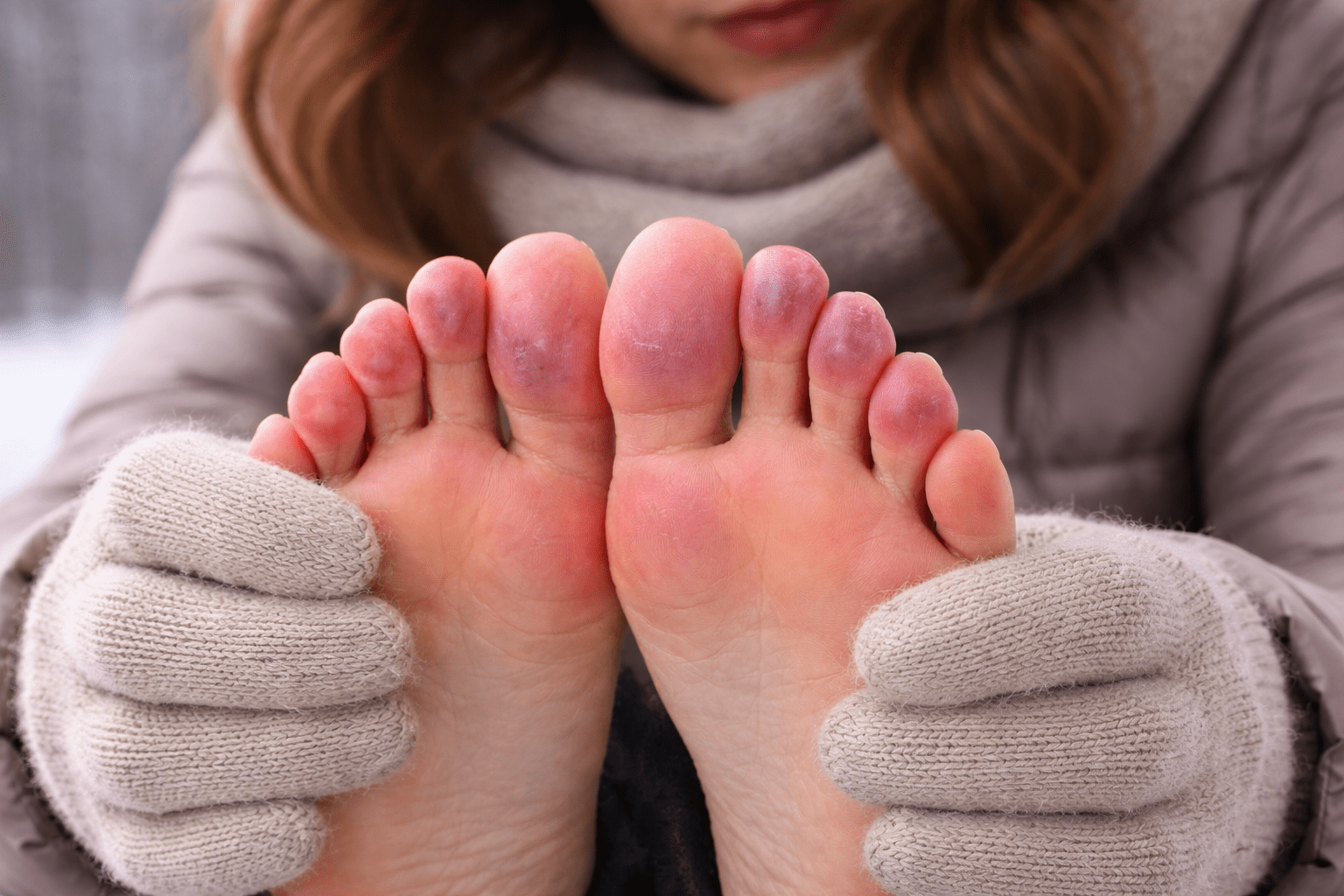
The result is a patch, or several, of red, purple or bluish swollen skin, usually on the toes or fingers, that itches, burns or throbs. Symptoms often appear several hours after cold exposure, and they frequently flare when you come into a warm room. They can be surprisingly uncomfortable for something so small, and they tend to return each winter in people who are prone to them.
How chilblains develop
When skin gets cold, the small blood vessels near the surface narrow to conserve heat. When the skin then warms, they open up again. In some people, this response is exaggerated or uneven, and fluid leaks into the surrounding tissue, causing swelling and inflammation. Rapid rewarming, such as putting cold feet near a heater, is thought to make this worse.
Chilblains are more likely if you:
- Live in a cold, damp climate or a poorly heated home
- Have poor circulation, or a condition such as Raynaud's phenomenon
- Smoke, which narrows blood vessels
- Are underweight
- Have certain autoimmune conditions, such as lupus
- Wear tight shoes or clothing that restrict blood flow
Where they appear and how they feel
- Toes are the most common site, followed by fingers
- Also the heels, ears, nose, and sometimes the thighs or buttocks after cold riding or outdoor work
- Itching or burning that can be intense, especially in a warm room
- Red, purple or dusky swelling, sometimes shiny
- Tenderness to touch
- Occasionally blisters or small sores
Most chilblains settle on their own within one to three weeks, as long as further cold exposure is limited.
When to see a doctor
- The skin breaks down, blisters or forms an ulcer
- Signs of infection: increasing pain, pus, spreading redness, warmth or fever
- Symptoms haven't improved after about two to three weeks
- Chilblains keep coming back or appear in warm weather
- You also have joint pain, rashes, fatigue or other unexplained symptoms
- You have diabetes or poor circulation, where foot sores can heal slowly and need early attention
Easing a flare
- Rewarm gradually. Move to a moderately warm room and let skin warm up at its own pace. Avoid hot water bottles, heat pads, hot baths or holding feet up to a fire or heater.
- Resist scratching. It can break the skin and invite infection. Keeping nails short helps.
- Soothing creams. A plain, fragrance-free moisturizer can help with tight, itchy skin. A pharmacist can suggest an anti-itch product suited to you.
- Protect broken skin. Keep any blisters or sores clean and covered with a non-stick dressing.
- Raise swollen feet when resting.
If chilblains are severe or recurring, a doctor may look for underlying causes and discuss prescription options. It is worth asking.
Staying ahead of next winter
- Keep your whole body warm, not just your hands and feet; layers and a hat help your circulation stay steady
- Wear warm, dry socks and roomy, insulated footwear, and change socks if they get damp
- Use gloves and keep spare pairs if you're often outside
- Keep your home reasonably heated, especially rooms where you sit for long periods
- Move regularly; sitting still in the cold lets feet chill quickly
- If you smoke, stopping can improve blood flow; ask your doctor about support
- Moisturize hands and feet daily so skin stays supple
What a doctor may look at
Chilblains are usually recognized from how they look and the story of cold exposure. If they are unusual, severe, or keep returning, a doctor may ask about other symptoms, check your circulation and pulses in your feet, and sometimes suggest blood tests to look for an underlying condition such as an autoimmune disease or a circulation problem. Bringing photos of a flare can help, since the skin may look calmer by the time of the appointment. It also helps to mention any medicines you take, how long flares last, and whether anyone in your family has similar problems.
If your work or hobbies keep you outdoors
Gardeners, delivery drivers, farm and construction workers, hikers and cyclists are often exposed to long spells of cold, damp air. Thermal sock liners under wool socks, waterproof boots with room to wiggle your toes, insulated gloves with a thin inner pair, and a dry change of socks in your bag can make a real difference. Taking short warm-up breaks indoors, rather than staying out for hours and then rushing to a heater, gives skin a gentler transition.
Living with cold-sensitive skin
For people who get chilblains every year, winter can mean a lot of planning: wearing extra socks to the office, keeping a fleece blanket in the car, avoiding the bus stop that faces the wind. That effort is worth it. Many find the biggest difference comes from avoiding big swings in temperature, such as stepping from a freezing street straight into a very hot shower.
If you also notice fingers turning white or blue in the cold, mention it to your doctor. That pattern can suggest Raynaud's phenomenon, which has its own management options.
Worth remembering
Chilblains are an inflammatory reaction to cold and damp, not frostbite. Gradual rewarming, no scratching, and steady warmth through winter help most people. See a doctor for broken skin, signs of infection, chilblains that won't settle, or ones that appear without cold.
For help describing your skin or circulation symptoms, try our free Pain Check-Up. People managing sore, sensitive skin also share tips in the skin, burns and wound groups.
Dreading another cold season?
Our chilblains group is where members trade sock recommendations, rewarming routines and winter survival plans.
Join the Chilblains GroupReviewed by the ItHurts editorial team · Last reviewed 18 October 2026 · General information, not medical advice. If you are worried about your symptoms, talk to a doctor.