
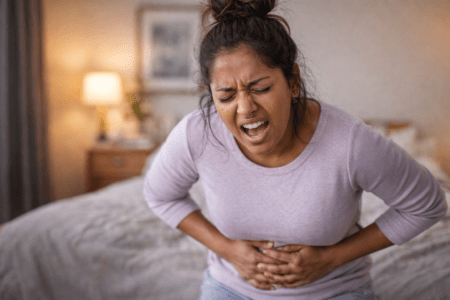
ItHurts Ouch Files: Ovarian Cyst Pain Edition Your Ovary Is Throwing a Rage Party (And Nobody Invited You) Ovarian cyst pain can cause pelvic discomfort, bloating, and pressure, sometimes appearing suddenly and affecting daily movement. While many cysts are harmless, persistent or severe pain should be medically evaluated. Ovarian cyst pain can feel intense, unpredictable, and hard to ignore. It may come and go or suddenly disrupt your routine, making simple activities uncomfortable. If your lower abdomen feels heavy, sore, or unusually painful, it’s not something to dismiss. Your body is signaling that something needs attention. The goal isn’t to ignore the pain—it’s to manage it and respond in a way that supports healing. 3 Practical Ways to Ease Ovarian Cyst Pain 🔥 Use Heat Therapy Apply a heating pad or hot water bottle to the lower abdomen for short intervals. Heat helps relax muscles and reduce cramping. 🥗 Reduce Inflammation Through Diet Incorporate anti-inflammatory foods and reduce processed or high-sugar items to help minimize bloating and discomfort. 🚶 Stay Gently Active Engage in light movement such as walking or gentle stretching to improve circulation and reduce stiffness. When to Seek Help If pain is sudden, severe, persistent, or accompanied by symptoms like fever, vomiting, or dizziness, it’s important to seek medical care immediately. The Recovery Reality Ovarian cyst pain can be challenging, but it is often manageable with the right approach and care. You’re not overreacting—you’re responding to real discomfort. And taking that seriously is the first step toward relief. If it Hurts we can help. Join a supportive community where people share real experiences, coping strategies, and encouragement—without judgment. Join the ItHurts Community Disclaimer: Enjoy the “Ouch Files” for the laughs and the lessons, but treat us like a supportive friend rather than a diagnostic tool. We aren’t doctors, and this content is not medical advice. Always consult a qualified healthcare professional for diagnosis and treatment of persistent symptoms.
 Written by Karrie