ItHurts Ouch Files: Vision Strain Edition Vision Impairment: When Your Eyes Become Overworked and Strained Eye strain and visual fatigue can occur when the eyes are overworked from prolonged screen use, poor lighting, dryness, or underlying vision problems. Vision impairment and eye strain can develop when the eyes focus intensely for long periods without adequate breaks. This is especially common with prolonged computer or phone use. People may experience blurred vision, headaches, eye fatigue, light sensitivity, or difficulty focusing after extended visual tasks. Fortunately, simple daily habits can help reduce eye fatigue and support overall visual comfort. 3 Practical Ways to Reduce Eye Strain 👀 Follow the 20-20-20 Rule Every 20 minutes, look at something about 20 feet away for at least 20 seconds. This allows the eye muscles to relax and reduces prolonged focusing stress. 💡 Improve Your Screen and Lighting Setup Reducing screen glare, adjusting brightness, increasing text size, and positioning screens slightly below eye level can reduce strain on the eyes. 🥕 Support Eye Health With Proper Nutrition Nutrients such as omega-3 fatty acids, vitamin A, lutein, and zeaxanthin help support retinal health and comfortable tear production. Small environmental and lifestyle adjustments can significantly reduce eye fatigue and help maintain healthy vision habits. If it Hurts we can help. If pain has taken over your sleep, your mood, or your search history, come find your people. Join the ItHurts Community Disclaimer: Enjoy the “Ouch Files” for the laughs and the lessons, but treat us like a witty friend rather than a diagnostic tool. We aren’t doctors, and this content is not medical advice. If vision changes suddenly, worsens, or is accompanied by eye pain, flashes of light, or loss of vision, consult a qualified eye care professional immediately.
ItHurts Ouch Files: Vaginismus Edition When Pelvic Floor Muscles Tighten Involuntarily Vaginismus is a condition where pelvic floor muscles contract automatically when penetration is attempted or anticipated, which can cause pain or difficulty during intimacy or medical exams. Vaginismus occurs when the pelvic floor muscles tighten involuntarily as a protective response. This reaction can make penetration uncomfortable or painful and may also create anxiety surrounding medical exams or sexual activity. The response is not intentional and often happens automatically when the body perceives discomfort or anticipates pain. 3 Practical Approaches That May Help Manage Vaginismus 🫁 Practice Pelvic Floor Relaxation Breathing exercises and pelvic floor awareness can help signal safety to the nervous system and gradually reduce muscle tension. 🌿 Use Gradual Desensitization Slow and gentle progression, sometimes using vaginal dilators under professional guidance, may help the body become more comfortable with sensation. 👩⚕️ Seek Pelvic Floor Physical Therapy Pelvic floor specialists can assess muscle tension and provide guided exercises to improve relaxation, coordination, and comfort. With supportive care and professional guidance, many people are able to retrain the pelvic floor muscles and reduce pain over time. If it Hurts we can help. If pain has taken over your sleep, your mood, or your search history, come find people who understand. Join the ItHurts Community Disclaimer: Enjoy the “Ouch Files” for the laughs and the lessons, but treat us like a witty friend rather than a diagnostic tool. We aren’t doctors, and this content is not medical advice. If pelvic pain or muscle tightness persists or worsens, consult a qualified healthcare professional or pelvic floor specialist.
ItHurts Ouch Files: Trigger Finger Edition When a Finger Locks or Clicks During Movement Trigger finger occurs when irritation or inflammation affects a tendon in the finger, causing stiffness, clicking, or locking when the finger bends or straightens. Trigger finger develops when the tendon that controls finger movement becomes irritated or swollen. The tendon may struggle to glide smoothly through its surrounding sheath, causing catching, clicking, or locking during movement. Many people notice tenderness near the base of the finger, stiffness in the morning, or difficulty straightening the finger after bending it. 3 Practical Ways That May Help Manage Trigger Finger ✋ Gentle Massage and Finger Mobility Light massage near the base of the finger may help improve circulation and reduce stiffness in the tendon area. 🤲 Perform Gentle Finger Stretches Slow stretching and controlled finger movements may help maintain flexibility and improve tendon glide. ⚙️ Reduce Repetitive Hand Strain Taking breaks from repetitive gripping or heavy hand activity may allow the irritated tendon time to recover. Combining rest, gentle movement, and activity adjustments may help reduce irritation and improve finger function. If it Hurts we can help. If pain has taken over your sleep, your mood, or your search history, come find your people. Join the ItHurts Community Disclaimer: Enjoy the “Ouch Files” for the laughs and the lessons, but treat us like a witty friend rather than a diagnostic tool. We aren’t doctors, and this content is not medical advice. If finger locking, pain, or stiffness persists or worsens, consult a qualified healthcare professional.
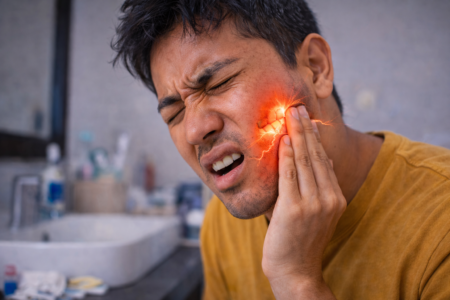
ItHurts Ouch Files: Trigeminal Neuralgia Edition When Facial Nerves Cause Sudden Electric Pain Trigeminal neuralgia is a nerve disorder that can cause sudden, intense facial pain triggered by everyday activities such as chewing, brushing teeth, or touching the face. Trigeminal neuralgia affects the trigeminal nerve, which carries sensory information from the face to the brain. When the nerve becomes irritated or compressed, it can produce brief but extremely intense bursts of facial pain. Although the attacks are usually short, they may occur repeatedly and can significantly affect daily life. 3 Practical Ways That May Help Manage Trigeminal Neuralgia 🧊 Identify and Avoid Personal Triggers Protecting the face from cold wind, using soft toothbrushes, and adjusting grooming routines may help reduce irritation that can trigger nerve pain. 🧘 Support Nervous System Calm Relaxation techniques, stress reduction practices, and gentle warm compresses may help reduce nervous system sensitivity. 👩⚕️ Seek Medical Evaluation Early Medical professionals may recommend medications, imaging tests, or specialized treatments to manage nerve pain effectively. Early evaluation and personalized treatment can help reduce pain episodes and improve quality of life. If it Hurts we can help. If pain has taken over your sleep, your mood, or your search history, come find your people. Join the ItHurts Community Disclaimer: Enjoy the “Ouch Files” for the laughs and the lessons, but treat us like a witty friend rather than a diagnostic tool. We aren’t doctors, and this content is not medical advice. Trigeminal neuralgia is a neurological condition that requires evaluation by qualified healthcare professionals.
ItHurts Ouch Files: Tooth Abscess Edition Tooth Abscess: When a Tooth Infection Causes Severe Pain A tooth abscess is a bacterial infection inside a tooth or surrounding gum tissue that can cause intense throbbing pain and swelling. A tooth abscess develops when bacteria enter the inner pulp of the tooth or nearby gum tissue. As the infection grows, pressure builds inside the tooth or surrounding area, which can cause severe throbbing pain. The pain may spread to the jaw, ear, or face, and swelling can make normal activities such as eating or speaking uncomfortable. Dental treatment is usually required to treat the infection and prevent it from spreading. 3 Practical Steps That May Help Reduce Discomfort 🧂 Use a Warm Saltwater Rinse A gentle saltwater rinse can help soothe irritated gums and temporarily reduce bacteria in the mouth while waiting for dental care. ❄️ Apply a Cold Compress Placing a cold compress on the outside of the cheek near the affected area may help reduce swelling and temporarily numb pain. 💊 Use Pain Relief Carefully Over-the-counter pain relievers may reduce inflammation and discomfort, but they do not treat the underlying infection. Although these steps may provide temporary relief, a tooth abscess usually requires treatment from a dentist to remove the infection. If it Hurts we can help. If pain has taken over your sleep, your mood, or your search history, come find your people. Join the ItHurts Community Disclaimer: Enjoy the “Ouch Files” for the laughs and the lessons, but treat us like a witty friend rather than a diagnostic tool. We aren’t doctors, and this content is not medical advice. A tooth abscess is a serious dental infection that requires professional evaluation. If swelling, fever, difficulty swallowing, or worsening pain occurs, seek immediate dental or medical care.
ItHurts Ouch Files: Torticollis Edition Torticollis: When Neck Muscles Spasm and Limit Movement Torticollis, sometimes called “wry neck,” occurs when neck muscles tighten or spasm, causing stiffness and restricted movement. Torticollis occurs when neck muscles tighten or spasm, forcing the head into an uncomfortable tilted or rotated position. This can cause stiffness, pain, and difficulty moving the neck normally. The condition may develop after sleeping awkwardly, muscle strain, sudden movements, or prolonged poor posture. In many cases, symptoms gradually improve with gentle care and muscle relaxation. 3 Practical Ways to Help Manage Torticollis ❄️ Alternate Cold and Heat Therapy Cold packs may help reduce inflammation while warm compresses relax tight muscles and improve circulation. 🔄 Gentle Neck Movement Slow and controlled neck movements within a comfortable range may help restore flexibility and reduce stiffness. 🪑 Improve Daily Posture Keeping screens at eye level, relaxing the shoulders, and maintaining proper spinal alignment can reduce strain on neck muscles. With rest, gentle movement, and proper posture, many cases of torticollis improve over time as muscle tension gradually decreases. If it Hurts we can help. If pain has taken over your sleep, your mood, or your search history, come find your people. Join the ItHurts Community Disclaimer: Enjoy the “Ouch Files” for the laughs and the lessons, but treat us like a helpful friend rather than a diagnostic tool. We aren’t doctors, and this content is not medical advice. If neck pain becomes severe, persistent, or worsens over time, seek evaluation from a qualified healthcare professional.
Afghanistan
Albania
Algeria
Andorra
Angola
Argentina
Armenia
Australia
Austria
Azerbaijan
Bahrain
Bangladesh
Barbados
Belarus
Belgium
Belize
Benin
Bhutan
Bolivia
Bosnia and Herzegovina
Botswana
Brazil
Brunei
Bulgaria
Burkina Faso
Burundi
Cambodia
Cameroon
Canada
Cape Verde
Central African Republic
Chad
Chile
China
Colombia
Comoros
Congo
Costa Rica
Croatia
Cuba
Cyprus
Czech Republic
Denmark
Djibouti
Dominican Republic
Ecuador
Egypt
El Salvador
Estonia
Ethiopia
Finland
France
Gabon
Gambia
Georgia
Germany
Ghana
Greece
Guatemala
Guinea
Guyana
Haiti
Honduras
Hungary
Iceland
India
Indonesia
Iran
Iraq
Ireland
Israel
Italy
Jamaica
Japan
Jordan
Kazakhstan
Kenya
Kuwait
Kyrgyzstan
Laos
Latvia
Lebanon
Lesotho
Liberia
Libya
Lithuania
Luxembourg
Madagascar
Malawi
Malaysia
Maldives
Mali
Malta
Mauritania
Mauritius
Mexico
Moldova
Mongolia
Montenegro
Morocco
Mozambique
Myanmar
Namibia
Nepal
Netherlands
New Zealand
Nicaragua
Niger
Nigeria
Norway
Oman
Pakistan
Panama
Paraguay
Peru
Philippines
Poland
Portugal
Qatar
Romania
Russia
Rwanda
Saudi Arabia
Senegal
Serbia
Singapore
Slovakia
Slovenia
South Africa
South Korea
Spain
Sri Lanka
Sudan
Sweden
Switzerland
Syria
Taiwan
Tajikistan
Tanzania
Thailand
Turkey
Turkmenistan
Uganda
Ukraine
United Arab Emirates
United Kingdom
United States
Uruguay
Uzbekistan
Venezuela
Vietnam
Yemen
Zambia
Zimbabwe