
ItHurts Ouch Files: Knee Ligament Injury Edition
Your Knee Didn’t “Pop”—It Filed a Formal Complaint: The MCL Sprain Survival Guide
An MCL (Medial Collateral Ligament) sprain occurs when the ligament on the inner side of the knee becomes stretched or torn. This can cause pain, swelling, and instability when walking or bending the knee.
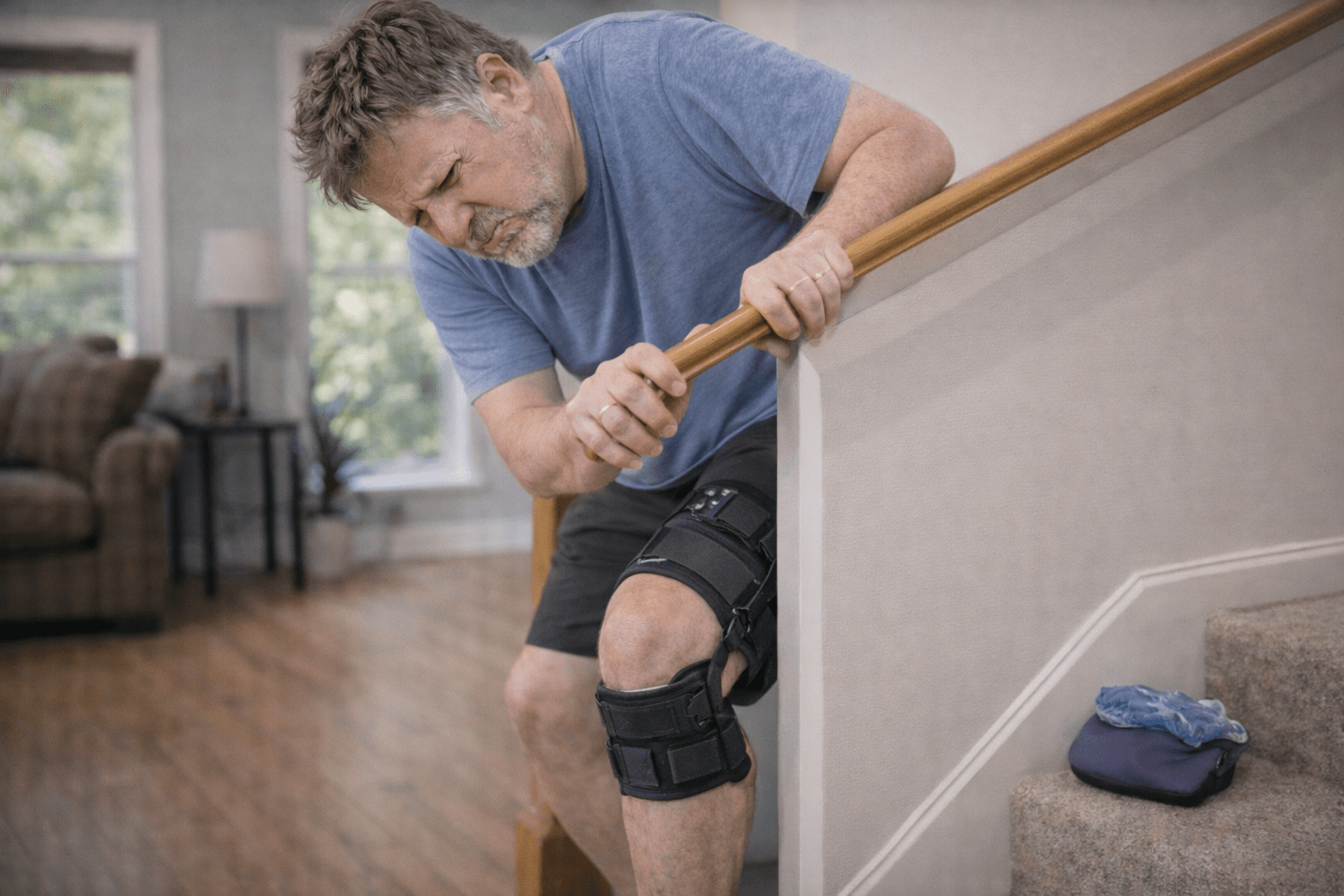
The MCL helps stabilize the knee and prevents it from collapsing inward. It can become injured during sudden twisting movements, sports activities, or awkward steps that place excessive stress on the inner knee.
Most mild to moderate MCL sprains improve with rest, controlled rehabilitation, and strengthening exercises that support knee stability.
3 Practical Tips to Support MCL Sprain Recovery
🧊 Reduce Swelling and Irritation
Ice therapy applied for 15–20 minutes several times daily may help reduce swelling and discomfort. Elevation and light compression can also support inflammation management.
Ice therapy applied for 15–20 minutes several times daily may help reduce swelling and discomfort. Elevation and light compression can also support inflammation management.
🦵 Protect the Knee During Healing
A supportive brace or compression sleeve may help stabilize the knee while avoiding activities that involve deep bending, twisting, or sudden side-to-side movement.
A supportive brace or compression sleeve may help stabilize the knee while avoiding activities that involve deep bending, twisting, or sudden side-to-side movement.
💪 Strengthen Supporting Muscles
Exercises such as quad sets, straight leg raises, and glute bridges may help rebuild stability and reduce stress on the injured ligament as recovery progresses.
Exercises such as quad sets, straight leg raises, and glute bridges may help rebuild stability and reduce stress on the injured ligament as recovery progresses.
The Recovery Reality
Recovery time varies depending on the severity of the sprain. Gradual rehabilitation, proper rest, and strengthening surrounding muscles can help restore stability and reduce the risk of recurring knee injuries.
If it Hurts we can help.
Join a supportive community where people share experiences, recovery tips, and encouragement while navigating pain and injury.
Join the ItHurts Community
Disclaimer: Enjoy the "Ouch Files" for the laughs and the lessons, but treat us like a supportive friend rather than a diagnostic tool. We aren't doctors, and this content is not medical advice. Always consult a qualified healthcare professional for diagnosis and treatment of persistent symptoms.