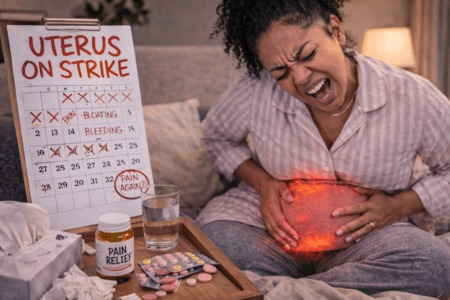

ItHurts Ouch Files: Uterine Pain Your Uterus Is Throwing Rave Parties You Didn’t RSVP For: A Survival Guide to Uterine Fibroids Uterine fibroids are common non-cancerous growths that can cause pain, pressure, and heavy periods. If your uterus feels like it’s hosting chaos—cramps, pressure, and bleeding that refuses to behave—you might be dealing with uterine fibroids. They’re not dangerous in most cases—but they are loud, persistent, and completely uninterested in your comfort. 🩸 What Are Uterine Fibroids? Fibroids are non-cancerous growths in or around the uterus. They’re extremely common and can vary in size, number, and symptoms. They may cause: • Pelvic pain or pressure • Heavy or prolonged periods • Bloating and abdominal discomfort • Lower back or leg pain 3 Practical Ways to Manage Fibroid Symptoms 🥦 Support Your Body with Anti-Inflammatory Foods Focus on whole foods like leafy greens, berries, and omega-3-rich options. Reduce ultra-processed foods, excess sugar, and alcohol to help manage inflammation. 🔥 Use Heat for Pain Relief Apply a heating pad or warm compress to the lower abdomen or back for 15–30 minutes to relax muscles and reduce cramping. 📋 Advocate for Proper Care Track your symptoms and discuss imaging and treatment options with a healthcare provider to ensure you receive appropriate support. Understanding the Condition Fibroid symptoms are influenced by hormones, inflammation, and their size or location. While some people have no symptoms, others experience significant discomfort that affects daily life. With the right approach, symptoms can be managed and treatment options explored effectively. If it Hurts we can help. Join a space where people share real experiences, support, and practical solutions—without judgment. Join the ItHurts Community Disclaimer: This content is for educational purposes only and is not medical advice. If symptoms are severe, persistent, or worsening, consult a qualified healthcare professional.
ItHurts Ouch Files: Uterine Fibroids Edition Your Uterus Is Freelancing Without Permission: A Survival Guide for Fibroids Uterine fibroids are noncancerous growths that can cause pelvic pain, pressure, heavy periods, and bloating. Managing inflammation, using heat therapy, and tracking symptoms may help reduce discomfort and guide treatment decisions. Uterine fibroids are common growths that develop in or around the uterus. While many people experience mild symptoms, others may feel significant pelvic pressure, heavy menstrual bleeding, and abdominal discomfort. Although medical evaluation is important for diagnosis and treatment planning, several everyday strategies may help reduce inflammation and manage fibroid-related discomfort. 3 Practical Tips for Managing Fibroid Pain 🥗 Support an Anti-Inflammatory Diet Eating foods that help reduce inflammation may support overall reproductive health. Leafy greens, berries, fatty fish, turmeric, and ginger are commonly included in anti-inflammatory diets. Limiting ultra-processed foods, excess sugar, and alcohol may also help reduce pelvic discomfort. 🔥 Use Heat Therapy for Pelvic Pain Heating pads applied to the lower abdomen or back for 20–30 minutes can help relax uterine muscles and improve circulation. Warm baths may also help reduce cramping and pelvic tension during symptom flare-ups. 📊 Track Symptoms and Patterns Recording pain levels, bleeding patterns, bloating, and menstrual cycle timing can help identify symptom triggers. Sharing this information with a healthcare provider may support more personalized treatment decisions. The Honest Reality Fibroid symptoms can vary from mild to disruptive. With proper medical care, lifestyle adjustments, and symptom awareness, many people are able to manage discomfort and maintain a good quality of life. If it Hurts we can help. If pain has taken over your sleep, your mood, or your search history, come find your people. Join the ItHurts Community Disclaimer: Enjoy the “Ouch Files” for the laughs and the lessons, but treat us like a supportive friend rather than a diagnostic tool. We aren’t doctors, and this content is not medical advice. Uterine fibroids should be evaluated and treated by a qualified healthcare professional.