


Itchy, peeling skin between your toes?
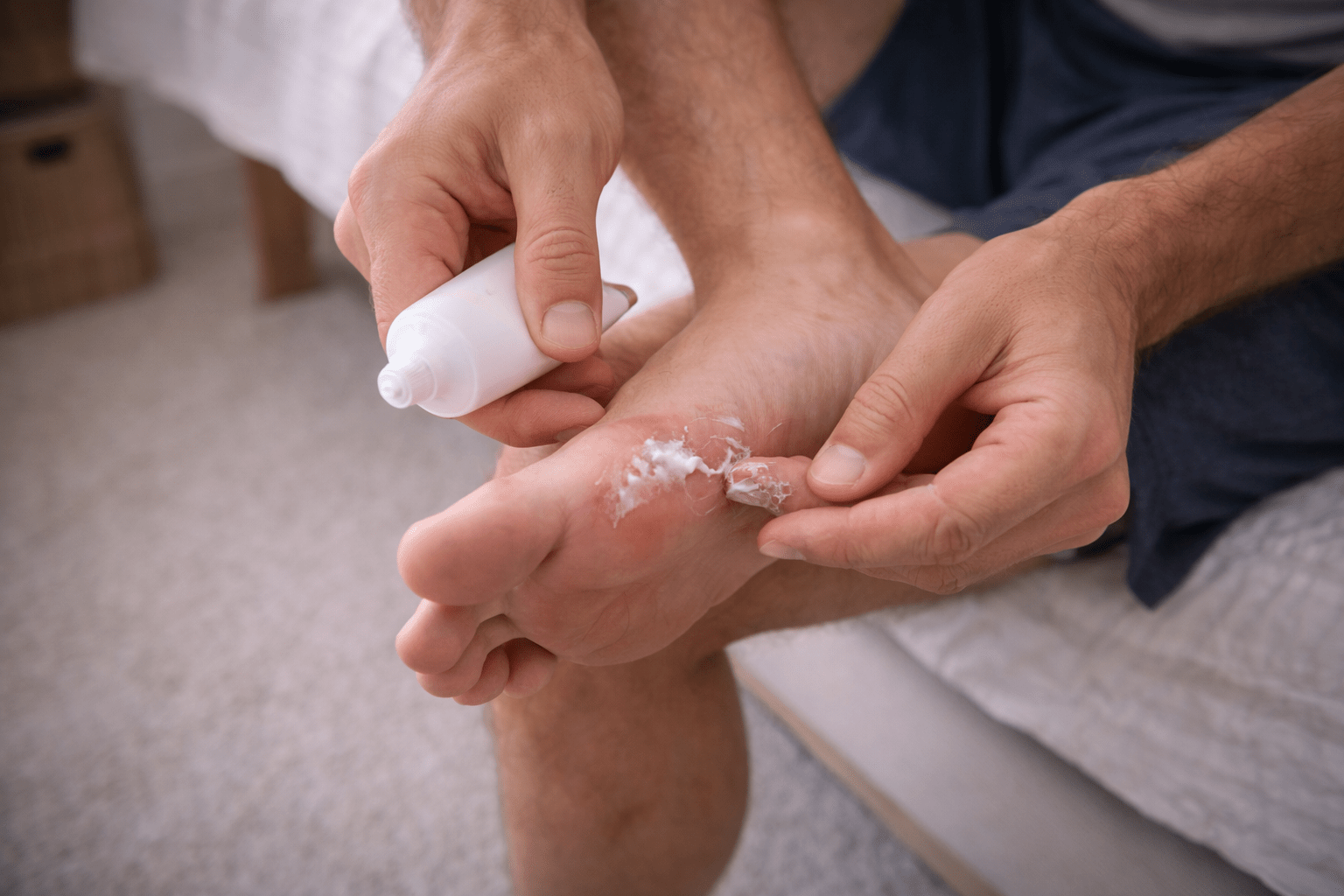
You take off your socks at the end of the day and the skin between your smallest toes is white, soggy and itching like mad. Or the soles of your feet have turned dry and scaly in a way lotion doesn't touch. Both are classic pictures of athlete's foot, known medically as tinea pedis.
It is one of the most common skin infections there is, and you don't need to be an athlete to get it. It is usually mild, but it can be stubborn, it can spread, and in some people it opens the door to more serious problems. Here is what is going on and what tends to help.
What actually causes it
Athlete's foot is caused by fungi that live on the outer layer of skin. They thrive where it is warm, damp and dark, which describes the inside of most shoes. The fungi spread by direct contact, or through floors, towels and footwear that someone with the infection has used.
Things that make it more likely:
- Shoes that don't breathe, worn for long stretches
- Sweaty feet, or socks that stay damp
- Walking barefoot in locker rooms, pool areas and shared showers
- Not drying carefully between the toes after bathing
- Sharing towels, socks or shoes
- Diabetes, poor circulation or a weakened immune system
The different ways it can look
- Between the toes. The most common form: itchy, cracked, peeling or soggy white skin, often between the fourth and fifth toes.
- Moccasin type. Dry, thickened, scaly skin across the sole and sides of the foot, sometimes mistaken for simple dry skin.
- Blistering type. Small, itchy fluid-filled blisters, often on the arch or instep.
Itching and burning are often worse right after taking shoes off. The same fungi can spread to the toenails, making them thick and discolored, and to the groin or hands if you scratch and then touch other areas.
Not every itchy, peeling foot is fungal. Eczema, psoriasis, contact dermatitis from shoe materials, and simple friction can look similar. If what you are trying isn't helping, a doctor can confirm the cause, sometimes with a quick skin scraping.
A daily foot routine that many people find helps
- Wash and dry with care. Wash feet daily, then dry thoroughly, especially between each toe. Some people finish with a hair dryer on a cool setting.
- Change socks when they're damp. Cotton or moisture-wicking socks; bring a spare pair if your feet sweat a lot.
- Rotate shoes. Give each pair a day or so to dry out completely before wearing it again.
- Let your feet breathe. Go barefoot at home on clean floors, or wear open sandals when you can.
- Protect your feet in shared spaces. Flip-flops or shower shoes at the gym, pool and dorm showers.
- Keep your own towel. Wash towels and socks in hot water if the label allows.
- Try not to scratch. Scratching can spread the fungus to other areas and break the skin.
Over-the-counter antifungal creams, sprays and powders are widely used for mild athlete's foot. A pharmacist can help you choose one. Follow the package directions, and keep going for as long as it says, because stopping as soon as the itch fades is a common reason it comes back.
When to see a doctor
Make an appointment if:
- There is no improvement after a couple of weeks of consistent over-the-counter care
- It keeps coming back
- Your toenails are thickening, crumbling or changing color
- The skin is cracked deeply, bleeding or very painful
- You are unsure whether it is athlete's foot at all
Get prompt or urgent care if:
- Redness, warmth or swelling is spreading up the foot or leg
- There is pus, red streaks, or the area is increasingly painful
- You have a fever or feel unwell
- You have diabetes, poor circulation, nerve damage in your feet, or a weakened immune system, and notice any break in the skin. In these situations even small foot problems deserve early attention.
What a doctor may suggest
If over-the-counter products haven't worked, a clinician may look closely at the skin, take a small scraping to confirm a fungus is involved, and recommend a stronger cream or, for stubborn or nail infections, a prescription medicine taken by mouth. They may also check for a bacterial infection in cracked skin. It helps to bring a list of what you have already tried and for how long.
Living with feet that like to sweat
Some people get athlete's foot once and forget about it. Others, especially those with sweaty feet or jobs in heavy boots, deal with it again and again. If that's you, it helps to treat prevention like brushing your teeth: a quick, boring habit rather than a reaction to a flare. Keeping a second pair of work boots, using an absorbent foot powder, and checking your feet when you change socks can catch it early.
If you share a home, encourage everyone to use their own towels and to wear sandals in the shower until the infection clears. It is easily passed around a household, so it is worth checking whether others have symptoms too.
Key takeaways
- Athlete's foot is a common fungal skin infection that thrives in warm, damp shoes.
- Careful drying, breathable footwear and shower shoes in shared spaces go a long way.
- Over-the-counter antifungals help many people when used for the full recommended time.
- Spreading redness, fever, or any foot wound in someone with diabetes needs a doctor promptly.
Not sure what is behind your foot discomfort? Our free Pain Check-Up walks you through it step by step. The ankle, foot and heel groups are another good place to compare notes.
Swap foot-care tips with others
Our athlete's foot group is where members share the routines and footwear changes that made the biggest difference.
Join the Athlete's Foot GroupReviewed by the ItHurts editorial team · Last reviewed 18 October 2026 · General information, not medical advice. If you are worried about your symptoms, talk to a doctor.