


What blepharitis is
Blepharitis is inflammation of the eyelid margins, the thin edge where your lashes grow. It usually affects both eyes and tends to come and go over months or years. It isn't contagious, and it rarely harms eyesight, but it can be genuinely wearing: the gritty feeling, the stuck-together lashes in the morning, the eyes that look tired no matter how much you sleep.
The good news is that most people can keep it in check with a simple daily routine and a few sensible changes. The less welcome news is that it often returns if the routine stops. Think of it as something you manage, like dandruff, rather than something you get rid of once.
Two main types, and what drives them
Doctors often describe blepharitis by where it starts:
- Front of the eyelid (anterior). Affects the skin and lash base. Often linked with bacteria that normally live on the skin, or with dandruff-like flaking from the scalp and eyebrows.
- Back of the eyelid (posterior). Involves the tiny oil glands along the lid edge, called meibomian glands. When their oil becomes thick or blocked, the tear film dries out faster and the lid edge becomes irritated.
Many people have a mix of both. Things that are commonly associated with blepharitis include:
- Skin conditions such as seborrheic dermatitis and rosacea
- Dry eye
- Allergies, including reactions to makeup, eye creams or contact lens solutions
- Tiny mites called Demodex that live at the base of the lashes in many adults
- Dry indoor air, long screen sessions and less frequent blinking
How it feels
- Burning, itching or a sandy, gritty feeling
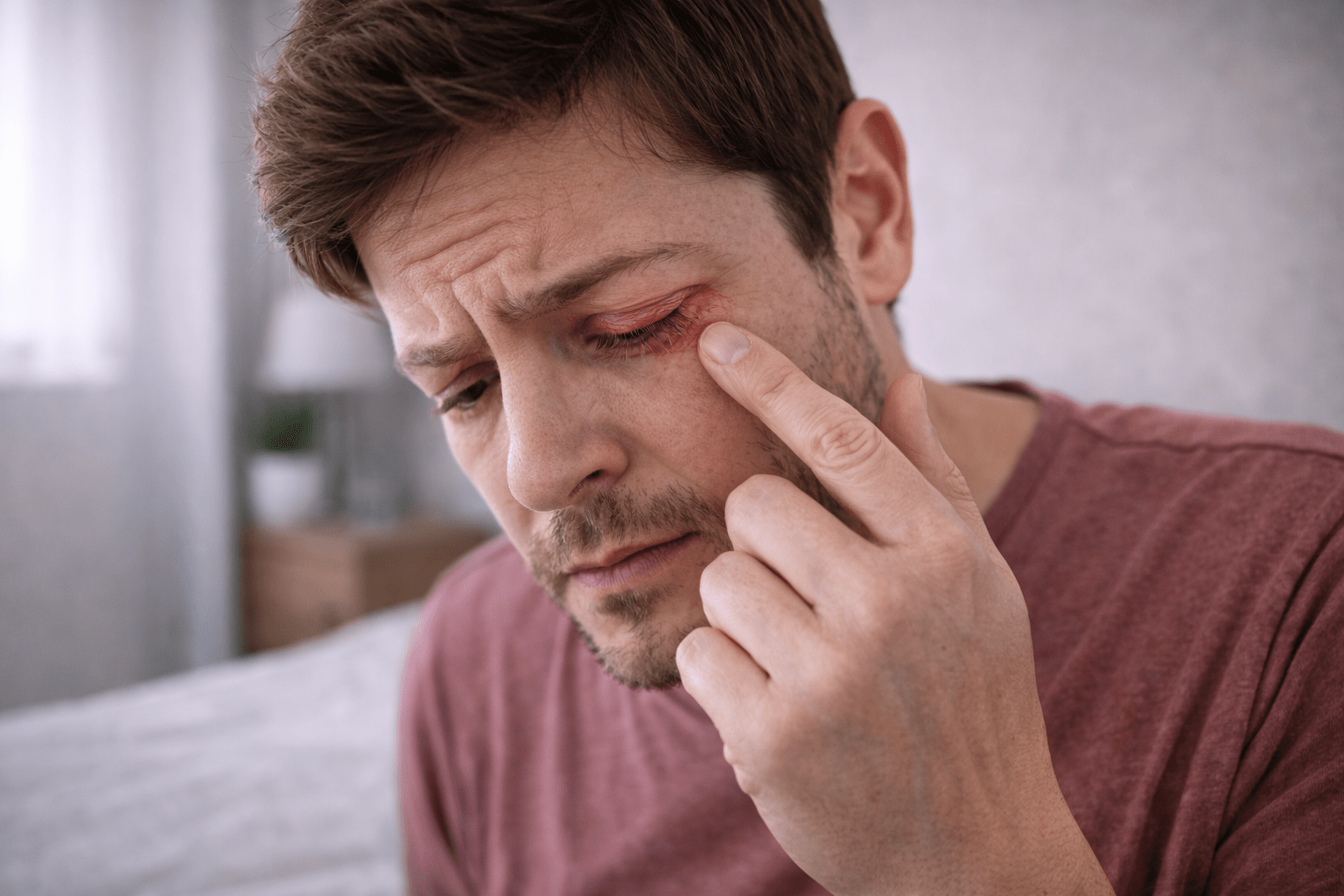
- Red, swollen or greasy-looking lid edges
- Crusts or flakes at the base of the lashes, often worse on waking
- Watery eyes, or eyes that feel dry and tired
- Sensitivity to light
- Frequent styes or small bumps on the lid
- In long-standing cases, lashes that fall out or grow in odd directions
Why it so often comes with dry eye
The oil made by the glands along your lid edge forms the top layer of your tears and slows evaporation. When those glands are blocked or inflamed, tears dry out faster, and the eye surface becomes irritated. Dry, irritated eyes then make the lids more inflamed, and the cycle continues. That's why lid care and comfort drops are often recommended together, and why improving one problem frequently eases the other.
A simple daily lid-care routine
This is the approach eye doctors commonly describe. Check with your own optometrist or ophthalmologist if you have had eye surgery or other eye conditions.
- 1. Warmth. Hold a clean, warm (not hot) compress over closed eyes for about five to ten minutes. Rewarm it as it cools. This softens crusts and helps thickened oil flow. Some people prefer a microwavable eye mask designed for this.
- 2. Gentle massage. With eyes closed, lightly roll a fingertip along the lid toward the lashes, a few times on each lid. Light pressure only.
- 3. Clean the lid edge. Use a clean cotton pad or cloth with warm water, a diluted gentle baby shampoo, or a ready-made lid wipe or cleanser from a pharmacy. Wipe along the lash line, then rinse.
- 4. Repeat daily. Once or twice a day during flares, then often once a day to keep things settled.
Many people also find preservative-free lubricating eye drops soothing, especially for screen-heavy days.
Small changes that ease flare-ups
- Take a break from eye makeup during flares, remove it fully every night, and replace old mascara and eyeliner
- Wash your face and eyebrows gently, and manage scalp dandruff, which can feed eyelid flaking
- Follow a regular blink break when using screens, for example looking away every 20 minutes
- Use a humidifier if indoor air is dry, and keep fans and vents from blowing at your face
- If you wear contact lenses, ask whether a break or a different lens or solution would help
- Try not to rub your eyes, which spreads irritation
When to see an eye doctor promptly
Blepharitis itself is not an emergency, but some eye symptoms are. Get same-day care if you notice:
- Sudden or significant eye pain
- Any loss of vision or vision that stays blurry after blinking
- Strong sensitivity to light
- A very red eye, especially in one eye only
- Swelling and redness spreading around the eye, with fever
- An injury or chemical in the eye
Book a routine appointment if symptoms don't improve after a few weeks of daily lid care, styes keep recurring, lashes are falling out, or a lump on the lid doesn't go away. Your clinician can look at the lid margins under magnification and may suggest prescription drops or ointments, in-office gland treatments, or management of related skin conditions.
Living with it long term
Because blepharitis tends to return, the people who cope best usually fold lid care into something they already do, such as brushing their teeth at night or making the morning coffee. Keeping a warm mask and lid wipes by the bathroom sink removes one more decision. When a flare comes, it helps to look back at what changed: a new cosmetic, a dry office, late nights on screens, a stressful week.
It can also be frustrating when friends say "it's just tired eyes." Ongoing irritation is real discomfort, and it is reasonable to ask for help with it.
The short version
Blepharitis is common, long-lasting and usually manageable. Warmth, gentle massage and lid cleaning every day form the backbone of care, while pain, vision changes or a very red eye mean you should be seen promptly.
If your eyes, head or face are bothering you in other ways too, our free Pain Check-Up can help you sort out what's going on. You can also visit the headache, head and eye pain groups.
Compare notes on lid care
Members of our blepharitis community share routines, product questions and what helps during a flare.
Join the Blepharitis CommunityReviewed by the ItHurts editorial team · Last reviewed 18 October 2026 · General information, not medical advice. If you are worried about your symptoms, talk to a doctor.
Some links are affiliate links. If you buy through them, ItHurts.com may earn a small commission at no extra cost to you.