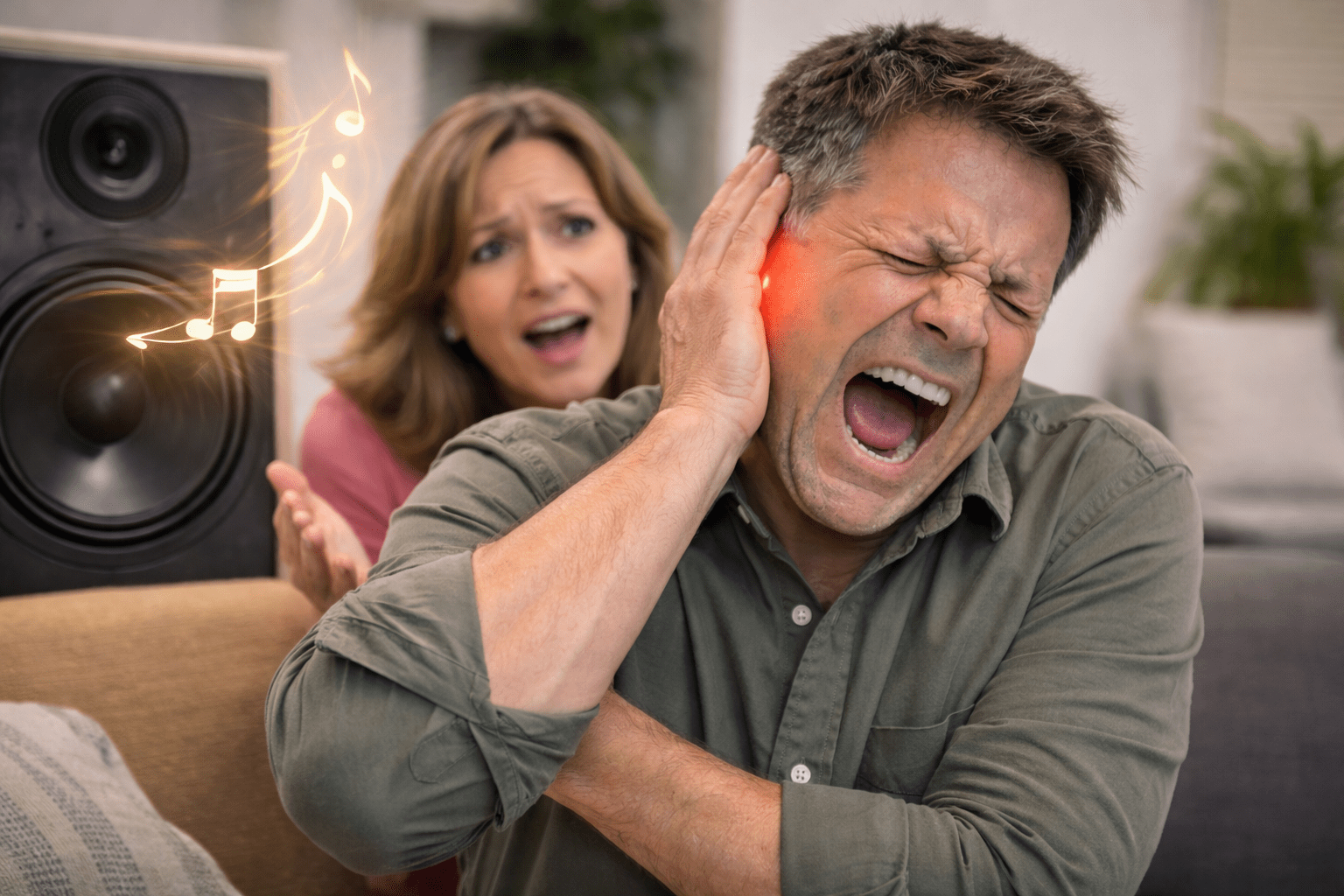
Hearing loss rarely arrives dramatically. It sneaks in slowly, making voices sound muffled, conversations exhausting, and everyday listening far more difficult than it used to be.
If you’ve ever nodded confidently during a conversation only to realize ten seconds later that you have no idea what was said, welcome to the club.
You’re not rude. You’re not distracted. Your ears may just be quietly unionizing. Hearing loss doesn’t arrive with a siren—it sneaks in wearing slippers and steals syllables.
One day everything sounds normal. The next day everyone is “mumbling” and the TV feels like it’s being narrated underwater.
This isn’t just inconvenient. Straining to hear taxes your brain, increases stress, and can turn social situations into exhausting guessing games.
3 Practical Tips That May Help Protect Your Hearing
🎧 Protect Your Ears from Loud Noise
Noise exposure is one of the most preventable causes of hearing loss. Use noise-canceling headphones, follow the 60/60 listening rule, and wear ear protection in loud environments such as concerts, heavy traffic, or construction areas.
🧠 Train Your Brain, Not Just Your Ears
Hearing is also a brain process. Face people when they speak, reduce background noise during conversations, and ask for clarification rather than repetition to help your brain process speech more effectively.
🔍 Get a Hearing Check Early
Early hearing evaluations can detect changes before they become severe. Monitoring symptoms such as ringing in the ears, muffled sound, or ear fullness allows professionals to recommend treatment or assistive technologies sooner.
Addressing hearing changes early can reduce mental fatigue, improve communication, and help maintain social connection and quality of life.
Disclaimer: Enjoy the "Ouch Files" for the laughs and the lessons, but treat us like a witty friend rather than a diagnostic tool. We aren't doctors, and this content is not medical advice. If you experience persistent hearing changes, ringing in the ears, dizziness, or difficulty understanding speech, consult a qualified healthcare professional or audiologist.