

ItHurts Ouch Files: Foam Rolling Edition
Foam Rolling: Why You’re Voluntarily Lying on the Floor Like an Injured Seal (and Why It Works)
Foam rolling is a form of self-myofascial release that helps reduce muscle tension, improve circulation, and support recovery after activity. When performed correctly, it can improve mobility and reduce stiffness in commonly overworked muscle groups.
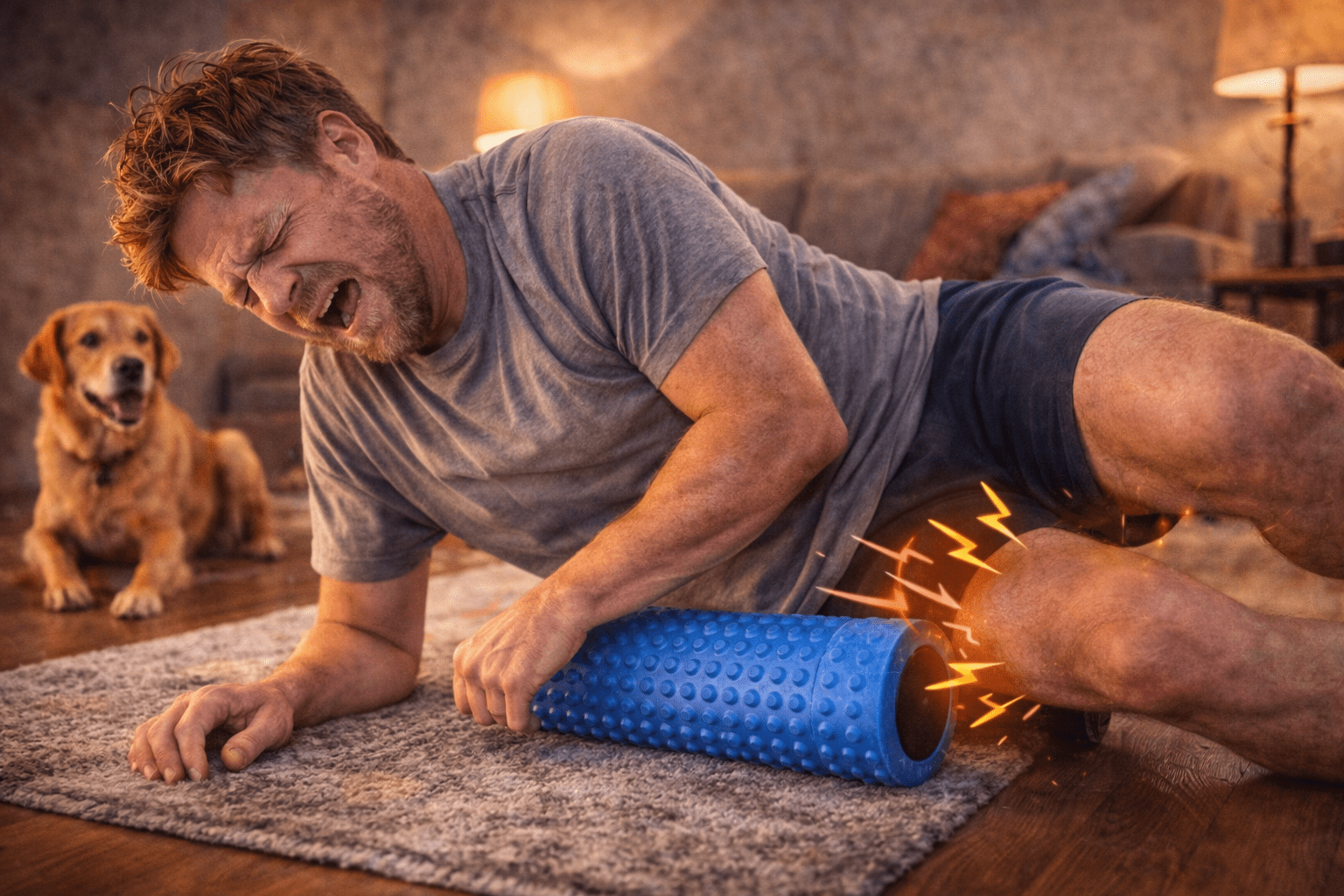
Muscle tightness and soreness often develop from repetitive movement, poor posture, stress, or lack of recovery. Foam rolling applies gentle pressure to muscles and connective tissue, helping improve circulation and encourage muscles to relax.
Used regularly, foam rolling can support flexibility, reduce stiffness, and improve movement quality.
3 Practical Foam Rolling Tips
🧘 Roll Slowly and Breathe
Move slowly across the muscle—about one inch per second—and breathe normally. Pause on tight spots for 20–30 seconds to allow the muscle to gradually relax.
⚠️ Avoid Excessive Pressure
Foam rolling should create moderate discomfort but not sharp or intense pain. Too much pressure can cause muscles to tighten rather than release.
🎯 Focus on Key Muscle Groups
Common areas that benefit from foam rolling include the calves, quadriceps, hip flexors, glutes, and upper back. Targeting these areas can improve mobility and reduce tension throughout the body.
The Honest Reality
Foam rolling is not a quick fix, but consistent practice can help maintain muscle health, improve flexibility, and support recovery after physical activity. Pairing foam rolling with stretching and regular movement often provides the best results.
If it Hurts we can help.
Connect with a community that understands pain and shares practical ways to manage it.
Join the ItHurts Community
Disclaimer: Enjoy the "Ouch Files" for the laughs and the lessons, but treat us like a supportive friend rather than a diagnostic tool. We aren't doctors, and this content is not medical advice. Always consult a qualified healthcare professional for diagnosis and treatment of persistent symptoms.
