



Description
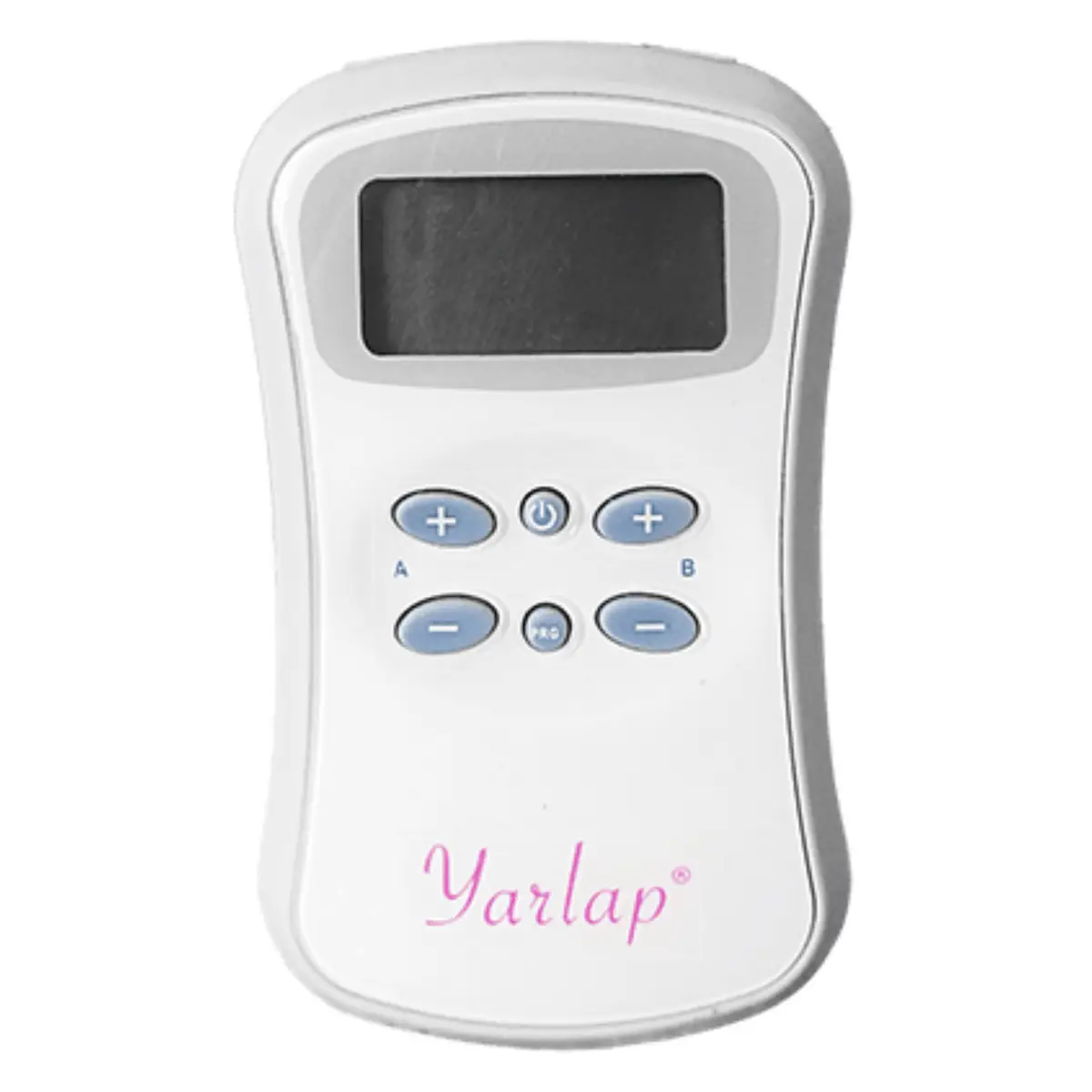
Ask a room of women whether they’re sure they’re doing Kegels right and most will shrug. That’s the problem Yarlap sets out to solve. Instead of you guessing which muscles to squeeze and for how long, the device does the squeeze-and-rest rhythm for you.
What happens in a session
Yarlap uses neuromuscular electrical stimulation (NMES), which it calls AutoKegel. You insert the small stimulator like a tampon, using the water-based gel that comes in the box, plug it into Channel A or B, turn the unit on, pick one of six preset programs and set an intensity that feels comfortable. Then you sit back for about 20 minutes. The suggested routine is three days a week.
Who it’s meant for
- Women who’ve tried Kegels on their own and never felt sure they were working the right muscles
- Anyone who wants a short, private routine at home
- People keeping up pelvic floor work they started with a clinician
In the bag
The Yarlap unit, the stimulator, a 5 oz tube of water-based gel, an illustrated manual, a 9-volt battery and a carrying bag. It’s FDA cleared, built from medical-grade parts, made in Ireland by a US company with US-based support, and eligible for FSA/HSA and FLEX dollars. Insurance isn’t billed directly.
Safety first
- Don’t use Yarlap if you have a pacemaker. That’s the maker’s rule.
- Talk to your doctor or pelvic health physical therapist before you begin, especially if you’re pregnant, recently gave birth, or have pelvic pain, as electrical stimulation isn’t right for everyone.
- Results vary. Yarlap says many people notice changes somewhere between 2 and 12 weeks of regular use.
- Pelvic pain, bleeding, or bladder symptoms that come on suddenly need a medical check first.
Want a clearer picture of what’s going on? Try the free Pain Check-Up, and find others who understand in the women’s health groups.
This is a paid/affiliate link — ItHurts.com may earn a commission if you buy, at no extra cost to you.















Reviews
There are no reviews yet.