


The 2 a.m. search
It starts with something small: a headache that lasts longer than usual, a skipped heartbeat, a lump you notice in the shower. Before long you are reading about worst-case diagnoses late at night, pressing the spot again to see if it has changed, and asking your partner for the third time whether it looks normal. The relief after a doctor's all-clear lasts a day or two, and then a new worry takes its place.
This pattern is called health anxiety. In its more persistent form, doctors may use the term illness anxiety disorder, or somatic symptom disorder when physical symptoms are a big part of it. Whatever the label, it describes a very real and exhausting form of anxiety that centers on the fear of being, or becoming, seriously ill.
What it is, and what it isn't
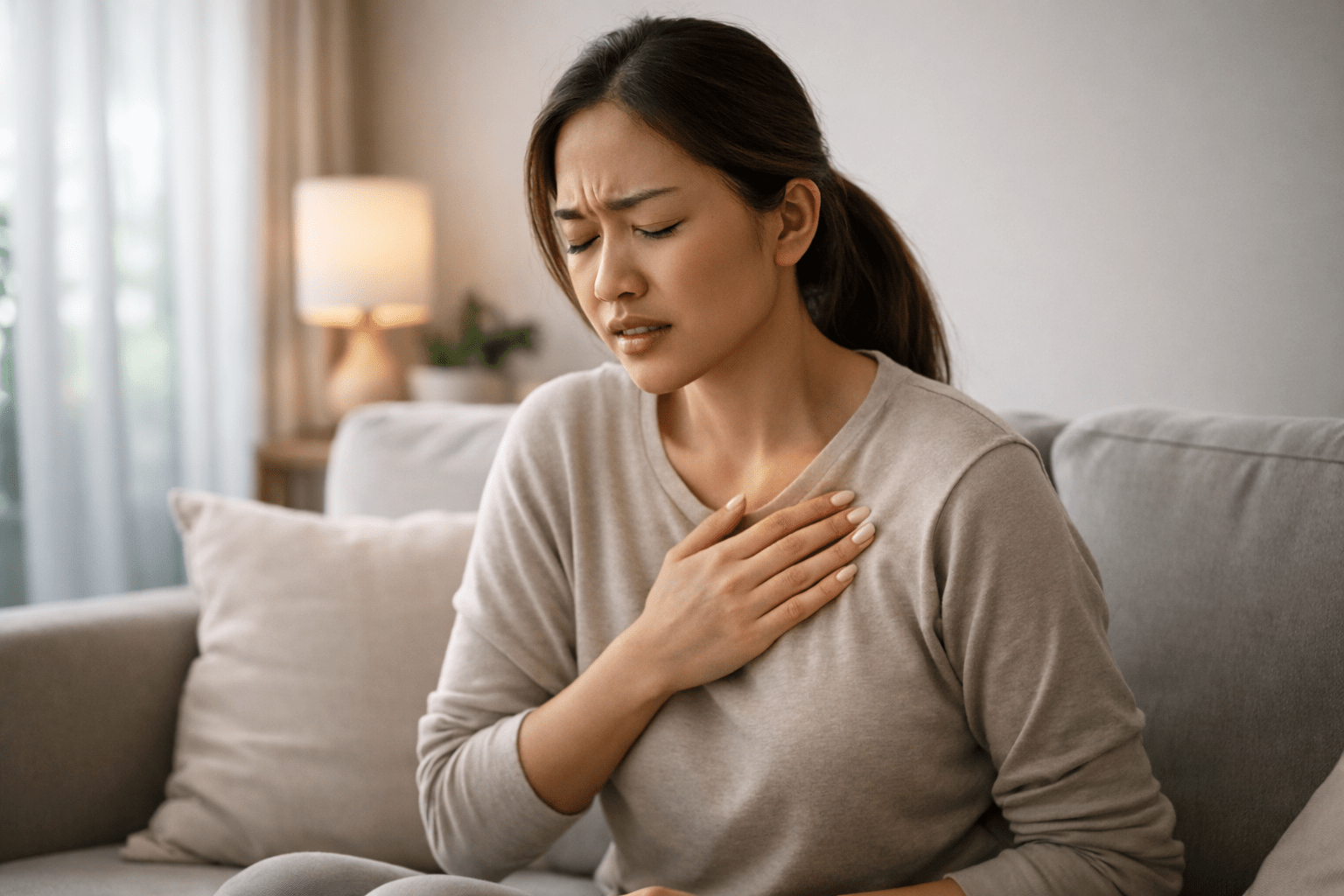
Health anxiety isn't the same as "making things up." The sensations people notice are usually real: a racing heart, tight chest, tingling, stomach upset or aches. Anxiety itself causes many of these sensations, which then feed the fear, which creates more sensations. It can affect anyone, and it often flares during stressful periods, after a loved one becomes ill, or after a personal health scare.
It also doesn't mean you should ignore your body. People with health anxiety can, and do, develop physical illnesses too. The aim is not to stop caring about your health, but to respond to your body in a way that is proportionate and less consuming.
Signs it may be health anxiety
- Spending a lot of time each day worrying about having a serious illness
- Frequently checking your body, pulse, blood pressure or skin for changes
- Searching symptoms online and feeling worse afterward
- Seeking reassurance repeatedly from doctors, friends or family, with relief that fades quickly
- Or the opposite: avoiding doctors, tests, hospitals or health news because they feel too frightening
- Finding that worry about health gets in the way of work, sleep, relationships or enjoyment
The cycle that keeps it going
Health anxiety usually runs in a loop. You notice a sensation, interpret it as a sign of danger, feel anxious, and then do something to feel safer: check, search, ask, or avoid. That action brings short-term relief, which teaches the brain that the check was necessary. Next time, the urge comes back stronger. Over time, your attention becomes tuned to bodily sensations, so you notice more of them, which confirms the fear.
Understanding this loop is helpful because it shows where change is possible. You don't have to win an argument with every worried thought. You can practice changing what you do in response.
Steps that help many people
- Notice the urge, then delay. When you want to check or search, wait 15 or 30 minutes. Often the urge fades. Gradually lengthen the gap.
- Set limits on searching. Consider unplugging from symptom websites altogether, or agree with yourself to use only one trusted source.
- Reduce body checking. Repeated pressing or examining can irritate tissue and keep attention locked on the area.
- Plan your medical care. Agree with one regular doctor on a sensible schedule for check-ups, so you don't feel you have to seek reassurance every time something comes up.
- Calm the body. Slow breathing, gentle exercise and regular sleep lower the overall level of physical arousal, which means fewer alarming sensations.
- Redirect attention. When you catch yourself scanning your body, shift your focus to something absorbing in the outside world, such as a conversation, a task or a walk.
- Tell loved ones what helps. Gentle support that doesn't involve repeated reassurance is often more useful in the long run.
Professional support works
Health anxiety responds well to psychological therapy. Cognitive behavioral therapy (CBT), in particular, is widely used to help people understand the cycle, test out their fears and gradually reduce checking and avoidance. A primary care doctor can be a good first step: they can check your physical health, talk through what you are experiencing and refer you to a therapist. In some cases, they may also discuss medication as part of a wider plan.
When to get medical help regardless
Living with health anxiety doesn't mean ignoring warning signs. Seek urgent care for chest pain with breathlessness or sweating, sudden weakness or numbness on one side, slurred speech, a sudden severe headache, fainting, or heavy bleeding. See a doctor for new symptoms that persist or keep worsening, or a lump that is growing.
If anxiety leaves you feeling hopeless or having thoughts of harming yourself, please reach out straight away. In the US, call or text 988 for the 988 Suicide & Crisis Lifeline. Elsewhere, contact your local emergency number or crisis service.
Living with a worried mind
Recovery from health anxiety is rarely a straight line. Many people find there are calmer stretches and flare-ups, often around stressful life events. Each time you resist a checking urge or let a worried thought pass without acting on it, you are building a new habit. It helps to be patient with yourself and to notice progress, even small steps like closing a search tab.
Talking with others who understand the cycle can be a huge relief. Many people say it was the first time they felt understood rather than judged.
The bottom line
Health anxiety is a real and common form of anxiety in which worry about illness becomes consuming. Checking, searching and seeking reassurance bring brief relief but keep the cycle going. Gradually cutting back on those habits, calming the body and getting support, especially therapy such as CBT, help many people feel more at ease. Never ignore true emergency signs, and reach out to 988 or your local emergency number if you are in crisis.
You are not the only one
Our emotional and mental health groups are a judgment-free place to talk about anxiety. If you'd like a structured way to describe a physical symptom to your doctor, the free Pain Check-Up can help.
Join a Support GroupReviewed by the ItHurts editorial team · Last reviewed 18 October 2026 · General information, not medical advice. If you are worried about your symptoms, talk to a doctor.
Some links are affiliate links. If you buy through them, ItHurts.com may earn a small commission at no extra cost to you.