


It was never only about food
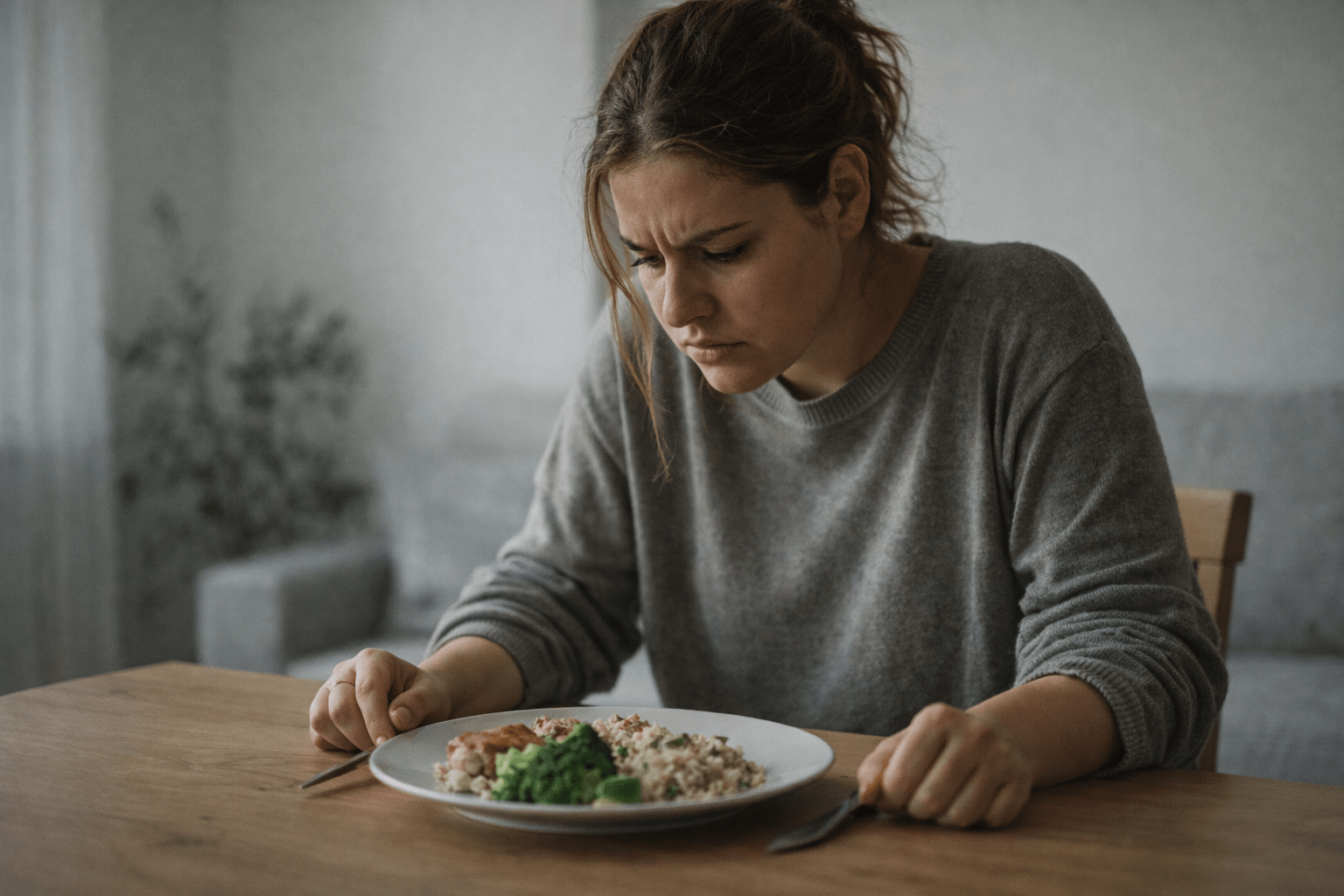
From the outside, an eating disorder can look like a diet, a fussy appetite or a phase. From the inside, it often feels like a constant internal conversation: rules about what is allowed, guilt after eating, guilt after not eating, fear about certain foods, and a relentless pressure to get it right. That conversation can be exhausting, and it is not your fault.
Eating disorders are serious health conditions that affect both the mind and the body. They can affect people of any age, gender, body size, background or ethnicity. And with the right support, recovery is possible.
If you are in crisis or thinking about harming yourself, please reach out now. In the US, call or text 988 to reach the 988 Suicide & Crisis Lifeline. Outside the US, call your local emergency number or a local crisis line.
Understanding what is going on
Eating disorders involve persistent patterns of eating and thinking about food, weight or body shape that harm health and daily life. Common types include anorexia nervosa, bulimia nervosa, binge eating disorder, and avoidant/restrictive food intake disorder (ARFID), along with other forms that don't fit neatly into one category.
There is rarely one cause. Factors often include:
- Genetics and family history
- Anxiety, depression, perfectionism or obsessive thinking patterns
- Stress, trauma or major life changes
- Diet culture and pressure about appearance, including on social media
- Sports or careers that focus on weight or body shape
- Using control over food as a way to cope with difficult emotions
For many people, the eating disorder started as something that felt protective, a way to feel in control or numb painful feelings. That's part of why letting go can feel so frightening.
Signs to notice
Everyone's experience is different, but common signs include:
- Intense preoccupation with food, calories, weight or body shape
- Strict food rules, skipping meals or cutting out whole food groups
- Eating large amounts of food while feeling out of control, often in secret
- Vomiting, using laxatives or exercising compulsively after eating
- Avoiding eating with others, or anxiety around meals and social events
- Mood changes, irritability, withdrawal or low self-worth tied to eating or appearance
- Physical signs such as tiredness, feeling cold, dizziness, changes in periods, or digestive problems
Myths that keep people from asking for help
- "It's a choice." Eating disorders are health conditions with biological, psychological and social roots, not a lifestyle decision.
- "Only young women get them." Men, older adults, children and people of every background can be affected.
- "I'm not sick enough." This thought is very common, and it is often part of the illness itself. If food and body worries are taking over your life, that is reason enough to reach out.
Physical warning signs that need urgent care
Eating disorders can put real strain on the heart and other organs. Call your local emergency number or go to an emergency department if you or someone you know has:
- Fainting or near-fainting
- Chest pain, a racing, pounding or irregular heartbeat
- Severe weakness, confusion, or difficulty standing
- Repeated vomiting, or vomiting blood
- Not eating or drinking for an extended time
- Thoughts of self-harm or suicide (call or text 988 in the US)
Even without these signs, a check-up with a doctor is important. Blood tests and heart checks can pick up problems that aren't obvious from how someone looks or feels.
What recovery support usually involves
Eating disorders are best supported by a team. Depending on your needs, that may include a primary care doctor, a therapist or psychologist, a dietitian experienced in eating disorders, and sometimes a psychiatrist. Care can take place in regular outpatient appointments, more intensive day programs, or, when the body needs closer monitoring, in a hospital or residential setting.
Talking therapies, such as cognitive behavioral approaches, help many people. For young people, family-based approaches are often used, with parents or caregivers playing an active role in meals. Recovery is rarely a straight line. Slips are common, and they are a part of the process, not proof of failure.
Gentle supports alongside professional care
- Follow the eating plan your care team gives you, even when your thoughts argue against it
- Build predictable routines around meals to reduce decision fatigue
- Unfollow or mute accounts that fuel comparison, diet talk or body checking
- Plan a calming activity after meals, such as a puzzle, a show or a phone call
- Use grounding techniques when anxiety spikes, like slow breathing or naming things you can see
- Write reassuring notes to yourself for hard moments
- Tell at least one trusted person what's going on, so you're not carrying it alone
If you're worried about someone you love
Choose a calm, private moment. Talk about specific behaviors and feelings you've noticed, rather than their weight or appearance. Use "I" statements, such as "I've noticed you seem stressed at meals and I'm worried about you." Expect that they may deny it or feel defensive; that's common. Keep the door open, avoid arguments about food, and encourage them to see a doctor. Look after your own support too.
What progress can look like
Recovery is built from small moments: finishing a meal despite the noise in your head, noticing a harsh thought and choosing not to believe it, eating with friends, or asking for help before things spiral. These steps are meaningful, even when they feel tiny.
Holding on to this
Eating disorders are serious, common and treatable conditions, not choices or vanity. Physical warning signs need urgent care, and a team approach helps many people recover. Wherever you are right now, you deserve support, and it's never too early or too late to ask.
Find understanding without judgment
You can read and share with others in our emotional and mental health support groups.
Join the Eating Disorder Recovery GroupReviewed by the ItHurts editorial team · Last reviewed 18 October 2026 · General information, not medical advice. If you are worried about your symptoms, talk to a doctor.
Some links are affiliate links. If you buy through them, ItHurts.com may earn a small commission at no extra cost to you.