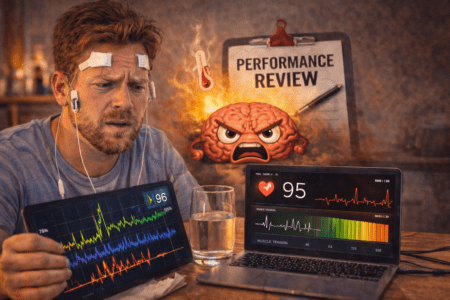
ItHurts Ouch Files: Biofeedback Edition Biofeedback: When Your Nervous System Gets a Performance Review Biofeedback is a technique that helps people learn how their bodies respond to stress, pain, and tension. By monitoring physical signals such as heart rate or muscle activity, individuals can practice ways to relax and better regulate their nervous system. Biofeedback uses sensors and monitoring tools to provide real-time information about how the body is functioning. This may include tracking heart rate, breathing patterns, muscle tension, or skin temperature. By seeing these signals, people can learn techniques to relax their body, regulate breathing, and reduce tension that may contribute to pain or stress-related symptoms. 3 Practical Tips for Using Biofeedback to Manage Pain 🧠 Focus on Your Body’s Strongest Signals Biofeedback can help identify patterns such as shallow breathing, muscle tension, or elevated heart rate. Learning to recognize and regulate these signals may help reduce stress-related pain responses. 🎯 Practice Consistently Short, regular biofeedback sessions—such as 5–10 minutes a day—can help train the body to respond differently to stress. Consistency often produces better results than occasional long sessions. 🔄 Use Biofeedback During Pain Episodes Biofeedback techniques can be used when discomfort begins. Monitoring breathing, muscle tension, or heart rate can help guide relaxation strategies that reduce the body’s stress response. The Honest Reality Biofeedback does not eliminate every source of pain, but it can be a helpful tool for learning how the body reacts to stress and tension. Over time, practicing these techniques may help improve relaxation, emotional regulation, and overall comfort. If it Hurts we can help. If pain, stress, or health concerns have taken over your search history, come find your people. Join the ItHurts Community Disclaimer: Enjoy the “Ouch Files” for the laughs and the lessons, but treat us like a supportive friend rather than a diagnostic tool. We aren’t doctors, and this content is not medical advice. Always consult a qualified healthcare professional for diagnosis and treatment of persistent or worsening symptoms.
 Written by Karrie