
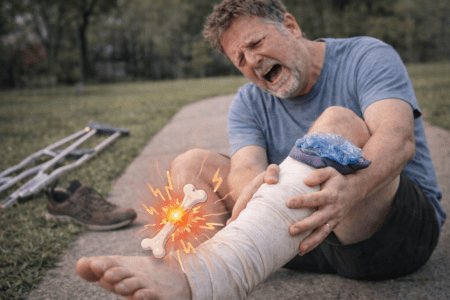
ItHurts Ouch Files: Fracture & Bone Injury Edition Congratulations, Your Bone Has Resigned: A Survival Guide for When Your Skeleton Betrays You A fracture occurs when a bone cracks or breaks due to trauma, stress, or impact. While fractures can be painful and disruptive, proper care, immobilization, and gradual recovery can support healing and restore function. Bone fractures can occur from falls, accidents, sports injuries, or sudden force applied to a bone. Symptoms often include sharp pain, swelling, bruising, limited movement, and difficulty bearing weight. Recovery typically involves immobilization, managing inflammation, and supporting the body’s natural bone-healing process through proper care and nutrition. 3 Practical Tips to Support Fracture Recovery 🩼 Follow Immobilization Instructions Casts, braces, boots, or splints help keep the injured bone stable while it heals. Limiting unnecessary movement can reduce pain and support proper bone alignment. 🧊 Manage Swelling With Ice and Elevation Applying ice for short periods and elevating the injured area may help reduce swelling and discomfort. Always protect the skin by wrapping ice in a cloth before use. 🍗 Support Healing With Nutrition Bone recovery requires adequate nutrients such as protein, calcium, vitamin D, and proper hydration to help support tissue repair and bone regeneration. The Recovery Reality Fracture recovery takes time and patience. Following medical guidance, protecting the injured area, and gradually returning to normal activities can help reduce complications and support long-term mobility. If it Hurts we can help. Join a supportive community where people share experiences, recovery strategies, and encouragement while navigating pain and healing. Join the ItHurts Community Disclaimer: Enjoy the “Ouch Files” for the laughs and the lessons, but treat us like a supportive friend rather than a diagnostic tool. We aren’t doctors, and this content is not medical advice. Always consult a qualified healthcare professional for diagnosis and treatment of persistent symptoms.
 Written by Karrie