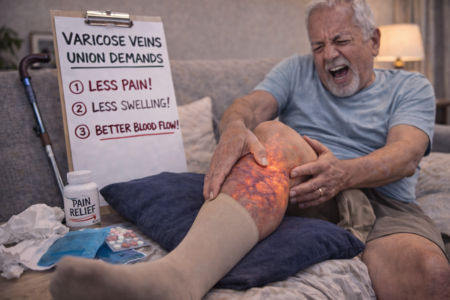
ItHurts Ouch Files: Varicose Veins Edition Your Legs Didn’t “Get Old.” They Unionized. A Survival Guide for Varicose Veins Varicose veins occur when weakened vein walls allow blood to pool, causing swelling, aching, and visible vein changes. Elevation, compression, and regular movement may help reduce discomfort and improve circulation. Varicose veins develop when the valves inside veins weaken and blood begins to pool instead of flowing efficiently back to the heart. This can lead to visible bulging veins, aching legs, swelling, and heaviness—especially after long periods of standing or sitting. While medical treatment may be necessary in some cases, certain daily habits can help reduce pressure on veins and improve circulation. 3 Practical Tips for Managing Varicose Vein Pain 🦵 Elevate Your Legs Raising your legs above heart level for 15–20 minutes can help reduce pressure in the veins and improve blood flow back toward the heart. Doing this once or twice a day may help relieve heaviness and swelling. 🧦 Use Compression Stockings Graduated compression socks apply gentle pressure that supports vein walls and encourages healthy circulation. They can be particularly helpful for people who spend long periods sitting or standing. 🚶 Stay Physically Active Low-impact activities such as walking, swimming, or cycling help activate leg muscles, which assist veins in pushing blood upward. Regular movement can reduce blood pooling and improve overall circulation. The Honest Reality Varicose veins can be uncomfortable, but early lifestyle adjustments and medical consultation can significantly improve symptoms. If swelling, pain, or skin changes worsen, professional evaluation is recommended to prevent complications. If it Hurts we can help. If pain has taken over your sleep, your mood, or your search history, come find your people. Join the ItHurts Community Disclaimer: Enjoy the “Ouch Files” for the laughs and the lessons, but treat us like a supportive friend rather than a diagnostic tool. We aren’t doctors, and this content is not medical advice. Varicose veins should be evaluated by a qualified healthcare professional if symptoms are severe or worsening.
 Written by Karrie