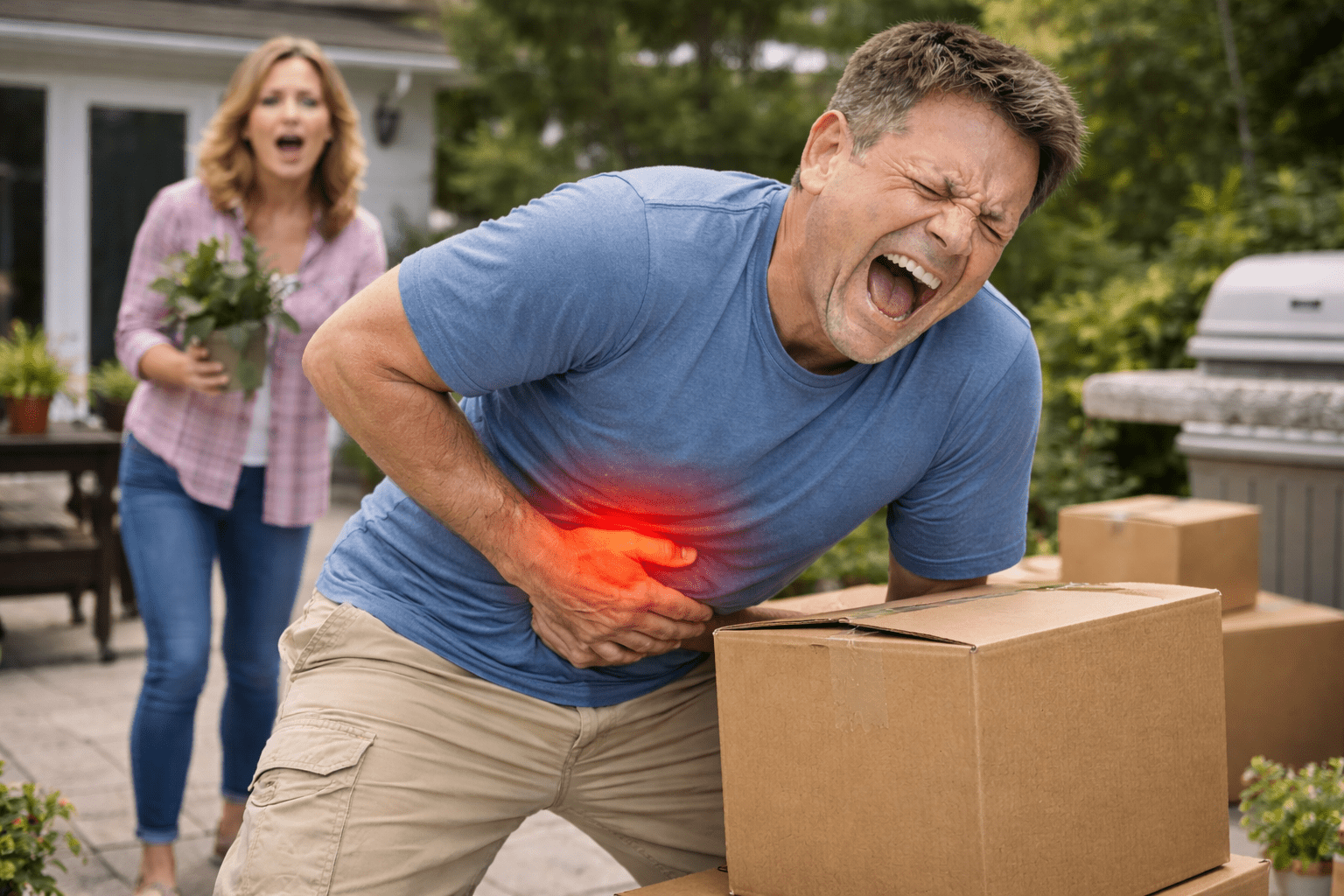
A hernia occurs when internal tissue pushes through a weakened area of muscle, often creating a noticeable bulge and discomfort. Activities like lifting, coughing, or bending can make symptoms more noticeable.
Hernias commonly develop in the abdomen or groin when a portion of tissue pushes through a weakened section of muscle. While some hernias cause mild discomfort, others may produce noticeable pain, pressure, or a visible bulge that becomes more pronounced during physical activity.
Although medical evaluation is important for long-term treatment, certain lifestyle adjustments may help reduce discomfort and prevent additional strain.
3 Practical Tips That May Help Reduce Hernia Discomfort
🧠 Avoid Excessive Core Straining
Tightening the abdominal muscles too aggressively can increase pressure on the weakened area. Practicing controlled breathing and gentle abdominal engagement during movement may help reduce strain.
🧺 Use Safe Lifting Techniques
When lifting objects, keep them close to your body, bend at the knees and hips, and exhale during effort. Avoid twisting motions that may increase abdominal pressure.
🩹 Consider Support During Physical Activity
Some people benefit from wearing a hernia support belt during activities that place strain on the abdomen. Proper fit and guidance from a healthcare professional can help ensure safe use.
While supportive habits can help manage symptoms, hernias generally do not heal without medical treatment. Monitoring symptoms and seeking medical advice when necessary is important for long-term care.
Disclaimer: Enjoy the "Ouch Files" for the laughs and the lessons, but treat us like a witty friend rather than a diagnostic tool. We aren't doctors, and this content is not medical advice. Hernias can become serious if untreated. If pain becomes severe, persistent, or is accompanied by nausea, fever, or a bulge that cannot be pushed back in, seek medical attention immediately.