
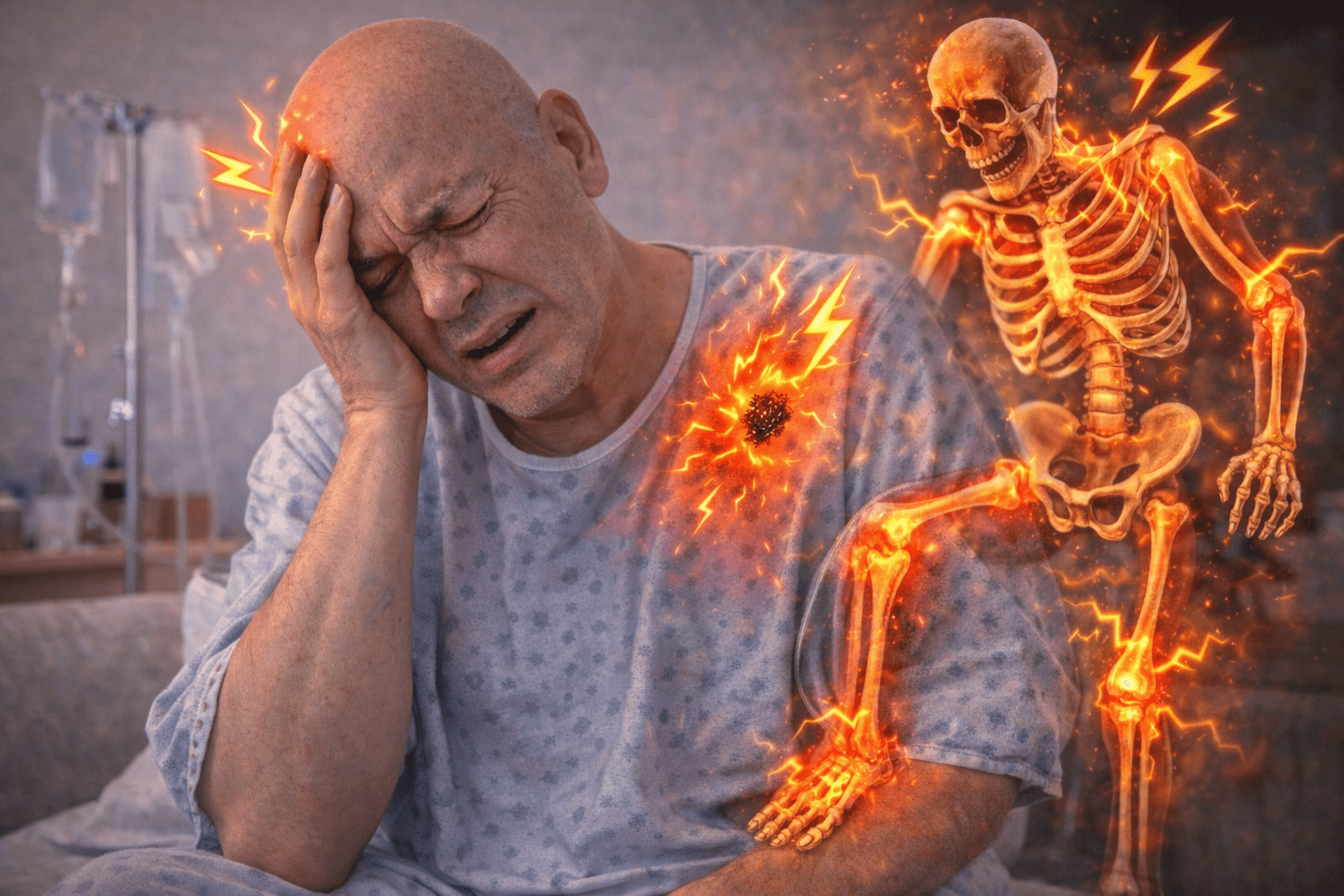
Metastatic cancer occurs when cancer spreads from its original location to other parts of the body. This can lead to different types of pain, including bone pain, nerve-related discomfort, inflammation, and fatigue.
Because symptoms can vary widely depending on where cancer spreads, pain management often requires a combination of medical treatment and supportive daily strategies.
While medical care is essential, some practical habits may help reduce discomfort and improve overall quality of life.
3 Strategies That May Help Manage Metastatic Cancer Pain
🧠 Track Pain Patterns
Metastatic cancer pain can have multiple causes, including inflammation, nerve involvement, or pressure on surrounding tissues.
- Record when pain occurs and how long it lasts
- Note the type of pain (sharp, burning, aching)
- Share detailed observations with your healthcare team
Clear descriptions help medical professionals choose appropriate treatment strategies.
🧘 Gentle Movement May Reduce Stiffness
Remaining completely inactive for long periods can increase muscle tension and discomfort.
- Practice gentle stretching or range-of-motion movements
- Take short, slow walks if comfortable
- Use breathing exercises that expand the chest and diaphragm
Low-impact movement may improve circulation and reduce stiffness.
😴 Prioritize Sleep and Rest
Poor sleep can increase pain sensitivity and worsen fatigue.
- Maintain a consistent sleep routine
- Create a dark, quiet sleeping environment
- Discuss pain management timing with your healthcare provider
Improved sleep quality may help reduce pain intensity and improve energy levels.
You Deserve Support
Living with metastatic cancer can be physically and emotionally challenging. Support from healthcare professionals, caregivers, and communities can help people navigate these challenges while maintaining dignity and comfort.
⚠️ Disclaimer
I am not a doctor. This content is for informational purposes only and should not replace professional medical advice.
Metastatic cancer and related pain require evaluation and treatment by qualified healthcare professionals. Always consult your healthcare provider regarding symptoms, treatment options, and pain management strategies.
If it Hurts we can help.
Join ItHurts — the Social Network for Pain.
A place where people living with pain can learn, listen, and share experiences with others who truly understand.
Visit ItHurts