

ItHurts Ouch Files: Buttock Pain Edition
Your Butt Is Not Betraying You — It’s Filing a Formal Complaint
Buttock pain can occur from muscle strain, nerve irritation, prolonged sitting, or pressure on the gluteal muscles. When these tissues become irritated, even simple activities like sitting or walking may become uncomfortable.
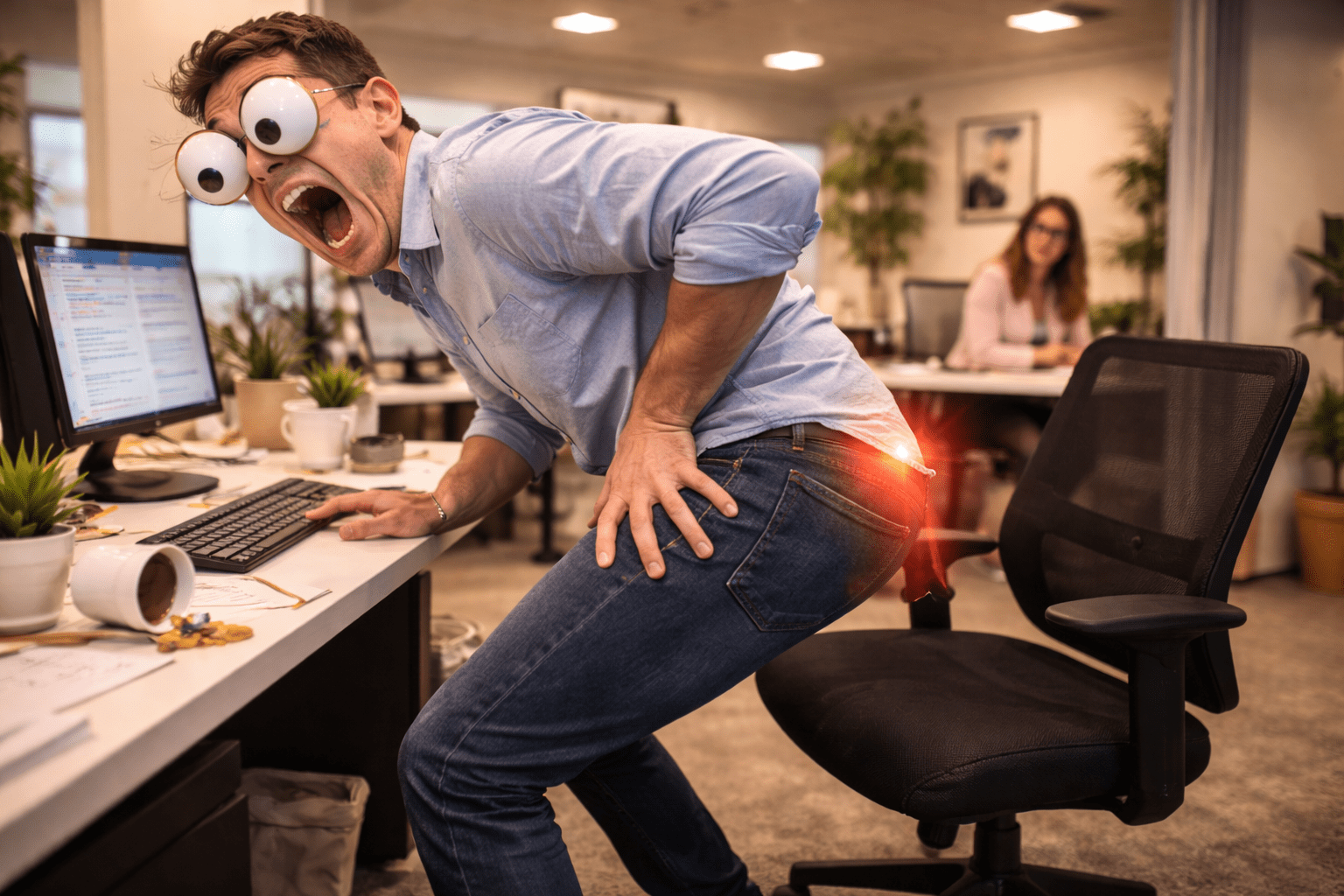
Buttock pain may develop gradually from long periods of sitting, muscle imbalance, or overuse during physical activity. It can also occur when surrounding muscles or nerves become irritated.
Small adjustments in posture, movement habits, and muscle conditioning can often help reduce discomfort and support recovery.
3 Practical Habits That May Help Reduce Buttock Pain
🪑 Take Breaks from Sitting
Standing, walking, or stretching every 30–45 minutes may reduce pressure on the gluteal muscles and surrounding nerves. Using a supportive cushion can also reduce compression when sitting for long periods.
🍑 Strengthen the Glute Muscles
Exercises such as glute bridges, gentle squats, and hip extensions may help improve stability in the hips and pelvis, reducing strain on surrounding tissues.
🧊🔥 Use Heat or Cold Therapy
Cold packs may help calm inflammation during sharp pain, while gentle heat can relax tight muscles and improve circulation when soreness is deeper and more persistent.
If pain becomes severe, persistent, or radiates down the leg, consult a healthcare professional for evaluation.
If it Hurts we can help.
If pain has taken over your sleep, your mood, or your search history, come find your people.
Join the ItHurts CommunityDisclaimer: Enjoy the "Ouch Files" for the laughs and the lessons, but treat us like a witty friend rather than a diagnostic tool. We aren't doctors, and this content is not medical advice. Persistent or worsening pain should always be evaluated by a qualified healthcare professional.
