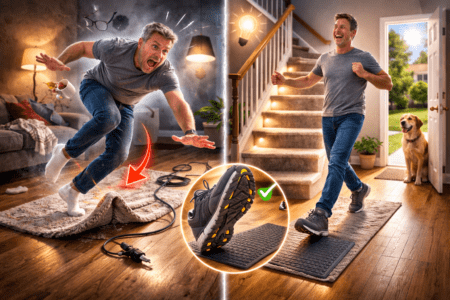
ItHurts Ouch Files: Fall Prevention Edition Fall Prevention: Because Gravity Is Aggressive and You Are Not a Cartoon Character Falls are a common cause of injury and pain, especially in everyday environments like the home. Simple adjustments to lighting, balance training, and footwear can greatly reduce fall risk and improve confidence while moving. Many falls occur during routine daily activities such as walking through poorly lit areas, stepping on loose objects, or losing balance while turning or standing. Preventing these situations often comes down to improving environmental safety and strengthening balance. Small changes can significantly reduce fall risk and help maintain mobility and independence. 3 Practical Fall Prevention Strategies 🏠 Reduce Tripping Hazards at Home Remove loose rugs or secure them with non-slip pads, improve lighting in hallways and stairways, and keep walking areas clear of cords, clutter, or objects that could cause trips. 🦶 Practice Balance Exercises Regularly Simple exercises such as standing on one leg, walking heel-to-toe, or rising from a chair without using your hands can strengthen stabilizing muscles and improve coordination. 👟 Wear Supportive Footwear Shoes with good grip and support help maintain stability and reduce the risk of slipping. Non-slip socks or supportive indoor footwear can also improve traction on smooth floors. The Honest Reality Fall prevention is about preparation rather than fear. Improving home safety, strengthening balance, and wearing appropriate footwear can help reduce injury risk and allow people to move more confidently in daily life. If it Hurts we can help. Join a community where people share experiences and practical ways to manage pain and stay active. Join the ItHurts Community Disclaimer: Enjoy the “Ouch Files” for the laughs and the lessons, but treat us like a supportive friend rather than a diagnostic tool. We aren’t doctors, and this content is not medical advice. Always consult a qualified healthcare professional for diagnosis and treatment of persistent symptoms.
ItHurts Ouch Files: Ergonomics Edition Your Desk Is Gaslighting You: Why Your Body Hurts and Your Chair Is the Villain Poor workstation ergonomics can place unnecessary strain on the neck, back, shoulders, and wrists. Small adjustments to chair height, screen position, and daily movement can significantly reduce tension-related pain during long work sessions. Many people experience discomfort after long hours at a desk because their workspace does not support natural body alignment. Sitting with poor posture or using poorly positioned screens and keyboards can increase pressure on muscles and joints over time. Improving workstation ergonomics can help reduce strain and make long work sessions more comfortable. 3 Practical Ergonomic Fixes 🪑 Adjust Your Chair for Proper Support Keep your feet flat on the floor and your knees at or slightly below hip level. Use lumbar support to maintain the natural curve of your lower back and reduce pressure on spinal discs. 🖥️ Position Your Screen at Eye Level The top of your monitor should align with your eye level and sit about an arm’s length away. This helps prevent forward head posture and reduces neck and shoulder strain. ⏱️ Take Regular Movement Breaks Stand, stretch, or walk for a short period every 30–45 minutes. Frequent micro-breaks help restore circulation and reduce stiffness caused by prolonged sitting. The Honest Reality Good ergonomics isn’t about expensive equipment—it’s about creating a workspace that respects how the human body moves and rests. Small adjustments can make a noticeable difference in daily comfort and long-term joint health. If it Hurts we can help. Connect with others who understand the experience of living with pain and share practical solutions. Join the ItHurts Community Disclaimer: Enjoy the “Ouch Files” for the laughs and the lessons, but treat us like a supportive friend rather than a diagnostic tool. We aren’t doctors, and this content is not medical advice. Always consult a qualified healthcare professional for diagnosis and treatment of persistent symptoms.
ItHurts Ouch Files: Digital Detox Edition Digital Detox: Because Your Phone Is Gaslighting Your Nervous System Constant screen exposure can affect posture, sleep quality, and stress levels. Practicing a digital detox helps reduce nervous system overload, improve sleep, and decrease tension-related pain in the neck, shoulders, and head. Modern devices keep the brain constantly stimulated through notifications, blue light exposure, and prolonged screen use. This stimulation can increase stress hormones, disrupt sleep patterns, and create tension in the neck, shoulders, and back. Taking intentional breaks from screens allows the nervous system to reset and helps the body relax. 3 Practical Digital Detox Strategies 📵 Reduce Non-Essential Notifications Turn off alerts from apps that are not necessary for daily communication. Limiting interruptions helps reduce stress responses and prevents constant muscle tension. 🧍♂️ Improve Screen Posture Position screens at eye level, keep shoulders relaxed, and avoid leaning forward for long periods. Good posture reduces strain on the neck and upper back. 🌙 Set a Screen Curfew Before Bed Avoid screens at least 60 minutes before sleep. Replacing late-night scrolling with relaxing activities helps the body produce melatonin and improves sleep quality. The Honest Reality Technology itself isn’t the problem—constant exposure is. Building small digital boundaries can significantly improve sleep, posture, and overall stress levels, which often reduces tension-related pain. If it Hurts we can help. Join a community where people share real experiences and practical strategies for living with pain. Join the ItHurts Community Disclaimer: Enjoy the “Ouch Files” for the laughs and the lessons, but treat us like a supportive friend rather than a diagnostic tool. We aren’t doctors, and this content is not medical advice. Always consult a qualified healthcare professional for diagnosis and treatment of persistent symptoms.
ItHurts Ouch Files: Knee Cartilage Injury Edition Your Knee Just Ghosted You: A Meniscus Tear Survival Guide for People Who Did Literally Nothing Wrong A meniscus tear occurs when the cartilage cushion inside the knee becomes damaged. This injury can cause pain, swelling, clicking sensations, and difficulty bending or straightening the knee comfortably. The meniscus acts as a shock absorber within the knee joint. It helps distribute weight, stabilize movement, and protect the cartilage surfaces of the knee. When it becomes torn due to twisting, sudden movement, or gradual wear, symptoms such as swelling, stiffness, locking, or clicking may occur. Many meniscus injuries improve with conservative treatment including rest, strengthening exercises, and activity modification. 3 Practical Tips to Support Meniscus Tear Recovery 🧊 Manage Swelling and Irritation Applying ice for 15–20 minutes several times daily may help reduce inflammation. Compression sleeves and elevating the leg can also help control swelling and discomfort. 🦵 Strengthen Supporting Muscles Exercises targeting the quadriceps, hamstrings, and glutes—such as straight leg raises, knee extensions, and glute bridges—may help stabilize the knee and reduce pressure on the injured cartilage. 🚶 Avoid Twisting or Pivoting Movements Sudden turning or twisting movements can worsen meniscus irritation. Moving the entire body instead of rotating the knee may help protect the joint during recovery. The Recovery Reality Some meniscus tears heal with rest and rehabilitation, while others may require medical evaluation or additional treatment. Gradual strengthening and careful activity progression can help improve stability and reduce ongoing discomfort. If it Hurts we can help. Join a supportive community where people share experiences, recovery strategies, and encouragement while managing pain and injury. Join the ItHurts Community Disclaimer: Enjoy the “Ouch Files” for the laughs and the lessons, but treat us like a supportive friend rather than a diagnostic tool. We aren’t doctors, and this content is not medical advice. Always consult a qualified healthcare professional for diagnosis and treatment of persistent symptoms.
ItHurts Ouch Files: Core Stabilization Edition Your Core Is a Lazy Intern: Why Your Back Hurts and Your Abs Are on Strike Core stabilization exercises help strengthen the deep muscles that support the spine and protect the body during everyday movement. Building stability in the core can reduce strain on the back, hips, and joints while improving balance and posture. Your core is more than just abdominal muscles. It includes deep stabilizing muscles around the spine, pelvis, and hips that help maintain posture and distribute forces during movement. When these muscles are inactive or poorly coordinated, other areas of the body may compensate, often leading to discomfort or strain. Core stabilization focuses on retraining these muscles so the spine remains supported during both exercise and daily activities. 3 Practical Core Stabilization Tips 🧠 Practice Core Bracing Instead of pulling your stomach inward, gently tighten your abdominal muscles as if preparing for a light cough while continuing to breathe normally. This activates the deep stabilizing muscles that help protect the spine. 🧩 Try the Dead Bug Exercise Lie on your back with arms raised and knees bent. Brace your core, then slowly lower the opposite arm and leg while keeping your lower back gently supported against the floor. Alternate sides slowly and with control. 🏃 Use Core Stability During Daily Movements Practice engaging your core before lifting objects, standing up, or twisting. Training these muscles during everyday activities helps build stability where it matters most. The Honest Reality Core stabilization exercises can improve posture, support the spine, and reduce unnecessary strain on surrounding muscles. Consistent practice combined with proper movement habits can make daily activities more comfortable and reduce the risk of recurring pain. If it Hurts we can help. Join a community where people share real experiences and practical ways to manage pain. Join the ItHurts Community Disclaimer: Enjoy the “Ouch Files” for the laughs and the lessons, but treat us like a supportive friend rather than a diagnostic tool. We aren’t doctors, and this content is not medical advice. Always consult a qualified healthcare professional for diagnosis and treatment of persistent symptoms.
ItHurts Ouch Files: Contrast Therapy Edition Ice, Fire, Repeat: Why Your Body Needs a Temperature Identity Crisis Contrast therapy alternates between heat and cold to stimulate circulation, reduce inflammation, and help the body recover from muscle tension and joint discomfort. When used properly, this method can support faster recovery and improve mobility. Contrast therapy works by rapidly switching between hot and cold temperatures. Heat helps relax tight muscles and increase blood flow, while cold reduces swelling and slows pain signals. Alternating between the two acts like a circulation pump that encourages fresh oxygen and nutrients to reach irritated tissues. Used correctly, this method can help reduce stiffness, calm inflammation, and support the body’s natural recovery process. 3 Practical Contrast Therapy Tips 🚿 Use the Contrast Shower Method Start with warm water for 2–3 minutes to relax muscles, then switch to cold water for 30–60 seconds. Repeat this cycle several times and finish with cold water. This temperature change encourages circulation and may help reduce muscle tension. 🔥❄️ Apply Heat and Cold to Specific Areas For joints or muscles that feel stiff or inflamed, apply a heating pad for about 10 minutes followed by a wrapped ice pack for 3–5 minutes. Repeat the cycle two to three times to encourage circulation and reduce swelling. ⏱️ Keep Sessions Short and Controlled Contrast therapy works best when used in short cycles rather than long exposures. This helps stimulate circulation without irritating sensitive tissues. The Honest Reality Contrast therapy can support recovery and reduce stiffness, but it works best when combined with proper rest, gentle movement, and professional medical advice when needed. Consistency and moderation are key. If it Hurts we can help. Connect with a community that understands pain and shares practical ways to manage it. Join the ItHurts Community Disclaimer: Enjoy the “Ouch Files” for the laughs and the lessons, but treat us like a supportive friend rather than a diagnostic tool. We aren’t doctors, and this content is not medical advice. Always consult a qualified healthcare professional for diagnosis and treatment of persistent symptoms.
Afghanistan
Albania
Algeria
Andorra
Angola
Argentina
Armenia
Australia
Austria
Azerbaijan
Bahrain
Bangladesh
Barbados
Belarus
Belgium
Belize
Benin
Bhutan
Bolivia
Bosnia and Herzegovina
Botswana
Brazil
Brunei
Bulgaria
Burkina Faso
Burundi
Cambodia
Cameroon
Canada
Cape Verde
Central African Republic
Chad
Chile
China
Colombia
Comoros
Congo
Costa Rica
Croatia
Cuba
Cyprus
Czech Republic
Denmark
Djibouti
Dominican Republic
Ecuador
Egypt
El Salvador
Estonia
Ethiopia
Finland
France
Gabon
Gambia
Georgia
Germany
Ghana
Greece
Guatemala
Guinea
Guyana
Haiti
Honduras
Hungary
Iceland
India
Indonesia
Iran
Iraq
Ireland
Israel
Italy
Jamaica
Japan
Jordan
Kazakhstan
Kenya
Kuwait
Kyrgyzstan
Laos
Latvia
Lebanon
Lesotho
Liberia
Libya
Lithuania
Luxembourg
Madagascar
Malawi
Malaysia
Maldives
Mali
Malta
Mauritania
Mauritius
Mexico
Moldova
Mongolia
Montenegro
Morocco
Mozambique
Myanmar
Namibia
Nepal
Netherlands
New Zealand
Nicaragua
Niger
Nigeria
Norway
Oman
Pakistan
Panama
Paraguay
Peru
Philippines
Poland
Portugal
Qatar
Romania
Russia
Rwanda
Saudi Arabia
Senegal
Serbia
Singapore
Slovakia
Slovenia
South Africa
South Korea
Spain
Sri Lanka
Sudan
Sweden
Switzerland
Syria
Taiwan
Tajikistan
Tanzania
Thailand
Turkey
Turkmenistan
Uganda
Ukraine
United Arab Emirates
United Kingdom
United States
Uruguay
Uzbekistan
Venezuela
Vietnam
Yemen
Zambia
Zimbabwe