

Syphilis: The STD That Shows Up Late, Causes Drama, and Still Needs You to Take It Seriously
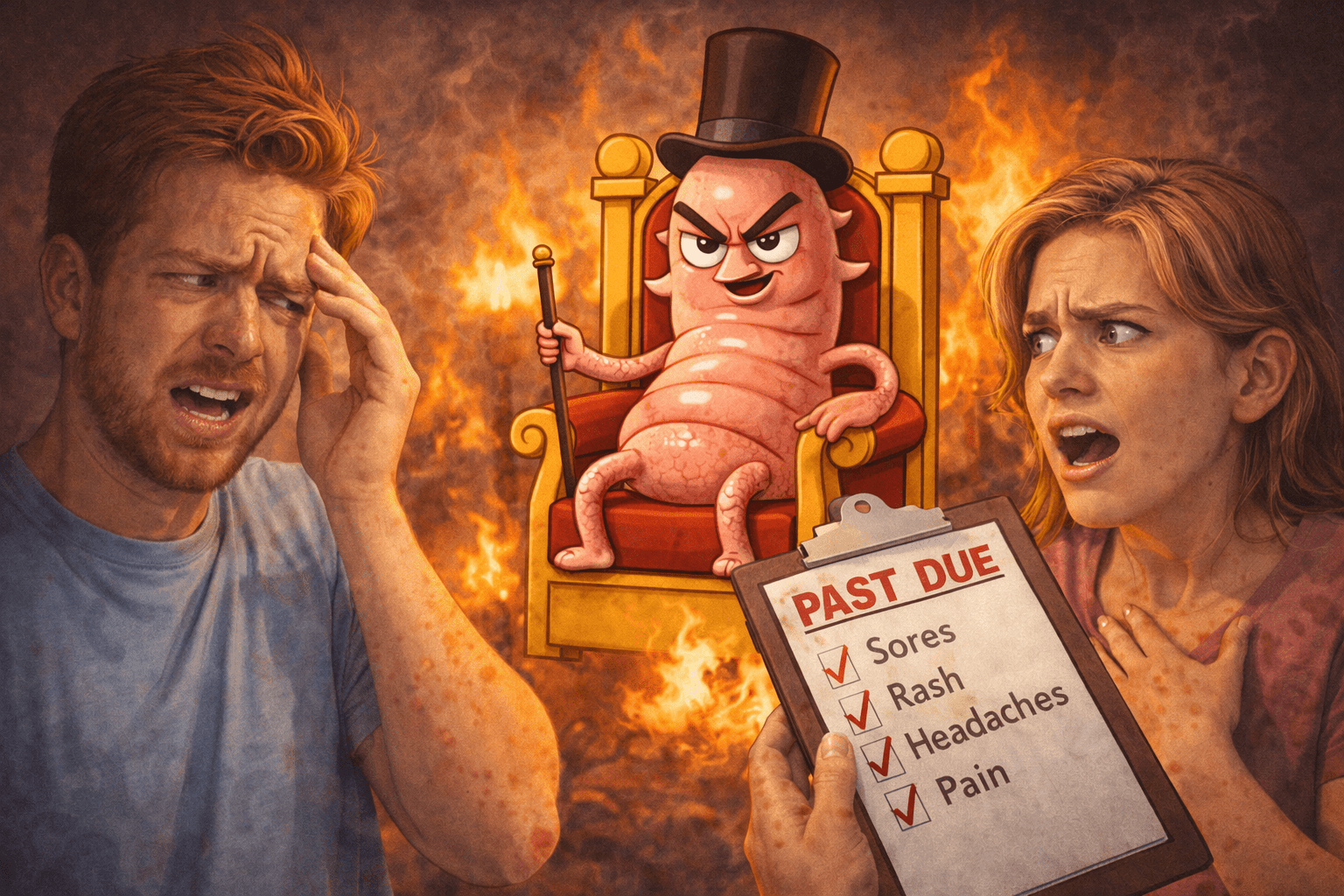
Syphilis is a sexually transmitted bacterial infection that can develop in stages. Early symptoms may include sores or rashes, but the infection can progress to affect nerves, joints, and other organs if left untreated. Because symptoms can disappear temporarily, some people may not realize they still have the infection.
Early testing and proper treatment can prevent complications and significantly improve recovery outcomes.
3 Practical Tips for Managing Syphilis Symptoms
The Honest Reality
Syphilis can be serious if untreated, but it is highly treatable when identified early. Regular testing, proper medical care, and supportive recovery habits can help prevent complications and restore health.
If it Hurts we can help.
If pain, symptoms, or health concerns have taken over your search history, come find your people.
Join the ItHurts Community