
ItHurts Ouch Files: Callus Edition
Your Callus Is a Tiny Leather Couch Your Body Didn’t Ask For
Calluses form when repeated pressure or friction causes the skin to thicken as a protective response.
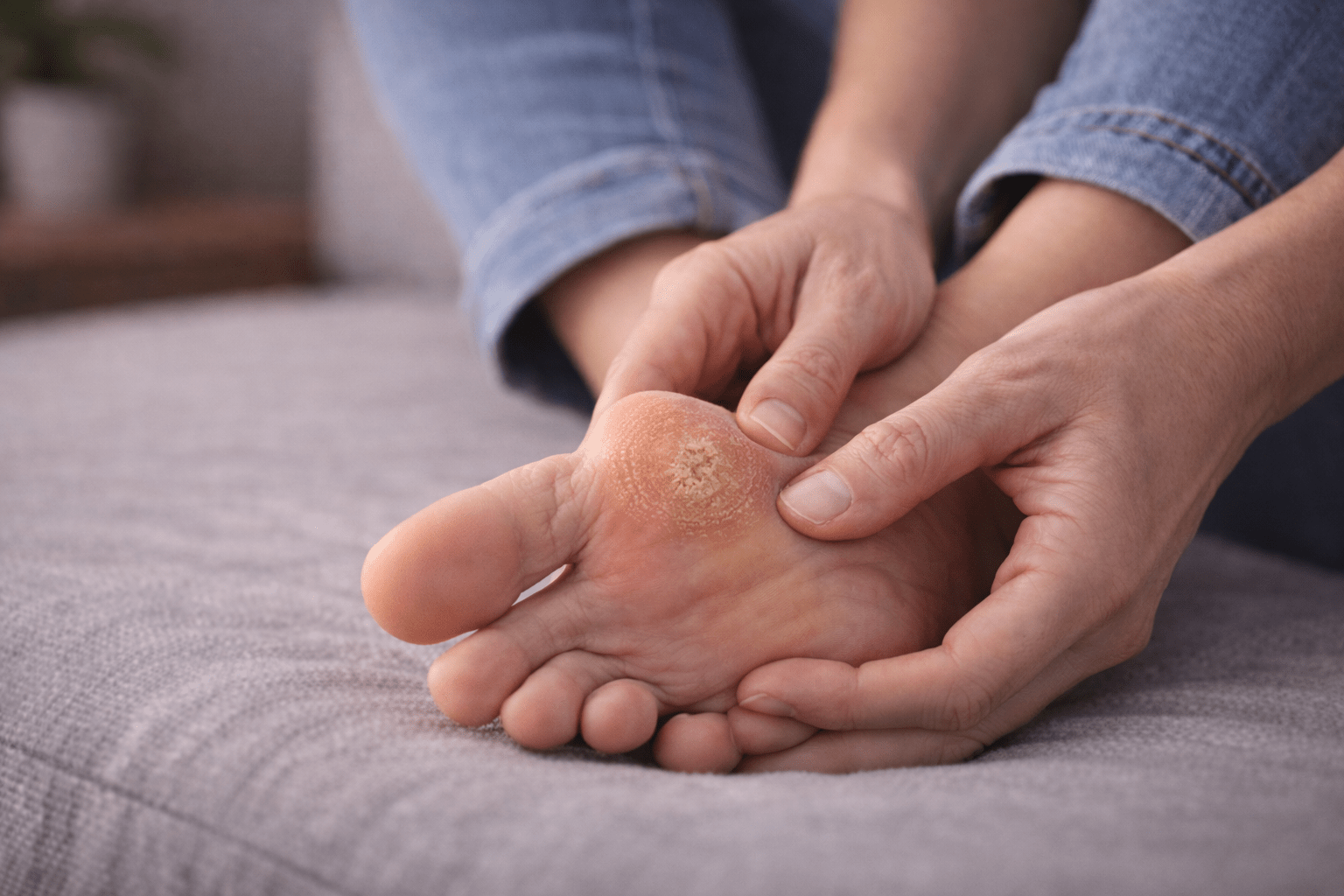
Calluses develop when the skin repeatedly experiences friction or pressure. In response, the body thickens the outer skin layer to protect underlying tissue.
Although this protection can help prevent injury, thick calluses can become uncomfortable, cracked, or painful when pressure continues.
3 Practical Tips That May Help Reduce Callus Pain
🧽 Soften the Skin Before Removing Thick Areas
Soaking the area in warm water for 10–15 minutes can soften the skin and make gentle filing with a pumice stone or foot file more effective.
🧴 Moisturize to Keep Skin Flexible
Thick creams containing urea, lactic acid, or salicylic acid may help soften hardened skin and reduce cracking. Applying moisturizer at night and covering with socks or gloves can improve hydration.
👟 Reduce Friction and Pressure
Wearing properly fitted shoes, using cushioned insoles, or protecting hands during repetitive tasks can help reduce the friction that causes calluses to form.
Reducing pressure and maintaining healthy skin hydration can significantly improve comfort and prevent calluses from returning.
If it Hurts we can help.
If pain has taken over your sleep, your mood, or your search history, come find your people.
Join the ItHurts Community
Disclaimer: Enjoy the "Ouch Files" for the laughs and the lessons, but treat us like a witty friend rather than a diagnostic tool. We aren't doctors, and this content is not medical advice. If a callus becomes extremely painful, cracked, infected, or does not improve, consult a qualified healthcare professional.