
ItHurts Ouch Files: Blue Light Hygiene Edition
Your Phone Is Gaslighting Your Nervous System: A Blue Light Horror Story
Blue light from phones, tablets, and computers can affect sleep patterns, eye strain, and nervous system balance. Reducing nighttime screen exposure can help improve sleep quality and support pain management.
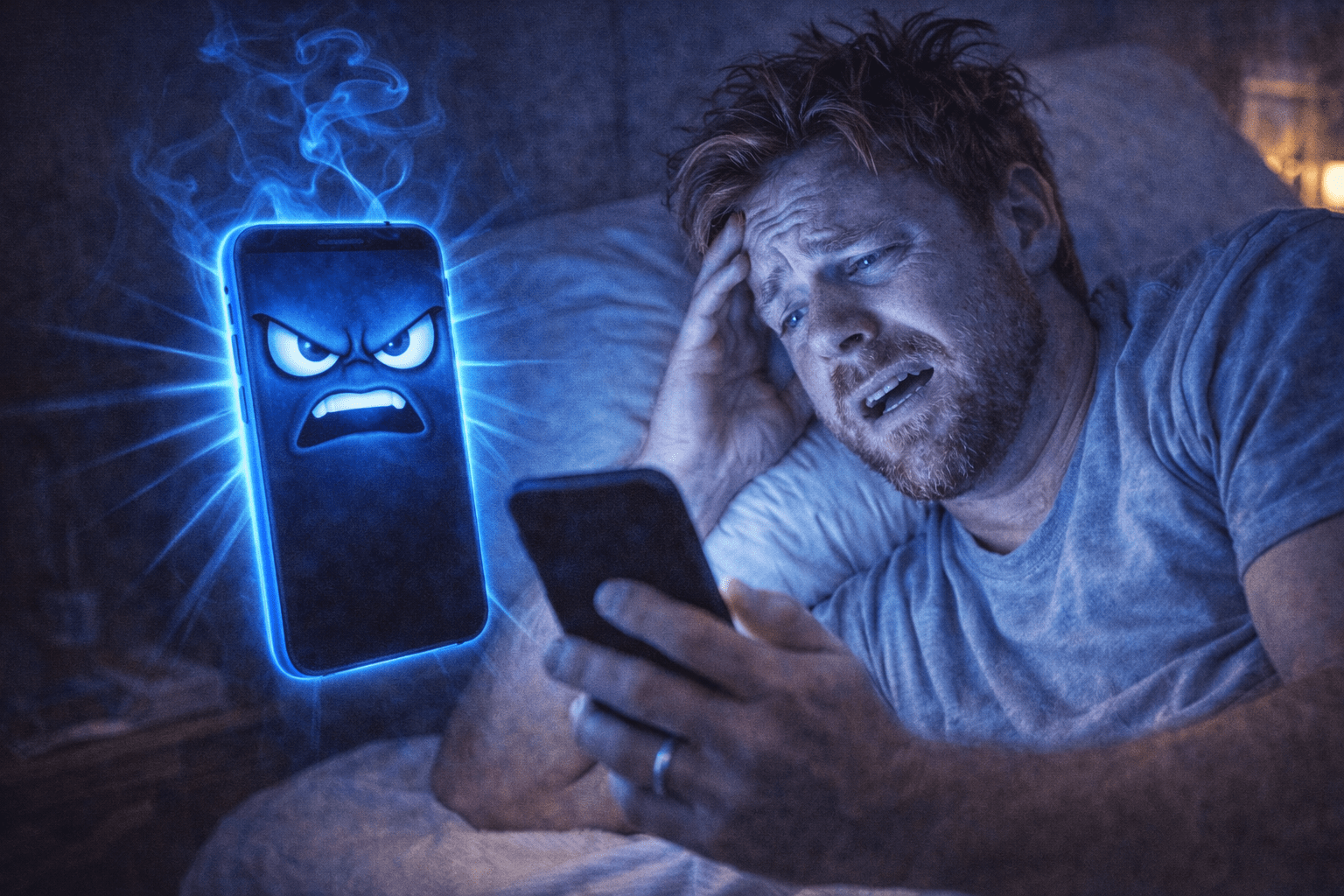
Blue light is emitted by digital screens such as smartphones, tablets, computers, and televisions. During daytime hours, it can help regulate alertness. However, excessive exposure at night may interfere with melatonin production and disrupt sleep cycles.
Poor sleep and increased nervous system stimulation can contribute to headaches, eye strain, tension, and increased pain sensitivity.
3 Practical Tips for Reducing Blue Light Exposure
🟦 Use Night Mode or Blue Light Filters
Most devices include night mode or blue light filtering settings that shift the display toward warmer colors after sunset. Enabling this feature can help reduce nighttime eye strain and sleep disruption.
🤓 Consider Blue Light Filtering Glasses
Blue light filtering glasses may help reduce digital eye strain during extended screen use. They can be particularly helpful for people who work on computers or use screens late in the evening.
🌙 Limit Screen Time Before Bed
Reducing screen exposure 60–90 minutes before sleep can help support melatonin production and improve sleep quality. Replacing screen time with relaxing activities such as reading, listening to music, or gentle stretching may help the body wind down.
The Honest Reality
Technology is part of everyday life, but managing screen habits can support better sleep and reduce nervous system stress. Small changes in nighttime screen use can improve rest, reduce eye strain, and support overall well-being.
If it Hurts we can help.
If pain, stress, or sleep issues have taken over your search history, come find your people.
Join the ItHurts Community
Disclaimer: Enjoy the "Ouch Files" for the laughs and the lessons, but treat us like a supportive friend rather than a diagnostic tool. We aren't doctors, and this content is not medical advice. Always consult a qualified healthcare professional for diagnosis and treatment of persistent symptoms.