

Your Uterus Is a Tiny Drama Queen: A Survival Guide to Dysmenorrhea
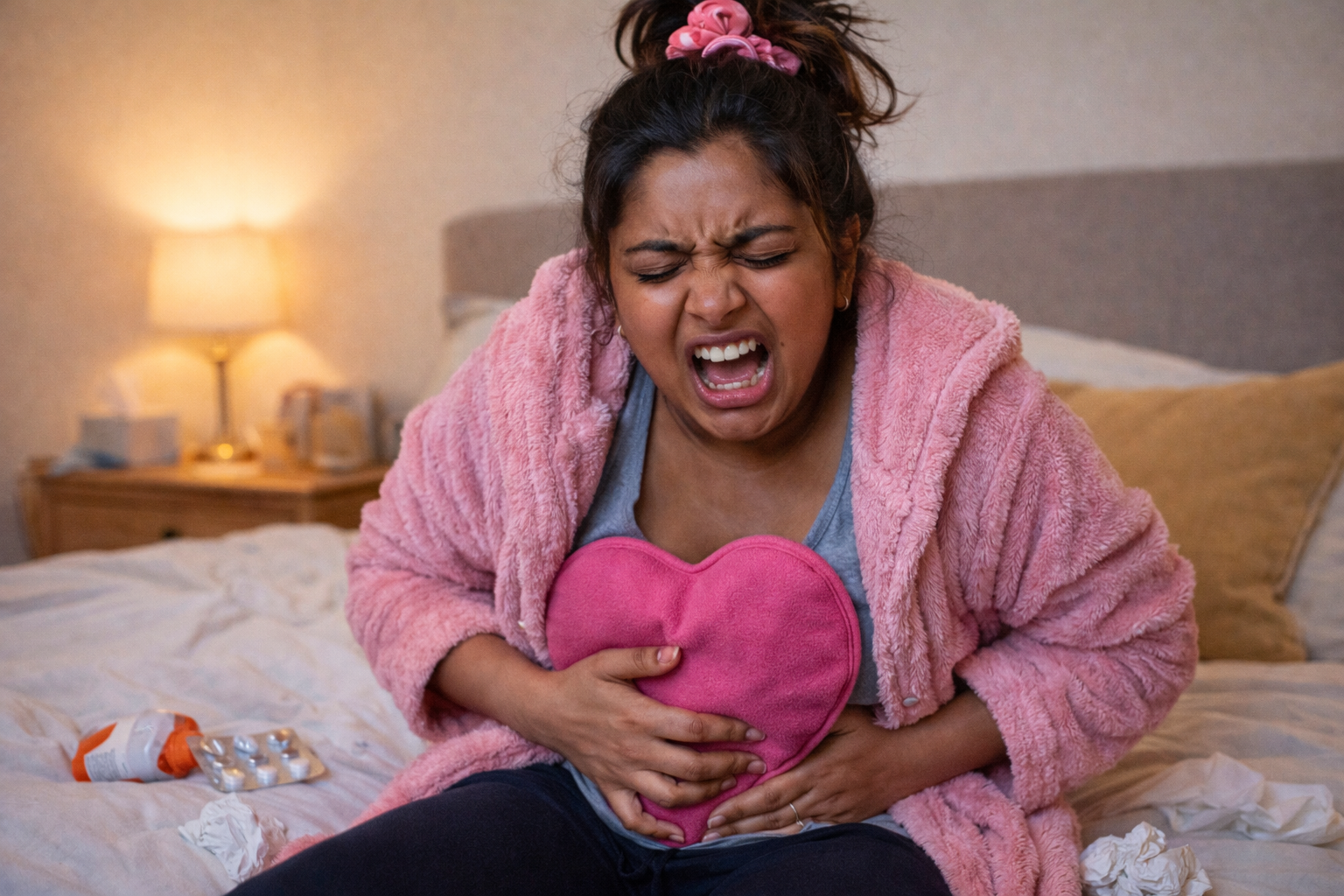
If cramps were a person, they’d be the coworker who ruins your day and pretends it’s your fault. Dysmenorrhea isn’t mild discomfort—it’s a full-body experience with pain, fatigue, and mood swings all showing up uninvited.
This kind of pain can feel overwhelming, but it doesn’t mean you’re weak or dramatic. It means your body is reacting—and you can respond with the right strategies.
You don’t need to “just push through.” You need better tools.
3 Practical Ways to Reduce Period Pain
Apply a heating pad or hot water bottle to your lower abdomen or back for 15–30 minutes. Heat helps relax muscles and reduce the intensity of cramps.
Light movement like walking, stretching, or gentle yoga can improve circulation and release natural pain-relieving chemicals in the body.
Focus on anti-inflammatory foods, magnesium-rich options, and hydration. Reducing processed foods and excess caffeine can also help manage symptoms.
The Recovery Reality
Severe period pain that disrupts your life is not something you should ignore. It can be a sign that your body needs more support or medical attention.
You’re not overreacting. You’re responding to real pain—and that deserves to be taken seriously.
If it Hurts we can help.
Join a supportive community where people share experiences, solutions, and encouragement—without judgment or dismissal.
Join the ItHurts Community