


"I thought something was seriously wrong"
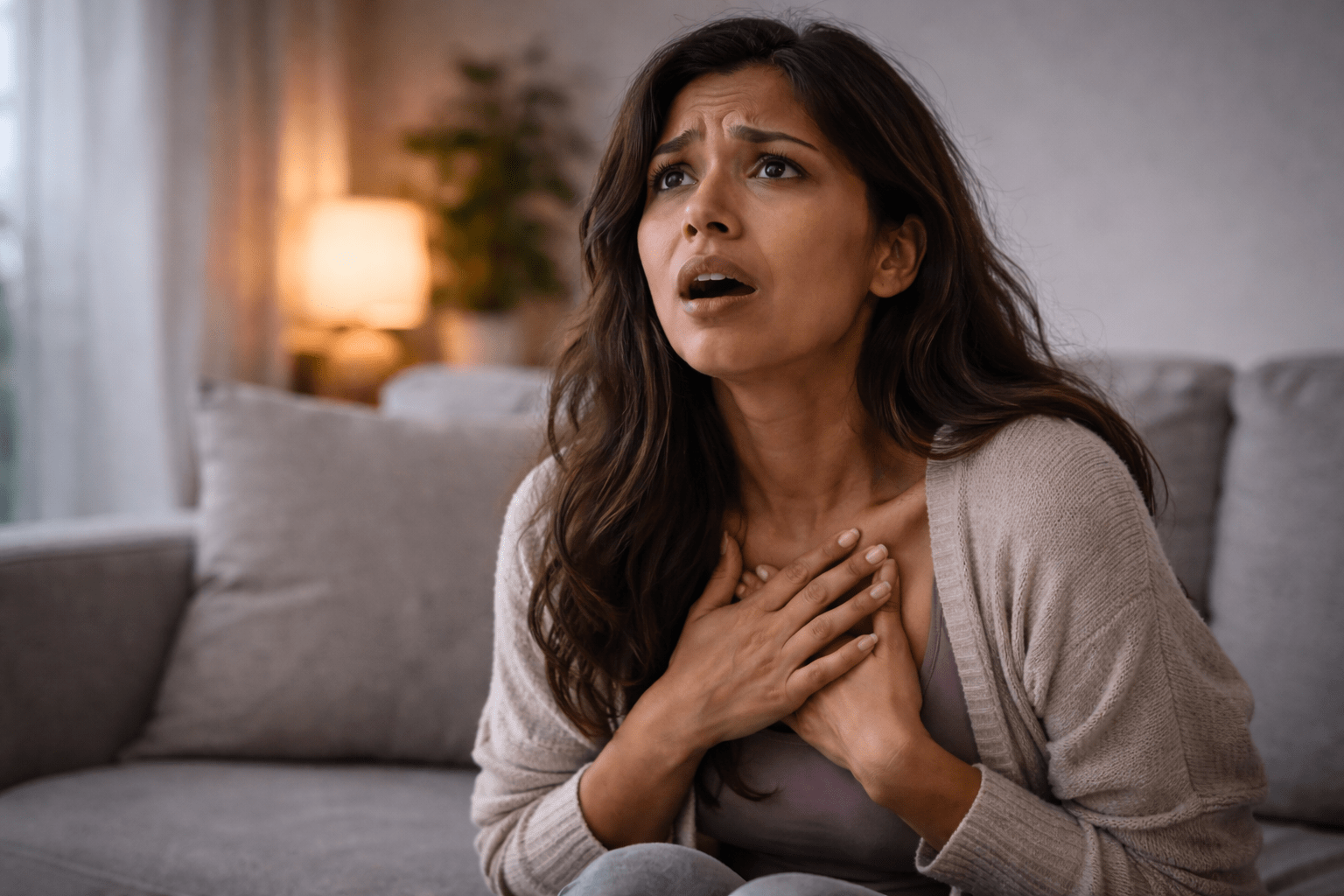
That is how many people describe their first panic attack. The heart pounds, breathing feels tight, the hands tingle, and a wave of terror arrives out of nowhere. It is common to believe you are having a heart attack, losing control, or about to faint, and plenty of people head to an emergency room the first time it happens.
Panic attacks are frightening, but they are also common and well understood. Knowing what is happening in your body can take away some of the fear, and there are effective ways to cope and to get support.
What a panic attack is
A panic attack is a sudden surge of intense fear or discomfort that usually peaks within about ten minutes and then gradually eases. It happens when the body's alarm system, the fight-or-flight response, fires when there is no real danger. Your body releases stress hormones such as adrenaline, preparing you to run or fight, even if you are sitting at your desk or lying in bed.
Panic attacks can happen once or twice in a lifetime, often during stressful periods. When they keep happening and people start to worry constantly about the next one, or change their lives to avoid them, a doctor may talk about panic disorder.
What it can feel like
- Pounding or racing heart
- Shortness of breath or a feeling of choking
- Chest tightness or discomfort
- Sweating, trembling or shaking
- Dizziness, lightheadedness or feeling faint
- Nausea or stomach churning
- Tingling or numbness in the hands, feet or face
- Hot flushes or chills
- Feeling detached from yourself or your surroundings
- Fear of losing control, going crazy, or dying
Afterward, many people feel drained, shaky, or tearful for some time.
Panic attack or something else?
Some panic symptoms overlap with heart and lung problems. You should never assume chest pain is "just panic," especially the first time or if anything feels different.
Call your local emergency number if you have:
- Chest pain or pressure, especially spreading to the arm, jaw, neck or back
- Shortness of breath that does not ease, or blue lips
- Fainting, or symptoms that last much longer than your usual attacks
- Weakness on one side, slurred speech, or a drooping face
- Symptoms after starting a new medicine or taking a substance
Once a doctor has checked you and ruled out other causes, it becomes easier to recognize your own panic pattern. Conditions such as thyroid problems, heart rhythm issues, and the effects of caffeine or other substances can sometimes mimic panic, which is another reason to get checked.
Why panic attacks happen
There is often no single cause. Factors linked to panic attacks include:
- Long periods of stress, or major life changes
- A family history of anxiety or panic
- Past trauma
- Other anxiety conditions or depression
- Caffeine, nicotine, alcohol or stimulant use, or withdrawal
- Lack of sleep
- Paying very close attention to body sensations and interpreting them as dangerous
That last point matters. A normal flutter of the heart can set off the thought "something is wrong," which raises anxiety, which makes the heart race more. This loop is a big part of why panic escalates so quickly, and also why understanding it helps.
Riding out an attack
Many people find these steps help them get through:
- Name it. If you know this is a panic attack, remind yourself: "This is panic. It is uncomfortable, but it will pass."
- Slow your breath. Breathe in gently through your nose for about four counts and out slowly for about six. Avoid big gulps of air, which can make tingling and dizziness worse.
- Ground yourself. Notice your feet on the floor, describe five things you can see, or hold something cold.
- Let the wave come and go. Fighting the sensations often makes them stronger. Some people find it helps to imagine the feelings rising and falling like a wave.
- Stay where you are if it is safe. Leaving every time can teach your brain that the place was dangerous, which can make avoidance grow.
Between attacks
- Practice slow breathing when you are calm, so it comes more easily when you need it.
- Notice and reduce caffeine, alcohol and nicotine.
- Keep regular sleep and meal times.
- Move your body most days; exercise also helps you get used to a raised heart rate in a safe setting.
- Gently challenge avoidance by returning to places or activities you have started to dodge, step by step.
Getting help
Panic attacks respond well to support, and you do not need to wait until they take over your life. Talk to your doctor, who can check your physical health and discuss options. Cognitive behavioral therapy (CBT) is widely used for panic and teaches practical skills for breaking the fear cycle. Some people also discuss medication with their doctor. It is common to feel better with the right combination of help.
If panic comes with thoughts of suicide or self-harm, call or text 988 in the US to reach the 988 Suicide & Crisis Lifeline, any time of day. Outside the US, call your local emergency number.
If you are with someone having a panic attack
Stay calm and stay with them. Speak in short, simple sentences. Encourage slow breathing by breathing slowly yourself. Avoid saying "just calm down." Ask what helps them, and if there is any doubt about chest pain or breathing, call for medical help.
The essentials
Panic attacks are intense bursts of fear with very real physical symptoms. They peak and pass, and while they feel dangerous, they are not usually harmful in themselves. Always get new or unusual chest pain checked. Breathing, grounding, steady routines and therapy help many people feel more in control.
If physical symptoms are part of your picture, our free Pain Check-Up can help you track them. You can also find understanding in the emotional and mental health support groups.
Others Have Been Here Too
Our panic attack group is a supportive space to share what helps and how recovery is going.
Join the Panic Attack GroupReviewed by the ItHurts editorial team · Last reviewed 18 October 2026 · General information, not medical advice. If you are worried about your symptoms, talk to a doctor.
Some links are affiliate links. If you buy through them, ItHurts.com may earn a small commission at no extra cost to you.