

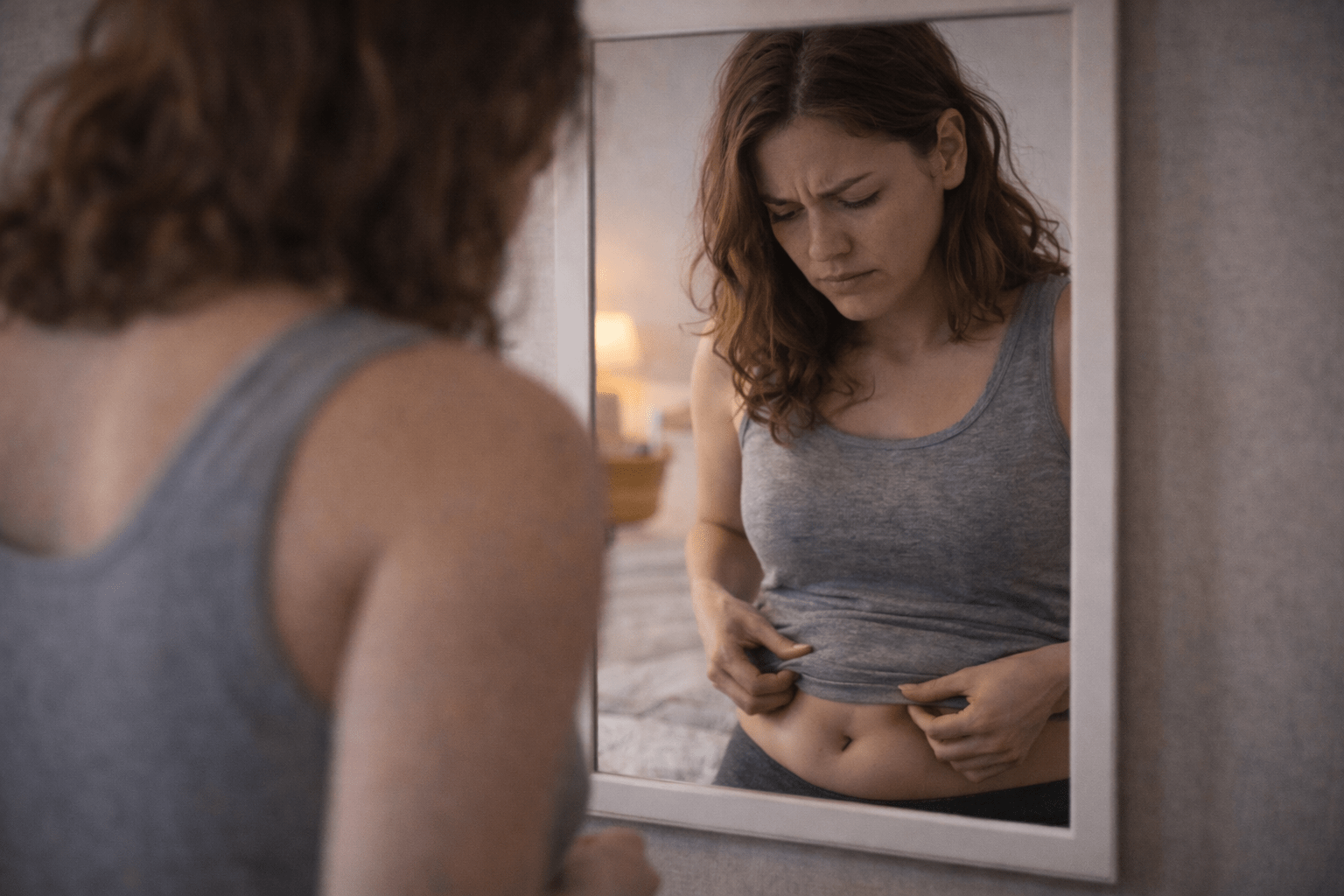
When Your Reflection Feels Untrustworthy
Body dysmorphic disorder (BDD) can make your reflection feel distorted, as if your brain is magnifying perceived flaws that others may not notice.
This is not about vanity. It is a perceptual and psychological condition that can create intense distress, self-doubt, and emotional exhaustion.
Quick note: This is not medical advice. Always consult a qualified mental health professional for personalized support.
What’s Happening in the Brain 🧠
In body dysmorphic disorder, the brain becomes overly focused on specific physical features, often exaggerating minor or imagined flaws.
- Distorted visual processing and perception
- Heightened emotional response to appearance
- Repetitive thought patterns and fixation
- Interaction with anxiety and stress systems
External influences can also contribute:
- Social comparison and filtered media exposure
- Past criticism or bullying experiences
- Cultural appearance standards
- Genetic and neurobiological factors
Why It Feels So Intense
There is often a disconnect between what you logically understand and what you emotionally experience. This gap can create ongoing tension, anxiety, and distress.
These reactions are not signs of weakness — they reflect how strongly perception and emotion are linked in the brain.
When to Seek Support ⚠️
- Persistent distress about appearance
- Frequent mirror checking or avoidance
- Social withdrawal due to self-image concerns
- Repetitive thoughts that are hard to control
- Strong emotional reactions to photos or reflections
- Considering harmful or extreme ways to change appearance
Supportive Strategies 🌱
- Limit comparison-driven media exposure
- Reduce repetitive mirror-checking habits
- Choose comfort-focused clothing
- Label intrusive thoughts (“this is BDD speaking”)
- Shift focus to grounding physical sensations
- Build a supportive environment
Moving Toward Self-Compassion
Recovery is not about eliminating thoughts overnight — it is about gradually building a more balanced and supportive relationship with your mind and body.
Outlook 💛
Body dysmorphic disorder does not define your identity, your value, or your future. With the right support and consistent care, improvement is possible.
Join the ItHurts Community 💬
Connect with people navigating self-image challenges and building self-compassion.
Join the CommunityThis content is for education and support only and does not replace professional mental health care.