
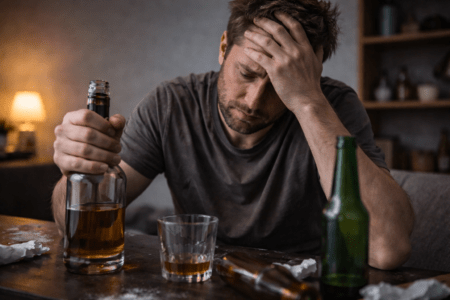
Alcohol Addiction: When Coping Quietly Turns Into Dependence 🍷 Understanding alcohol addiction with clarity, compassion, and the reminder that recovery is possible. This Is Not About Weakness Alcohol addiction is not a failure of discipline or character. It is a condition where something that once felt like relief slowly becomes something your body begins to depend on. What may begin as a way to unwind can gradually turn into a cycle of reliance, fatigue, and emotional strain. That shift is not a personal flaw — it is a biological and psychological response. Quick note: This is not medical advice. Always speak with a qualified healthcare professional about your individual situation. What’s Happening Inside Your Brain? 🧠 Alcohol changes how the brain regulates stress, mood, and reward. Over time, the brain reduces its natural calming mechanisms and begins to rely on alcohol to feel balanced. This creates a loop where stopping feels difficult — not because you lack willpower, but because your system has adapted to it. Chronic stress or emotional overload Trauma or major life changes Genetic predisposition Mental health conditions Using alcohol to cope with anxiety or pain “Addiction is not about weakness — it’s about a system trying to cope for too long without support.” Why It Feels So Heavy Alcohol addiction affects more than habits. It impacts sleep, mood, digestion, focus, and emotional balance. The guilt, shame, and exhaustion that often follow are real — but they are not signs of failure. Wanting to stop while still struggling is not contradiction. It is part of how addiction works. When to Seek Immediate Help ⚠️ Shaking, sweating, or tremors when not drinking Hallucinations or confusion Seizures or severe withdrawal symptoms Chest pain or breathing difficulty Severe anxiety or panic Thoughts of self-harm or hopelessness Supportive Steps That Can Help Recovery begins with small, manageable changes — not perfection: Stay hydrated and maintain regular meals Create distance from triggers where possible Use grounding techniques during cravings Build simple daily routines Reach out to at least one supportive person Practice self-compassion instead of self-criticism You Are Still Worthy of Change 🌱 Alcohol addiction does not erase your value, your future, or your ability to heal. Progress is rarely linear — and even small steps forward matter. Join the ItHurts Community 💬 Connect with people who understand recovery, setbacks, and the strength it takes to keep going. Join the Community Medical Disclaimer: This content is for educational and support purposes only and does not replace professional medical or mental health care.
 Written by Karrie