
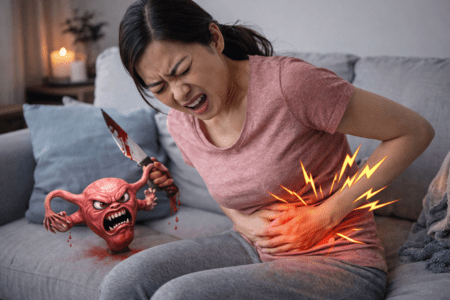
ItHurts Ouch Files: Adenomyosis Edition Adenomyosis: When Your Uterus Chooses Violence and Calls It a Lifestyle Adenomyosis is a condition where the inner lining of the uterus grows into the muscular wall, leading to heavy periods, pelvic pain, bloating, and fatigue. Symptoms can vary in intensity but often interfere with daily life and overall well-being. Let’s get something straight: adenomyosis is not “just bad cramps.” That’s like calling a hurricane a light breeze with attitude. If your uterus feels like it’s staging a monthly rebellion—with pain, bloating, fatigue, and a deep personal vendetta against your schedule—you’re not dramatic. You’re dealing with a real condition that demands real attention. Adenomyosis happens when uterine tissue grows where it shouldn’t, causing inflammation and pressure that can make everyday life feel overwhelming. But while it’s stubborn, it’s not unbeatable. 3 Practical Ways to Calm the Chaos 🩸 Treat Inflammation Like the Enemy Focus on anti-inflammatory foods like omega-3s, leafy greens, and berries. Reduce processed foods and excessive sugar, and consider proper timing of pain relief strategies with professional guidance. 🔥 Heat Is a Non-Negotiable Tool Use consistent heat therapy on the lower abdomen and back. Heat improves circulation, relaxes muscles, and helps reduce the intensity of cramping and discomfort. 🧠 Calm Your Nervous System Practice paced breathing, gentle relaxation techniques, and track symptoms to understand patterns. A calmer nervous system can reduce how intensely pain is experienced. The Recovery Reality You are not weak for needing rest. You are not lazy for canceling plans. And you are not imagining this pain. Adenomyosis is real, disruptive, and deserves support. Managing it is about strategy, consistency, and understanding your body—not pushing through suffering. If it Hurts we can help. Join a supportive community where people share experiences, recovery strategies, and encouragement while navigating pain and chronic conditions. Join the ItHurts Community Disclaimer: Enjoy the “Ouch Files” for the laughs and the lessons, but treat us like a supportive friend rather than a diagnostic tool. We aren’t doctors, and this content is not medical advice. Always consult a qualified healthcare professional for diagnosis and treatment of persistent symptoms.
 Written by Karrie