
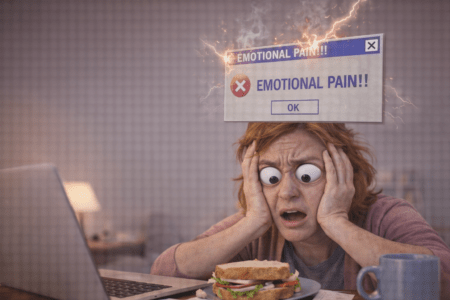
ItHurts Ouch Files: Emotional Pain Edition Your Brain Is Running Windows 95 Emotional pain can freeze the nervous system in survival mode, causing stress, rumination, and exhaustion. Emotional pain is often invisible, yet it can affect the body and mind as strongly as physical pain. Loss, betrayal, burnout, rejection, or grief can keep the nervous system in a constant state of alert. When emotional stress repeats over time, the brain may replay painful memories and create cycles of rumination that increase distress. 3 Practical Ways to Reduce Emotional Pain 🧠 Name the Emotion Clearly Identifying and labeling emotions such as grief, anger, or exhaustion can help the brain process them more calmly and reduce emotional intensity. 🔄 Interrupt the Rumination Loop Setting a short period to write or reflect on stressful thoughts and then shifting to movement or breathing exercises can help limit repetitive thinking. ❤️ Restore Nervous System Safety Sleep, regular meals, gentle movement, and supportive social interaction help signal safety to the body and reduce emotional overload. Emotional pain does not mean someone is broken—it often signals that something meaningful happened and deserves attention and care. If it Hurts we can help. If pain has taken over your sleep, your mood, or your search history, come find your people. Join the ItHurts Community Disclaimer: Enjoy the “Ouch Files” for the laughs and the lessons, but treat us like a helpful friend rather than a diagnostic tool. We aren’t doctors, and this content is not medical advice. If emotional pain becomes overwhelming or interferes with daily life, consult a qualified mental health professional for support.
 Written by Karrie