United States
Afghanistan
Albania
Algeria
Andorra
Angola
Argentina
Armenia
Australia
Austria
Azerbaijan
Bahrain
Bangladesh
Barbados
Belarus
Belgium
Belize
Benin
Bhutan
Bolivia
Bosnia and Herzegovina
Botswana
Brazil
Brunei
Bulgaria
Burkina Faso
Burundi
Cambodia
Cameroon
Canada
Cape Verde
Central African Republic
Chad
Chile
China
Colombia
Comoros
Congo
Costa Rica
Croatia
Cuba
Cyprus
Czech Republic
Denmark
Djibouti
Dominican Republic
Ecuador
Egypt
El Salvador
Estonia
Ethiopia
Finland
France
Gabon
Gambia
Georgia
Germany
Ghana
Greece
Guatemala
Guinea
Guyana
Haiti
Honduras
Hungary
Iceland
India
Indonesia
Iran
Iraq
Ireland
Israel
Italy
Jamaica
Japan
Jordan
Kazakhstan
Kenya
Kuwait
Kyrgyzstan
Laos
Latvia
Lebanon
Lesotho
Liberia
Libya
Lithuania
Luxembourg
Madagascar
Malawi
Malaysia
Maldives
Mali
Malta
Mauritania
Mauritius
Mexico
Moldova
Mongolia
Montenegro
Morocco
Mozambique
Myanmar
Namibia
Nepal
Netherlands
New Zealand
Nicaragua
Niger
Nigeria
Norway
Oman
Pakistan
Panama
Paraguay
Peru
Philippines
Poland
Portugal
Qatar
Romania
Russia
Rwanda
Saudi Arabia
Senegal
Serbia
Singapore
Slovakia
Slovenia
South Africa
South Korea
Spain
Sri Lanka
Sudan
Sweden
Switzerland
Syria
Taiwan
Tajikistan
Tanzania
Thailand
Turkey
Turkmenistan
Uganda
Ukraine
United Arab Emirates
United Kingdom
United States
Uruguay
Uzbekistan
Venezuela
Vietnam
Yemen
Zambia
Zimbabwe

News

Your Shoulder Isn’t “Tight.” It’s Staging a Hostile Takeover.

ItHurts Ouch Files: Shoulder Pain Edition Your Shoulder Isn’t “Tight.” It’s Staging a Hostile Takeover. If lifting your arm suddenly feels like a negotiation with gravity, your shoulder may be reacting to posture, tension, and muscle imbalance rather than a single injury. The shoulder is the most mobile joint in the body. That flexibility allows incredible movement, but it also means the joint depends heavily on surrounding muscles and posture for stability. Long hours hunched over phones, laptops, and desks often overload the shoulder muscles and tendons, leading to stiffness, irritation, and pain. 3 Practical Ways to Calm Shoulder Pain 🧍 Reset Your Shoulder Posture Lower your shoulders away from your ears and gently pull them back and down. Imagine your shoulder blades sliding toward your back pockets. This helps release tension and restore alignment. 💪 Strengthen the Supporting Muscles Exercises like wall push-ups, resistance band rows, and light external rotations strengthen the stabilizing muscles that protect the shoulder joint. 😴 Improve Sleeping Position Side sleepers can hug a pillow to prevent the shoulder from collapsing forward. Back sleepers may benefit from supporting the arm with a small pillow. Reality Check If shoulder pain is sharp, worsening, radiating down the arm, or caused by an injury, professional medical evaluation is important. If it Hurts we can help. If pain has taken over your sleep, your mood, or your search history, come find your people. Join the ItHurts Community Disclaimer: Enjoy the “Ouch Files” for the laughs and the lessons, but treat us like a witty friend rather than a diagnostic tool. We aren’t doctors, and this content is not medical advice. Persistent or severe shoulder pain should always be evaluated by a qualified healthcare professional.

Your SI Joint Is Gaslighting You: A Survival Guide for When Your Pelvis Chooses Violence

ItHurts Ouch Files: SI Joint Pain Edition Your SI Joint Is Gaslighting You When your lower back and pelvis suddenly revolt, the sacroiliac (SI) joint may be the culprit. This small but powerful joint connects your spine to your pelvis and plays a major role in stability and movement. SI joint pain often appears suddenly and can make normal movements like sitting, standing, or walking uncomfortable. Irritation or instability in this joint can create pain in the lower back, buttocks, hips, or upper thigh. 3 Practical Ways to Support the SI Joint 🧘 Use Gentle Mobility Instead of Aggressive Stretching Slow hip flexor stretches and controlled hamstring mobility can reduce surrounding tension without destabilizing the joint further. 💪 Strengthen Core and Glutes Exercises such as glute bridges, clamshells, and light core bracing provide stability and reduce excessive stress on the SI joint. ⚖️ Maintain Balanced Posture and Movement Avoid twisting while lifting, sit with even weight distribution, and use supportive sleeping positions to reduce uneven pressure on the pelvis. The Bigger Picture SI joint pain often improves when stability, posture, and movement patterns are addressed. Listening to the body’s signals and supporting the joint can help restore normal function. If it Hurts we can help. If pain has taken over your sleep, your mood, or your search history, come find your people. Join the ItHurts Community Disclaimer: Enjoy the “Ouch Files” for the laughs and the lessons, but treat us like a witty friend rather than a diagnostic tool. We aren’t doctors, and this content is not medical advice. Persistent or severe back or pelvic pain should always be evaluated by a qualified healthcare professional.

Rib Pain: When Breathing Becomes a Personal Betrayal

ItHurts Ouch Files: Rib Pain Edition Rib Pain: When Breathing Becomes a Personal Betrayal When laughing, sneezing, or simply breathing suddenly hurts, irritated rib muscles or joints may be the cause. Rib pain can feel dramatic because the rib cage moves with every breath. Rib pain often occurs when the small muscles between the ribs (intercostal muscles) become strained or irritated. Even small movements like twisting, coughing, or laughing can trigger discomfort because the rib cage moves constantly during breathing. 3 Practical Ways to Calm Rib Pain 🫁 Practice Controlled Breathing Slow, deep breathing helps gently mobilize the rib cage and prevent muscle tightening caused by shallow breathing. 🧘 Use Gentle Movement Light side bends, slow torso rotations, and controlled mobility exercises can restore movement without triggering muscle spasms. 🔥❄️ Use Heat or Cold Therapy Heat may help relax tight muscles, while cold therapy can reduce inflammation during acute flare-ups. The Reality Check Most rib pain improves with rest, gentle mobility, and supportive care. However, persistent or severe pain should always be evaluated by a medical professional. If it Hurts we can help. If pain has taken over your sleep, your mood, or your search history, come find your people. Join the ItHurts Community Disclaimer: Enjoy the “Ouch Files” for the laughs and the lessons, but treat us like a witty friend rather than a diagnostic tool. We aren’t doctors, and this content is not medical advice. If rib pain is severe, persistent, or accompanied by symptoms like shortness of breath or chest pain, seek medical care immediately.

Your Butt Is Betraying You: A Survival Guide for Rectal Pain (Yes, We’re Going There)

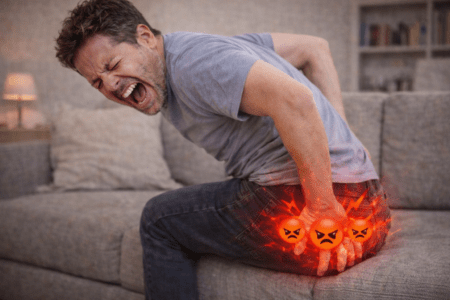
ItHurts Ouch Files: Rectal Pain Edition Your Butt Is Betraying You: A Survival Guide for Rectal Pain When sitting suddenly feels like a bad decision and bathroom visits turn dramatic, rectal pain may be the result of pressure, irritation, or inflammation in sensitive tissues. Rectal pain is more common than people admit. It can be caused by muscle spasms, hemorrhoids, fissures, irritation, or pressure from prolonged sitting. Because the area is highly sensitive, even minor inflammation can feel intense. 3 Practical Ways to Reduce Rectal Pain 🍑 Sit Smarter Using a donut cushion or pressure-relief pillow helps reduce direct pressure on sensitive tissues during sitting. 🛁 Warm Sitz Baths Soaking the area in warm water for 10–15 minutes may help relax muscles, improve circulation, and reduce discomfort. 🧻 Reduce Straining Staying hydrated and increasing dietary fiber can help prevent straining during bowel movements and reduce irritation. The Honest Reality Many cases of rectal pain improve with pressure relief, hydration, and gentle care. However, persistent or worsening symptoms should always be evaluated by a medical professional. If it Hurts we can help. If pain has taken over your sleep, your mood, or your search history, come find your people. Join the ItHurts Community Disclaimer: Enjoy the “Ouch Files” for the laughs and the lessons, but treat us like a witty friend rather than a diagnostic tool. We aren’t doctors, and this content is not medical advice. Persistent or severe rectal pain should be evaluated by a qualified healthcare professional.

Your Prostate Is Not Your Enemy—It’s Just Very, Very Dramatic

ItHurts Ouch Files: Prostate Pain Edition Your Prostate Is Not Your Enemy—It’s Just Very, Very Dramatic When sitting suddenly feels uncomfortable and your body seems unusually aware of itself, prostate irritation or pelvic tension may be involved. Prostate discomfort can appear as pelvic pressure, pain while sitting, or urinary irritation. It often relates to inflammation, pelvic floor tension, prolonged sitting, dehydration, or stress affecting surrounding muscles. 3 Practical Ways to Support Prostate Comfort 🪑 Reduce Prolonged Sitting Pressure Use a pressure-relief cushion and take standing or walking breaks every 30–45 minutes to reduce pressure on the pelvic region. 💧 Stay Consistently Hydrated Regular hydration helps maintain urinary tract comfort and prevents irritation caused by concentrated urine. 🧘 Relax the Pelvic Floor Gentle breathing exercises, warm baths, and relaxation techniques may help reduce pelvic muscle tension and improve circulation. The Reality Check Prostate pain can have several causes, ranging from temporary irritation to conditions that require medical care. Persistent or worsening symptoms should always be evaluated by a healthcare professional. If it Hurts we can help. If pain has taken over your sleep, your mood, or your search history, come find your people. Join the ItHurts Community Disclaimer: Enjoy the “Ouch Files” for the laughs and the lessons, but treat us like a witty friend rather than a diagnostic tool. We aren’t doctors, and this content is not medical advice. Persistent pelvic or prostate pain should be evaluated by a qualified medical professional.

Plantar Fasciitis: Why Your Heel Wakes Up Every Morning Choosing Violence

ItHurts Ouch Files: Plantar Fasciitis Edition Plantar Fasciitis: Why Your Heel Hurts with the First Step That sharp pain when you take your first step in the morning is often plantar fasciitis — inflammation of the thick band of tissue that supports the arch of your foot. Plantar fasciitis occurs when the plantar fascia — the ligament connecting your heel to your toes — becomes irritated from repetitive stress or tight muscles in the foot and calf. The pain often feels worst in the morning or after long periods of sitting because the tissue tightens during rest. 3 Practical Ways to Help Reduce Heel Pain 🧊 Roll the Bottom of Your Foot Rolling your foot over a frozen water bottle or massage ball can loosen tight fascia tissue and improve circulation in the heel. 👟 Wear Supportive Shoes Shoes with proper arch support and firm soles help distribute pressure across the foot instead of placing stress directly on the heel. 🧘 Stretch Before Standing Gently pulling your toes toward you before getting out of bed helps stretch the plantar fascia and calf muscles before they bear your body weight. The Honest Reality Plantar fasciitis is common and often improves with consistent stretching, supportive footwear, and gradual activity adjustments. Small daily changes can make a significant difference in reducing heel pain over time. If it Hurts we can help. If pain has taken over your sleep, your mood, or your search history, come find your people. Join the ItHurts Community Disclaimer: Enjoy the “Ouch Files” for the laughs and the lessons, but treat us like a witty friend rather than a diagnostic tool. We aren’t doctors, and this content is not medical advice. Persistent heel pain should always be evaluated by a qualified healthcare professional.