


When every step has an opinion
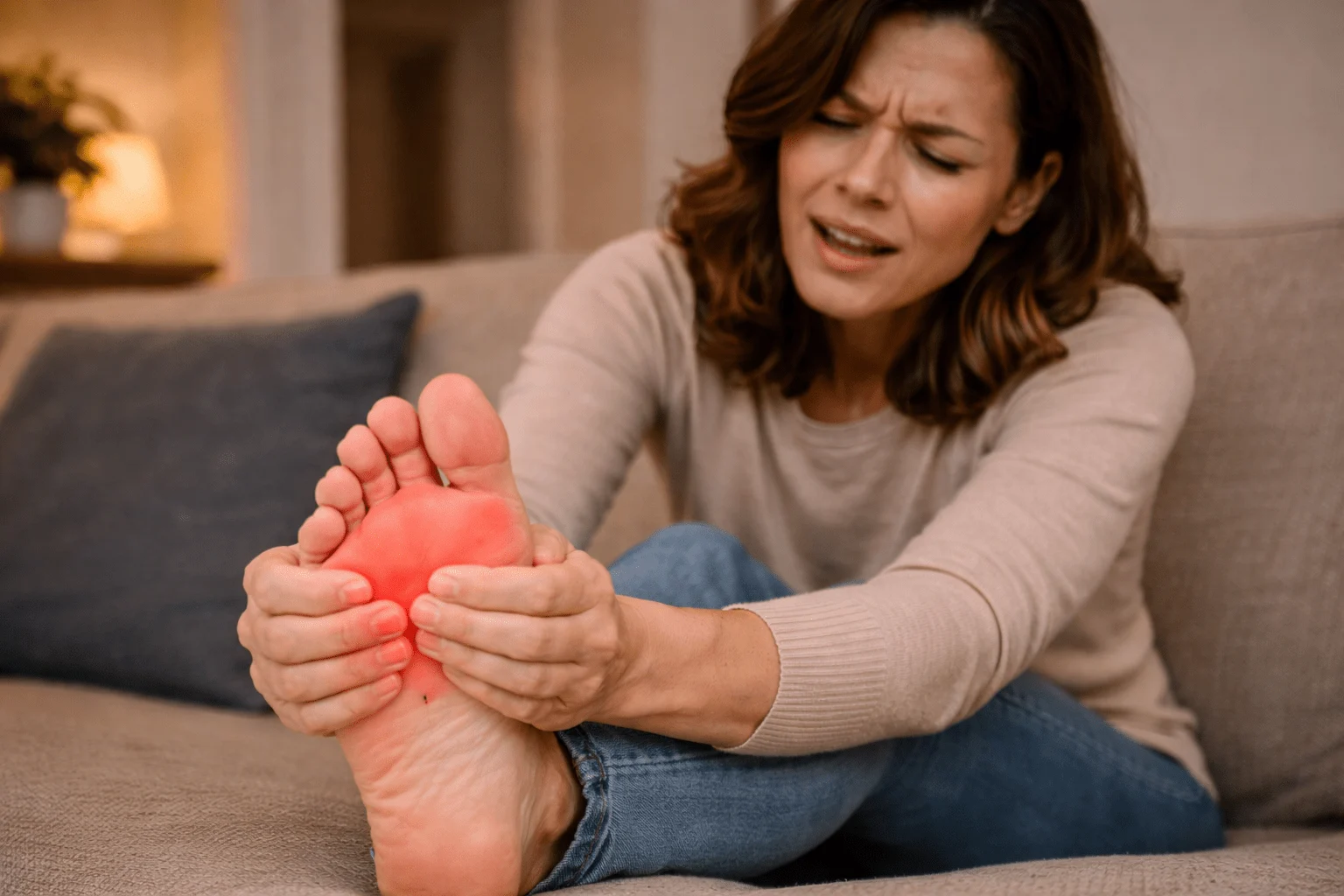
Feet rarely get attention until they hurt, and then they're impossible to ignore. Standing in line, walking the dog, climbing stairs, even the trip from bed to bathroom becomes something to plan around. Foot pain often changes how you walk, which can then leave your knees, hips or back aching too.
Because the foot has many small bones, joints, tendons, ligaments and nerves, the location of the pain is often the best first clue to its cause. This article walks through the most common patterns, then focuses on the single change that helps many people most: footwear. It's not a substitute for an exam, especially if pain is new, severe or getting worse.
Heel pain
- Underneath the heel, worst with the first steps in the morning: commonly plantar fasciitis, irritation of the thick band that supports the arch.
- Back of the heel, where the cord attaches: often Achilles tendon irritation, sometimes made worse by shoe backs that rub.
- Heel pain in active children and teens: often related to the growth area of the heel bone and usually settles with rest, but worth checking.
Arch pain
Aching along the arch may come from strain of the plantar fascia, tired muscles after long hours standing, or a change in foot shape over time, such as a gradually flattening arch. Pain along the inner ankle and arch that slowly gets worse, especially if the arch seems to be dropping, deserves assessment because a tendon there can weaken.
Ball of the foot
- Aching or bruised feeling under the ball of the foot: often called metatarsalgia, common with high heels, thin soles, high-impact exercise or a high arch.
- Burning, tingling or a "pebble in the shoe" feeling between the third and fourth toes: may be a Morton's neuroma, a thickened nerve that's worse in tight shoes.
- Sharp, localized pain on top of the foot that worsens with activity, especially after increasing running or walking: could be a stress fracture, which needs a doctor's check.
Toes
- A bony bump at the base of the big toe: a bunion, often aggravated by narrow shoes.
- Sudden, severe pain, redness and swelling in the big toe joint, often overnight: can be gout, which needs medical attention.
- Red, tender skin along the edge of a toenail: often an ingrown toenail, which can become infected.
- Toes that curl or rub the top of the shoe: hammertoes, which can cause corns and calluses.
Whole-foot burning or numbness
Burning, tingling, pins and needles or numbness across both feet, often worse at night, can be a sign of nerve damage called peripheral neuropathy. Diabetes is a common cause, but there are others. This always deserves a doctor's assessment.
When to see a doctor, or go today
Seek urgent care if:
- You can't put weight on the foot after an injury, or it looks deformed
- The foot is hot, red and swollen, especially with fever
- A wound or sore on your foot shows signs of infection, particularly if you have diabetes
- The foot is cold, pale or blue, or suddenly numb
- One calf is swollen, warm and painful
Book an appointment if:
- Pain hasn't improved after two or three weeks of sensible changes
- You have ongoing numbness, tingling or burning
- Pain is getting worse with activity and is focused on one bony spot
- You have diabetes or poor circulation and any new foot problem
- Swelling keeps returning
Choosing kinder shoes
- Room for your toes. A wide, deep toe box lets toes spread without pressure, which helps with bunions, neuromas and hammertoes.
- Cushioning under the ball and heel. Thicker, shock-absorbing soles often ease heel and forefoot pain.
- A firm heel counter. The back of the shoe should hold your heel steadily rather than collapsing when squeezed.
- Moderate heel height. Very high heels load the ball of the foot; completely flat, thin soles can strain the heel and arch for some people.
- Shop later in the day, when feet are slightly larger, and try shoes with the socks you'll wear.
- Replace worn shoes. When the cushioning is flattened or the sole is worn unevenly, support drops off.
- Consider insoles. Over-the-counter cushioned or arch-support insoles help some people; a podiatrist can advise whether custom orthotics make sense.
Other things that help many sore feet
- Gentle calf stretches against a wall, and slow ankle circles
- Rolling the arch over a ball or cool bottle for a few minutes
- A cushioned mat where you stand for long periods, such as at the kitchen sink or workstation
- Raising your feet after a long day if they swell
- Alternating high-impact exercise with lower-impact options like cycling or swimming
- Checking your feet regularly for sores or color changes, especially with diabetes
Work, home and everyday life
If your job keeps you on your feet, ask whether anti-fatigue mats, short sitting breaks or a change in footwear rules are possible. At home, many people find supportive slippers better than walking barefoot on hard floors. Planning errands to reduce walking on bad days, and explaining to friends why you'd prefer a seat or a shorter route, are reasonable ways to pace yourself. Ongoing foot pain can be tiring and frustrating, and it's fine to say so.
To sum up
Where your foot hurts often hints at why. Supportive, roomy, cushioned shoes, gentle stretches and pacing help many people. Severe pain after injury, a hot swollen foot, numbness, or any foot wound in someone with diabetes needs prompt care.
For a structured look at your symptoms, try our free Chronic Pain Check-Up. You'll find others comparing shoes and stretches in the ankle, foot and heel pain groups.
Sources
Share your shoe wins
Our foot pain group swaps footwear finds, insole tips and ways to stay on your feet with less pain.
Join the Foot Pain GroupReviewed by the ItHurts editorial team · Last reviewed 18 October 2026 · General information, not medical advice. If you are worried about your symptoms, talk to a doctor.