 Written by
 Knee Pain and Knee Osteoarthritis: What Really Helps
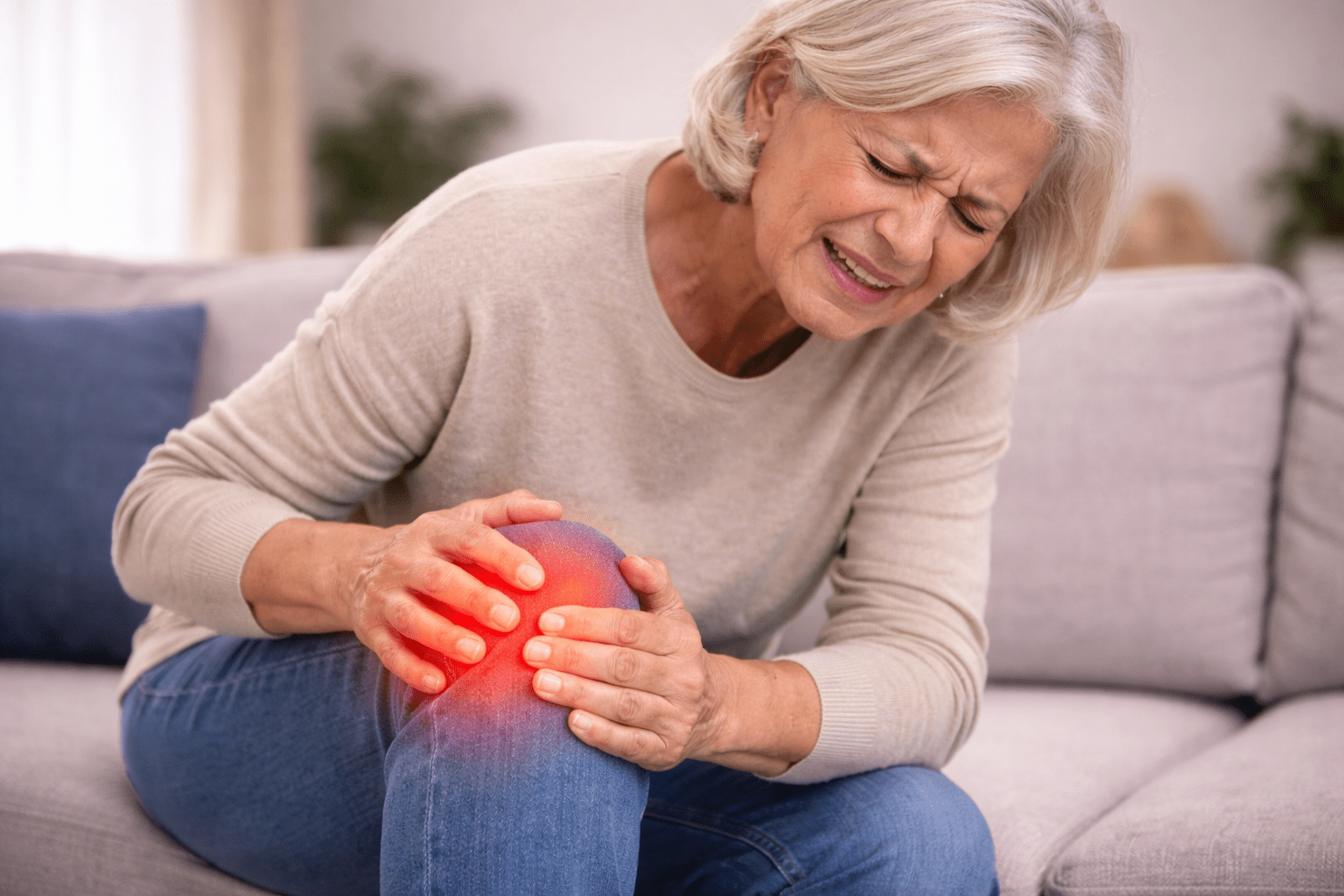
Stairs that feel taller than they used to. A creak and an ache when you get out of a chair. A knee that complains after a long walk or a day on your feet. Knee pain is one of the most common reasons people over 50 slow down, and it can chip away at the things you love doing.
The encouraging news is that there is a lot you can do. For the most common kind of knee pain in later life, knee osteoarthritis, the treatment with the strongest evidence isn't a pill or an operation. It's movement and strength. This guide explains what's usually going on, what helps, and when to get checked. It can't tell you what is causing your own knee pain, but it can help you take the next step.
What knee pain is and how it feels
Your knee is a hinge joint where your thigh bone meets your shin bone, with the kneecap at the front. The ends of the bones are covered in smooth cartilage, and two rubbery pads called menisci act as cushions. Strong muscles, especially the big thigh muscle at the front (the quadriceps), help support and protect the joint.
Knee pain can feel like:
- an ache in or around the knee, often worse after activity or at the end of the day
- stiffness, especially after sitting for a while or first thing in the morning
- pain going up or down stairs, kneeling or getting up from a low chair
- swelling or a feeling of puffiness around the knee
- creaking or grinding (painless clicking on its own is normal)
- the knee feeling weak or unsteady
Knee osteoarthritis is the most common cause of ongoing knee pain after middle age. It used to be called "wear and tear", but that makes it sound like the joint is simply wearing out. In fact, the joint is constantly repairing itself. In osteoarthritis, the repair can't quite keep up, so the cartilage thins and the joint becomes sore and stiff. Morning stiffness from osteoarthritis usually eases within about half an hour of moving around.
Many people with osteoarthritis on an X-ray have little pain, and some with a lot of pain have only small changes. How your knee feels and works matters more than how it looks on a picture.
Common causes
Knee pain with no obvious injury is often caused by:
- osteoarthritis, which becomes more common with age and often affects both knees
- irritation around the kneecap, often made worse by stairs, squatting or kneeling
- bursitis, where a small fluid-filled cushion near the knee gets swollen and sore, often from lots of kneeling
- gout or other types of arthritis, which can cause sudden hot, red, swollen joints
Knee pain after an injury may come from a sprain, a strained or torn ligament, or a torn meniscus.
Things that make knee osteoarthritis more likely include getting older, carrying extra body weight, an old knee injury, a family history of arthritis, and jobs or sports that put heavy, repeated load on the knees. Being female also raises the risk.
What usually helps
Exercise is the number one treatment. Guidelines for knee osteoarthritis put exercise at the heart of care. Strengthening the muscles around the knee, especially the thigh muscles, takes load off the joint and helps it work better. It's never too late to start, and it doesn't have to be hard work.
Keep moving every day. Walking, swimming, water exercise and cycling are all kind to knees. If walking flares your knee, try shorter walks spread through the day, or switch to cycling or swimming for a while.
Pace yourself. Mix active jobs with rest breaks, rather than doing everything in one go and paying for it later.
Look after your weight. If you carry extra weight, even a small loss can make a real difference, because your knees carry that load with every step you take.
Choose good footwear. Comfortable, cushioned, supportive shoes reduce the jolt through your knees. A walking pole or stick in the hand opposite the sore knee can also take the pressure off.
Use heat or cold. Many people find warmth eases stiffness, and a cold pack wrapped in a tea towel calms a sore, puffy knee after activity. Up to 20 minutes at a time.
Ask about pain relief. If you need something to help you stay active, ask a pharmacist or your doctor which options suit you. Creams and gels that you rub on the knee are an option many people find helpful.
Take stairs the smart way. Stairs aren't bad for you, but they can be hard work for sore knees. Use the handrail, and remember the saying "up with the good, down with the bad": lead with your stronger leg going up, and with your sore leg going down. Strengthening exercises usually make stairs easier over time.
What to try this week
When to see a doctor
Call 911 (or your local emergency number) or go to the emergency room if:
- you have a swollen, warm, painful calf, especially if you're also short of breath
- you can't put any weight on your leg after a fall or injury
- your knee has changed shape after a fall or twist
Call your doctor the same day, or get urgent care, if:
- your knee is hot, red and swollen, especially if you have a fever or feel hot, cold or shivery (this can be a sign of infection)
- your knee swelled up a lot within hours of an injury or twist
- you can't move your knee or put weight on it
- the pain is very severe
Book an appointment within 1 to 2 weeks if:
- your knee pain hasn't improved within a few weeks
- your knee keeps locking, catching or giving way
- you're stiff for more than an hour every morning, or several joints are swollen
- the pain is stopping you from sleeping, walking or doing the things you enjoy
Your doctor or a physiotherapist can examine your knee and help you plan your next steps. In many areas you can refer yourself to a physiotherapist. If you take medicines, don't change or stop them without talking to your doctor or pharmacist.
Common questions
Will exercise wear my knee out faster?
No. The right kind of exercise protects your knee by making the muscles around it stronger. Some ache during or after exercise is normal, but if pain lasts more than a day or two afterwards, ease back a little and build up more slowly.
Do I need an X-ray?
Often not. If you're over 45 and have typical symptoms, a doctor can usually diagnose knee osteoarthritis from your symptoms and an examination. An X-ray may be useful if things are unusual or surgery is being discussed.
Is a knee replacement inevitable?
No. Many people with knee osteoarthritis manage well for years with exercise, weight care and pain relief. Joint replacement is an option for some people when pain and stiffness seriously affect daily life despite other treatment.
Does the weather really affect my knees?
Many people say their knees ache more in cold or damp weather. The science isn't clear, but your experience is real. Keeping warm and moving on cold days can help.
Should I use a knee brace or sleeve?
Some people find a sleeve or brace makes the knee feel more secure. It's worth asking a physiotherapist which type, if any, suits your knee. Keep up your exercises too.
You don't have to figure this out alone
Want a clearer picture of your pain and what to focus on? Take the free 2-minute Pain Check-Up. Nine quick taps give you your Pain Archetype, your Pain Load score and three things to try this week.
You're far from the only one with grumbling knees. Join the ItHurts community to swap tips with people who know what it's like, from favourite exercises to the best shoes for long walks.
Sources
If it Hurts we can help.
Join a space where people share real experiences, support, and understanding—without judgment.
Join the ItHurts CommunityReviewed by the ItHurts editorial team · Last reviewed 18 October 2026 · General information, not medical advice. If you are worried about your symptoms, talk to a doctor.