
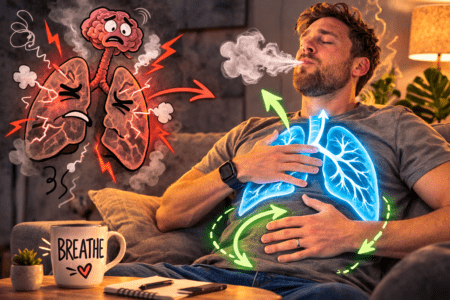
ItHurts Ouch Files: Breathing Exercises Edition Your Lungs Are Ignoring You (And That’s Why You’re Still in Pain) Breathing exercises can help calm the nervous system, reduce muscle tension, and improve the body’s response to stress. Simple breathing techniques can support relaxation and help manage certain types of pain. Many people breathe shallowly without realizing it, especially during periods of stress or discomfort. This pattern can keep the nervous system in a heightened alert state, which may contribute to muscle tension, headaches, and increased pain sensitivity. Practicing intentional breathing techniques can help regulate the nervous system, improve oxygen flow, and encourage the body to relax. 3 Practical Breathing Techniques for Pain Relief 🫁 Practice Diaphragmatic Breathing Place one hand on your chest and one on your abdomen. Breathe in slowly through your nose while allowing your abdomen to expand, then exhale slowly through your mouth. This method encourages deeper, calmer breathing patterns. 😮💨 Extend Your Exhale Inhale slowly for about four seconds and exhale for six to eight seconds. Longer exhales help activate the body’s relaxation response and may reduce tension and discomfort. 🧠 Use Mindful Breathing During Pain During moments of discomfort, focus on slow breathing and gently relaxing the muscles around the painful area. Intentional breathing can help shift attention away from stress signals and promote relaxation. The Honest Reality Breathing exercises are not a cure for every condition, but they can be a useful tool for managing stress and supporting the body’s natural relaxation response. Practiced regularly, they may help reduce tension and improve overall well-being. If it Hurts we can help. If pain, stress, or health concerns have taken over your search history, come find your people. Join the ItHurts Community Disclaimer: Enjoy the “Ouch Files” for the laughs and the lessons, but treat us like a supportive friend rather than a diagnostic tool. We aren’t doctors, and this content is not medical advice. Always consult a qualified healthcare professional for diagnosis and treatment of persistent symptoms.
 Written by Karrie