Nutrition for Stronger Bones: Calcium, Vitamin D and Beyond
Most of us don't think about our bones until something goes wrong: a fracture from a minor fall, a height loss noticed at a checkup, or a diagnosis of osteoporosis. Yet bone is living tissue that is constantly being broken down and rebuilt throughout life. What you eat, how you move and a few everyday habits all influence how well that rebuilding keeps up.
This guide covers the nutrients that matter most for bones, simple ways to get them from food, the lifestyle habits that work alongside nutrition, and when it is worth talking to a doctor about bone health.
Why bone health deserves attention at every age
Bones give your body structure, protect your organs, anchor your muscles and act as a store for calcium and other minerals. During childhood and early adulthood, the body builds bone faster than it breaks it down, reaching what is called peak bone mass in early adulthood. After that, bone is slowly lost with age, and the pace can speed up for women after menopause.
When bones become thin and fragile, the condition is called osteoporosis. It often causes no symptoms until a bone breaks, which is why prevention matters. Good nutrition can't change your genes, but it gives your bones the raw materials they need at every stage of life.
The key nutrients, and where to find them
Calcium
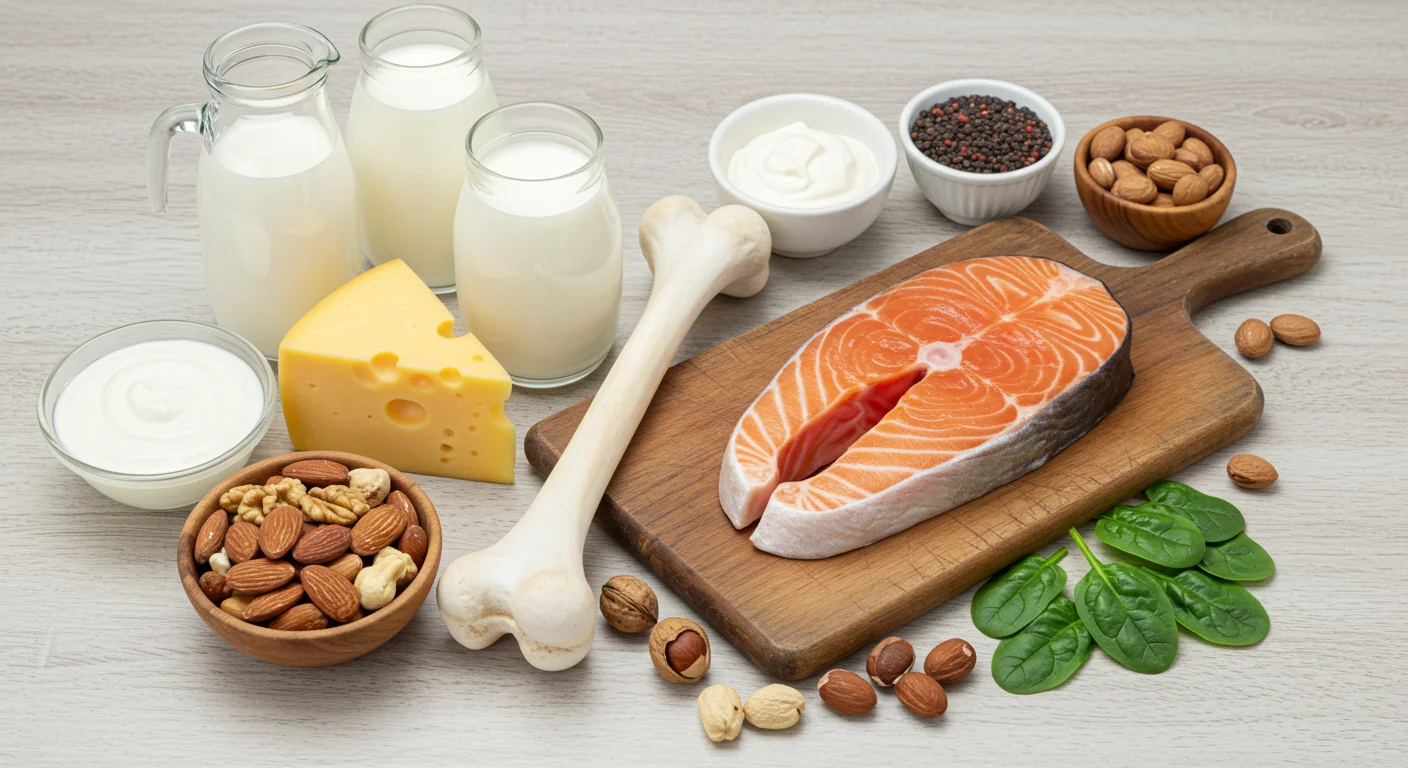
Calcium is the main mineral in bone. If you don't get enough from food, the body draws on the calcium stored in your bones. Good sources include:
- Milk, yogurt and cheese
- Calcium-fortified plant milks, juices, cereals and tofu made with calcium
- Canned fish eaten with their soft bones, such as sardines and salmon
- Some leafy greens, such as kale, bok choy and collard greens
- Almonds, sesame seeds and white beans, in smaller amounts
How much you need depends on your age, sex and life stage. Your doctor or a dietitian can tell you what is right for you.
Vitamin D
Vitamin D helps your body absorb calcium from food. The skin makes vitamin D when exposed to sunlight, but how much depends on where you live, the season, your skin tone, your age and how much time you spend outdoors. Few foods are rich in vitamin D, but useful sources include oily fish such as salmon and mackerel, egg yolks, and fortified foods like some milks and cereals. Many people, especially those who get little sun, may need a supplement. It is best to ask a doctor or pharmacist about the right amount, because more is not always better.
Protein
Bone is not just minerals. Protein forms part of its framework, and it also helps maintain the muscles that support and protect your bones. Include a source of protein, such as fish, poultry, eggs, dairy, beans, lentils, tofu or nuts, across your meals.
Other supporting nutrients
- Magnesium: found in nuts, seeds, whole grains and leafy greens.
- Vitamin K: found in green leafy vegetables such as spinach, broccoli and kale. If you take blood-thinning medicine, talk to your doctor before making big changes to how much vitamin K you eat.
- Potassium: found in fruits and vegetables, which also provide a range of other helpful nutrients.
- Zinc: found in meat, shellfish, legumes and seeds.
Putting it on the plate
You don't need special products to eat for your bones. A varied, balanced diet built on whole foods covers most needs. Some simple ideas:
- Breakfast: yogurt with fruit and seeds, or fortified cereal with milk or a calcium-fortified plant milk
- Lunch: a sardine or salmon salad with leafy greens, or a bean and vegetable soup
- Dinner: stir-fried tofu with bok choy and broccoli, or baked fish with greens and whole grains
- Snacks: a handful of almonds, a piece of cheese, or hummus with vegetables
Some things can work against bone health when consumed in large amounts, including heavy alcohol use, a lot of salt, and very high intakes of caffeine or soft drinks. Moderation is the sensible approach.
About supplements
Food is generally the preferred source of nutrients, but supplements can help fill gaps, especially for vitamin D, or for people who don't eat dairy or other calcium-rich foods. Supplements are not risk-free. Too much calcium from supplements can cause problems for some people, and supplements can interact with medicines. Talk to a doctor, pharmacist or dietitian before starting one, particularly if you have kidney problems, a history of kidney stones, or take regular medication.
Lifestyle habits that work alongside nutrition
- Weight-bearing exercise. Activities where you support your body weight, such as walking, dancing, hiking, stair climbing and tennis, help stimulate bone.
- Strength training. Working with weights, resistance bands or your own body weight helps both muscles and bones.
- Balance practice. Exercises such as tai chi help reduce falls, which matters because most fractures happen after a fall.
- A healthy weight. Being underweight is linked to a higher risk of bone loss and fractures.
- Not smoking and limiting alcohol. Both can harm bone health.
If you already have osteoporosis, joint problems or another health condition, ask a doctor or physical therapist which exercises are safe and suitable for you.

When to talk to a doctor about your bones
- You have broken a bone from a minor fall or bump
- You have lost noticeable height, or your upper back is becoming more curved
- You have sudden, severe back pain without a clear injury
- You have gone through early menopause, or have a family history of osteoporosis or hip fracture
- You have long-term conditions or take medicines that can affect bones, such as long-term steroid use
- You have an eating disorder, a digestive condition that affects absorption, or very restricted eating
A doctor can assess your risk and may suggest a bone density scan, blood tests or treatment if needed.
The bottom line
Strong bones are built and maintained over a lifetime. Calcium, vitamin D and protein are the foundation, supported by nutrients from fruits, vegetables, nuts and whole grains. Pair a balanced diet with regular weight-bearing and strength exercise, avoid smoking and heavy drinking, and talk to your doctor about your personal risk and whether you need supplements or testing.
Keep learning with others
Swap ideas on healthy routines in our wellness, rehab and lifestyle groups. If you are already living with bone or joint pain, the free ItHurts Chronic Pain Check-Up can help you understand your symptoms.
This article is general information, not medical advice. If you're worried about your symptoms, talk to a doctor.
Reviewed by the ItHurts editorial team · Last reviewed 18 October 2026 · General information, not medical advice. If you are worried about your symptoms, talk to a doctor.