


How many times have you used your hands today?
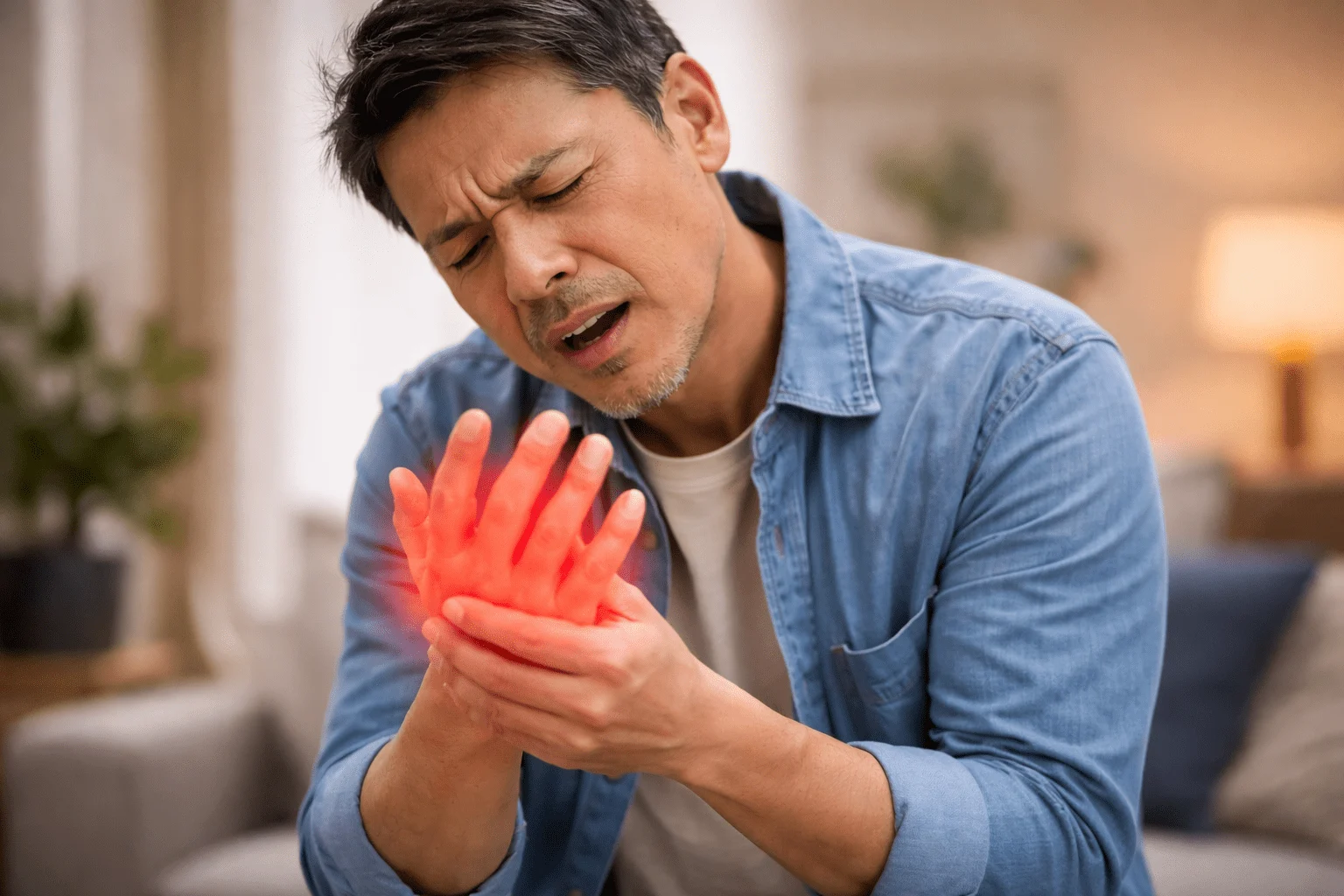
Turning off an alarm, twisting a toothpaste cap, buttoning a shirt, gripping a mug, typing, driving, opening a door. We rarely notice our hands until they hurt, and then suddenly every one of those tasks is a negotiation. Hand pain can be a sharp jab in a knuckle, a deep ache at the base of the thumb, stiffness that takes an hour to loosen, or a finger that catches and clicks.
The hand packs many small bones and joints, tendons, ligaments and nerves into a small space, so many different problems can cause pain. The good news is that timing, location and other symptoms usually offer useful clues, and there's a lot you can do to protect your hands day to day.
Clues from timing and pattern
- Stiff for a long time each morning, with swelling in several finger joints on both hands: may suggest inflammatory arthritis, such as rheumatoid or psoriatic arthritis. This deserves prompt assessment, because early care matters.
- Aching that builds with use and eases with rest, firm bumps on the finger joints, or pain at the base of the thumb: often osteoarthritis, which is very common as we get older.
- A finger or thumb that catches, locks or clicks when you bend it, often worse in the morning: commonly trigger finger, where a tendon has trouble gliding smoothly.
- Pain on the thumb side of the wrist when gripping or lifting: often tendon irritation at the base of the thumb.
- Numbness, tingling or burning in the fingers: nerve compression, such as carpal tunnel syndrome, or a nerve issue higher up in the arm or neck.
- Fingers that turn white or blue in the cold, then red and painful as they warm: Raynaud's phenomenon.
- A suddenly hot, red, very painful joint: can be gout, or infection, which needs urgent care.
- Pain after a jam, crush, fall or sports injury: a sprain, dislocation, fracture or tendon injury.
Signs that need prompt or urgent care
- A cut, bite or puncture wound on the hand, especially with spreading redness, swelling, red streaks, pus or fever. Hand infections can spread quickly; seek care the same day.
- A finger that looks bent or misshapen after an injury, or that you can't straighten or bend
- A cold, pale or bluish finger or hand, or numbness after an injury
- Sudden severe swelling, or a hot, red, very painful joint
- Numbness or weakness that is spreading, or new clumsiness
- Swelling and stiffness in several joints lasting more than a few weeks
- Pain that wakes you at night or isn't improving after a few weeks
Joint-friendly habits for everyday tasks
Occupational therapists often teach "joint protection" ideas that many people find helpful:
- Use bigger joints. Carry bags over your forearm or shoulder instead of gripping handles with your fingers. Push doors open with your palm or shoulder.
- Make handles fatter. Foam tubing or built-up grips on pens, cutlery, toothbrushes and tools reduce the force your fingers need.
- Let gadgets do the work. Jar openers, electric can openers, key turners, lever taps and lightweight kitchenware save strain.
- Avoid sustained tight grips. Loosen your hold on the steering wheel, phone or tools, and take frequent short breaks.
- Pace repetitive work. Alternate tasks, and spread heavy hand jobs like gardening or knitting across the week.
- Use voice-to-text when typing or texting hurts.
Comfort measures
- Warmth for stiffness. Warm water, a warm compress, or moving your hands in a bowl of warm water in the morning can ease stiff joints.
- Cold for a flare. A wrapped cold pack can calm a hot, irritated joint or a recent strain.
- Gentle movement. Making a soft fist then spreading the fingers, touching the thumb to each fingertip, and gentle finger bends help many people keep mobility. Avoid forcing painful stretches.
- Splints. A thumb or finger splint may help rest a painful joint, especially at night or during heavy tasks. A hand therapist can advise on type and fit.
- Warm gloves. Helpful in cold weather, particularly for Raynaud's or arthritis.
What a clinician may do
A doctor will usually look at and feel your hands, check movement, strength and sensation, and ask how the pain affects your life. X-rays, ultrasound, blood tests or nerve studies may be used depending on what they suspect. Options can include hand therapy, splints, medicines, injections and, for some conditions, surgery. If inflammatory arthritis is suspected, you may be referred to a rheumatologist.
Living with sore hands
Hand pain can quietly chip away at independence and hobbies, from cooking to playing an instrument. Many people find it helps to plan the day so that hand-heavy tasks are spread out, to keep a few adaptive tools in the places they're needed, and to ask for help with the toughest jobs without guilt. At work, an ergonomic review, a different keyboard or mouse, or adjusted duties can make a real difference. If your hands are affecting your mood or sleep, that's worth raising too.
It can also help to keep a short note for a week or two of which tasks hurt, what time of day pain is worst, and which joints are involved. Photos of any swelling on a bad day are useful too, since joints often look calmer at the appointment. These details help a clinician narrow down the cause much faster.
The essentials
Hand pain has many causes, from arthritis and trigger finger to nerve compression and injuries. Joint-friendly habits, warmth, gentle movement and well-fitted splints help many people. Infections, injuries with deformity or numbness, and new swelling in several joints need prompt medical care.
Our free Chronic Pain Check-Up can help you describe your symptoms clearly. You'll find more ideas from others in the wrist, hand and finger pain groups.
Sources
- NHS: Hand pain
- MedlinePlus (US National Library of Medicine): Hand Injuries and Disorders
- NHS inform: Wrist, hand, finger and thumb problems
Swap hand-saving tricks
Our hand pain group shares gadget finds, splint tips and ways to keep doing what you love.
Join the Hand Pain GroupReviewed by the ItHurts editorial team · Last reviewed 18 October 2026 · General information, not medical advice. If you are worried about your symptoms, talk to a doctor.