 Written by
TENS Unit or Heating Pad for Back Pain? Which One to Reach For
Two tools, two different jobs
A heating pad warms the tissue under it. That extra warmth relaxes tight muscles, improves blood flow to the area and simply makes the back feel less guarded, which is why most people move more freely after twenty minutes with one. It is comfort you can feel straight away.
A TENS unit, short for transcutaneous electrical nerve stimulation, sends small electrical pulses through sticky pads on the skin. The tingling competes with pain signals on their way to the brain and nudges the body to release its own pain-easing chemicals. It does not warm or loosen anything. What it does is turn the volume down on the pain for as long as it is switched on, and sometimes for a while after.
So the honest comparison is not which one is stronger. It is which problem you have today.
What the evidence says, in plain words
Heat has the clearer record for low back pain. Reviews of trials have found that continuous low-level heat, the kind a heat wrap or a heating pad gives, reduces pain and stiffness in the first days of a flare-up more than no treatment or a placebo wrap. The effect is modest and short-lived, but it is reliable, and it shows up again and again.
TENS is weaker on paper. When researchers pool the trials on chronic low back pain, TENS comes out no better than a dummy device for pain on average, with at best a small, short-lived gain in how people function. Two things soften that verdict: many trials ran the units too gently to reach the strong, comfortable tingle that seems to matter, and averages hide the fact that some people get clear relief while it is on and others get none. The NHS puts it plainly: TENS may help some people, it is safe for most, and it is worth a trial if other things have not worked. Go in expecting a personal experiment, not a guaranteed result.
Neither replaces movement. Gentle walking and the stretches in our lower back pain guide do more over weeks than any device does in a session.
Choose heat if
- your back feels stiff, tight or "locked", especially first thing in the morning
- the pain came on in the last few days after lifting, gardening or a long drive
- you want something to use while you rest, read or sleep
- you have a pacemaker, epilepsy or are pregnant, which rule out TENS for most people
Choose TENS if
- the pain is sharp, nagging or has lasted more than a few weeks
- you need relief while you work, walk or stand, not only while lying down
- heat has stopped helping or makes the area feel puffy
- you want something that does not plug into the wall or need to be reheated
Do not use TENS over broken skin, on the front of the neck, on the chest if you have a heart condition, or anywhere you cannot feel normally. If you are not sure, ask a pharmacist or your doctor first.
The three we would buy
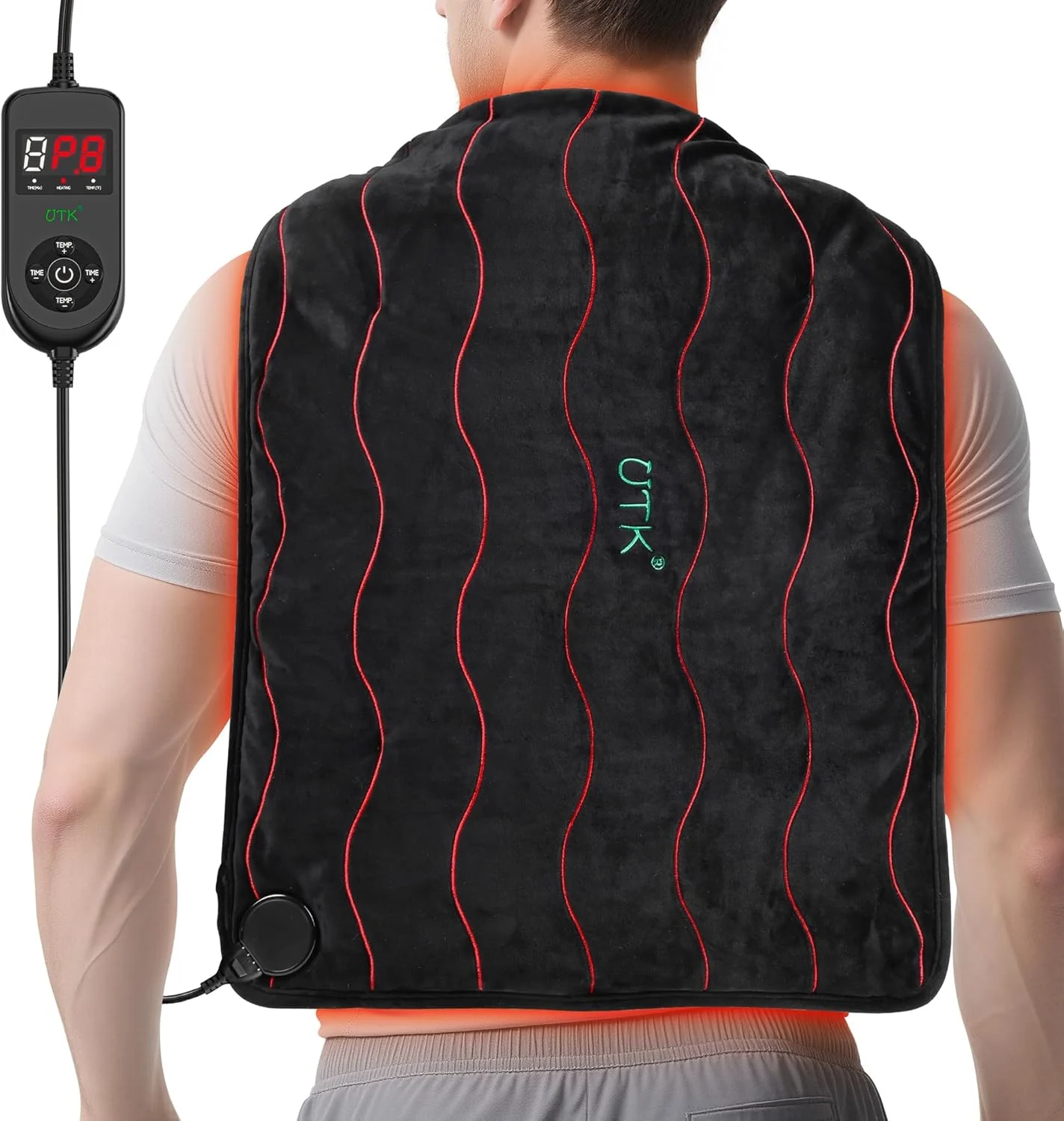
UTK Wearable Far Infrared Back Heating Pad
Best for: a sore, stiff lower back you want to warm deeply while you sit or lie down. The far-infrared heat goes further into the tissue than a basic pad and the strap keeps it in place.
Skip it if: you want heat on the move, or you only need a pad now and then; it is the most expensive of the three.
Why we chose it: it heats evenly, holds its temperature, and the wearable strap means it stays where the pain is instead of sliding off the chair.
See it on ItHurts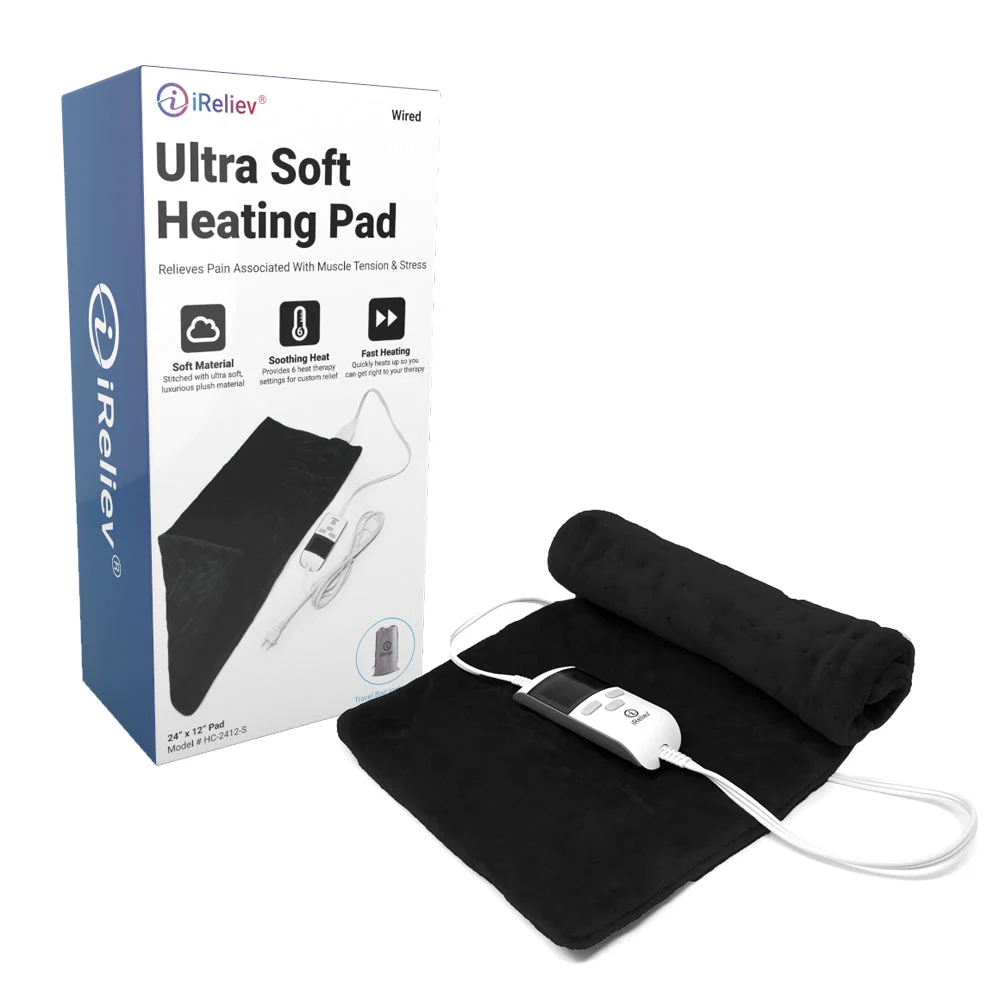
iReliev Ultra-Soft Heating Pad
Best for: everyday back ache, period pain or a cold evening. Big, soft, plugs in, cheap.
Skip it if: you need to wear it while moving around, or you want the deeper far-infrared type of heat.
Why we chose it: it is the simplest useful heating pad in the shop and costs less than a takeaway. Most people should start here.
See it on ItHurts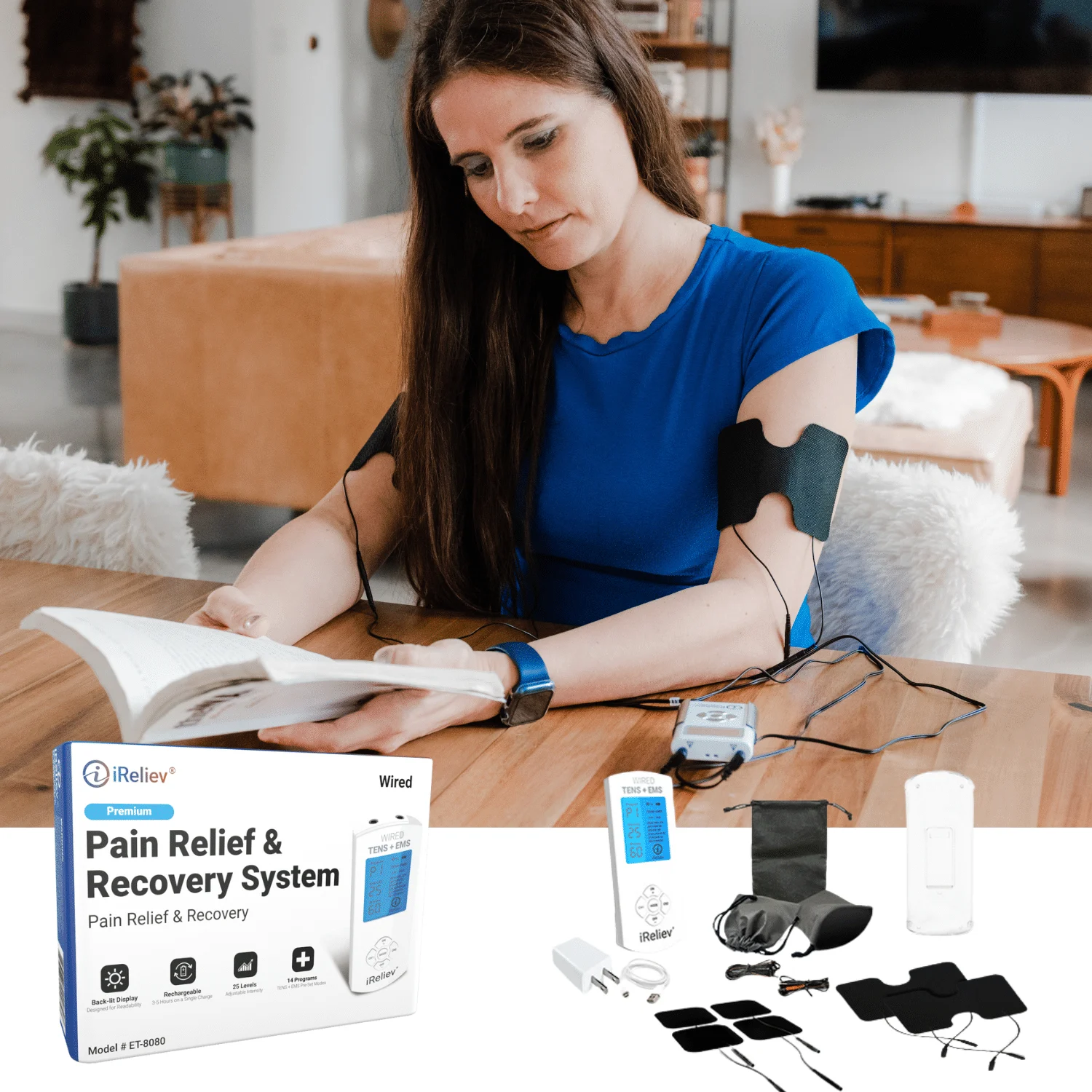
iReliev Premium TENS + EMS Device with Case
Best for: pain that keeps coming back, and for people who want to wear relief under their clothes at work. Two channels run four pads at once, so it can cover both sides of the lower back.
Skip it if: you have a pacemaker or another implanted device, epilepsy, or you are pregnant. Check with a doctor first if you have a heart condition.
Why we chose it: the strength range is wide enough to reach the strong, comfortable tingle that the research says matters, it includes EMS modes for muscle work, and the case keeps the pads and leads together.
See it on ItHurtsIf money is tight, a pair of ThermaCare lower back heat wraps gives eight hours of low-level heat while you move, and is a good way to test whether heat helps you before you buy a pad.
How to use each one well
Common questions
Can I use a TENS unit and a heating pad at the same time?
Not on the same spot. Heat changes how the skin conducts electricity and can make the TENS feel much stronger than the dial suggests. Use heat first, take it off, then use TENS.
Is a heating pad or TENS better for sciatica?
Sciatica is nerve pain that runs down the leg, and heat on the lower back often helps the muscle guarding around it, while TENS pads placed along the pain path can dull it for some people. We cover this in our separate guide on TENS for sciatica.
How long does TENS relief last after I switch it off?
Usually minutes to an hour or two. TENS is best thought of as something that works while it is on, which is why wearable units matter if you need relief during the day.
Will a heating pad make a disc problem worse?
Gentle heat is generally safe for a sore back, including when a disc is involved, as long as you keep the sessions short and the pad warm rather than hot. If heat makes leg pain, numbness or weakness worse, stop and see a doctor.
Sources
- Superficial heat or cold for low back pain — Cochrane review, French et al., 2006. Nine trials, 1,117 people: moderate evidence that heat wraps give a small, short-term reduction in acute back pain, more when combined with exercise.
- TENS versus placebo for chronic low-back pain — Cochrane review, Khadilkar et al., 2008. Four trials with conflicting results and no improvement in function; the evidence did not support routine TENS for chronic back pain.
- Meta-analysis of TENS in treating chronic back pain — Wu et al., Regional Anesthesia and Pain Medicine, 2018. Twelve trials, 700 patients: TENS no better than sham for pain, with a modest short-term gain in function.
- Transcutaneous electrical nerve stimulation (TENS) — NHS. What TENS is, who should not use it, and the line that it may help some people.
- Back pain — NHS. Staying active and using heat or cold packs are first-line advice.
Not sure which pain product is right for you?
Take the free two-minute Chronic Pain Check-Up and get three things to try this week.
Take the Chronic Pain Check-UpSome links are affiliate links. If you buy through them, ItHurts.com may earn a small commission at no extra cost to you.