

 Written by
Does a Plantar Fasciitis Night Splint Actually Work?
Why mornings hurt so much
The plantar fascia is a thick band that runs from the heel to the toes and holds up the arch. When it is irritated, it tightens and shortens while you sleep with your feet pointed down. The first steps of the day stretch it sharply, which is the stabbing pain in the heel that so many people describe. By mid-morning it has warmed up and loosened, and the pain fades, until you sit for an hour and it starts again.
Our plantar fasciitis guide covers the condition itself. A night splint tackles that cycle directly. It keeps the ankle at roughly a right angle through the night, so the fascia and the calf stay at length. No sudden stretch, less of a tear, less morning pain.
What the research shows
Trials of night splints go back more than twenty years, and the picture has shifted. The early studies reported less morning pain after a few weeks of splinting, with the biggest gains in people who had had heel pain for months and whose pain was clearly worst with first steps. A 2017 randomised trial then tested the obvious question: does a splint add anything to a good home stretching programme? In that study it did not. Both groups improved, and the splint group did not improve more.
Meanwhile the stretching evidence has only strengthened. A well-known randomised study found that a plantar-fascia-specific stretch, pulling the toes back toward the shin, beat ordinary calf stretching at eight weeks, including on first-step morning pain. Orthopaedic guidance lists calf and plantar fascia stretching as the most effective relief, with night splints as a supporting option.
The honest reading: stretch every day first. Add a splint if you want help holding the stretch overnight, if the morning pain is severe, or if you are not managing to stretch. Dropout from rigid splints is common because they are awkward to sleep in, so the device only ever works on the nights you actually wear it.
Who should try a night splint
- your heel pain is worst in the first steps of the morning or after sitting
- it has been going on for more than six weeks despite good shoes and rest
- you can tolerate something on your foot in bed, or you are willing to build up from an hour on the sofa
- you have been checked and know it is plantar fasciitis, not a stress fracture or nerve problem
Who should skip it
- pain that is just as bad all day, which points to something a splint cannot change
- numbness, tingling or burning in the foot, which needs a different look; see our peripheral neuropathy guide
- very poor circulation or skin that marks easily, where straps can cause sores
- anyone who simply cannot sleep in one; a sock-style splint or daytime stretching tools are the fallback
What to buy
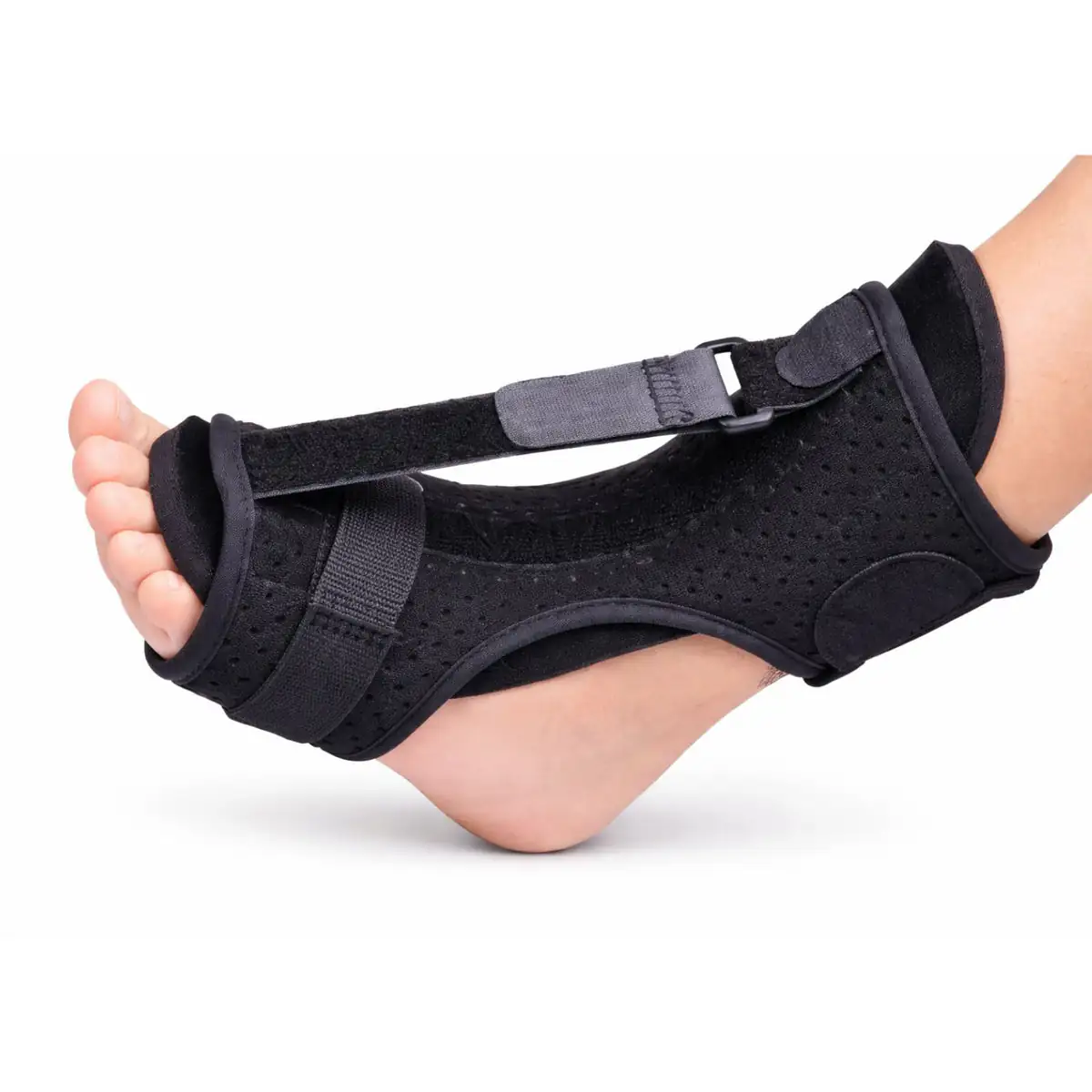
PlayMakar Adjustable Night Splint
Best for: first-step morning heel pain that has lasted more than six weeks. Adjustable straps let you start at a gentle angle and increase it as you get used to it.
Skip it if: you cannot sleep with anything on your foot, or your pain is constant through the day rather than worst in the morning.
Why we chose it: it is adjustable, padded and inexpensive, which matters because the whole question is whether you will keep it on. Start with an hour in the evening for a week, then try a full night.
See it on ItHurts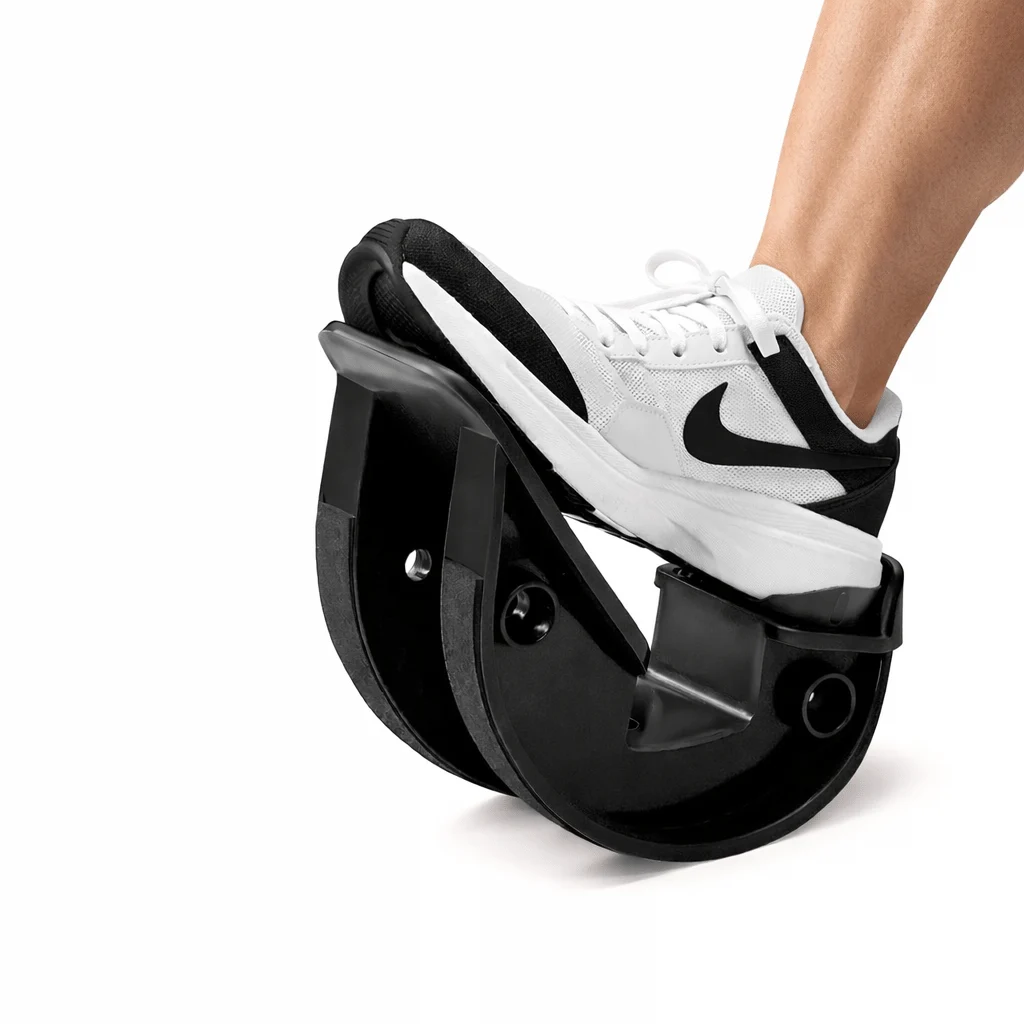
PlayMakar Foot Rocker and Stretching Tool
Best for: the daytime half of the job. A rocker gives a controlled calf and plantar fascia stretch you can do at the kitchen counter in two minutes.
Skip it if: you have balance problems or a recent ankle injury; use the strap below instead.
Why we chose it: the research is clear that stretching is the part that does the most. A rocker makes it easy to do the right stretch at the right angle, several times a day.
See it on ItHurts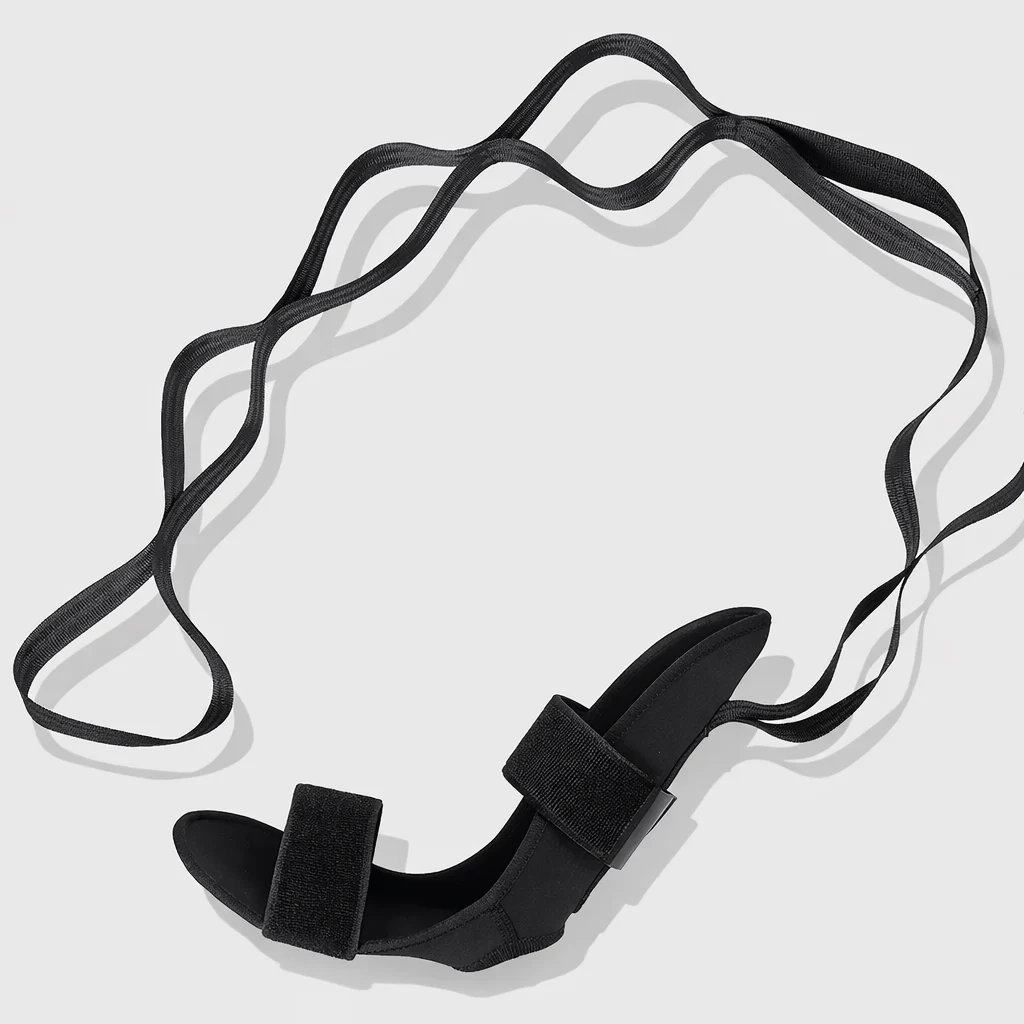
PlayMakar Foot and Calf Stretching Strap
Best for: stretching in bed before the first step, which is the single most useful habit for morning heel pain.
Skip it if: you already have a towel or belt that does the job; this is a convenience, not a necessity.
Why we chose it: loop it over the ball of the foot, pull the toes toward you for thirty seconds before you stand, and the first steps hurt less. Cheap, light and it lives on the bedside table.
See it on ItHurtsWhat else moves the needle
A splint is one part of a routine, not the routine. The things that matter most, in order: supportive shoes you wear even indoors, daily calf and arch stretching, cutting back the walking or standing that flares it for a couple of weeks, and keeping weight off a hot, swollen heel until it settles. Ice under the heel for ten minutes after a long day helps some people. If you stand all day for work, a cushioned insole or a heel cup makes the daytime half of the problem easier to live with while the splint handles the night.
How to make a night splint work
Common questions
How long should I wear a night splint?
All night is the goal, but an hour or two is better than nothing. Most people need a week or two to build up to a full night.
Which is better, a rigid boot splint or a soft sock splint?
Rigid splints hold the angle more reliably and have more evidence behind them. Sock splints are easier to sleep in and better than a boot that ends up on the floor. If you have tried a rigid one and given up, a sock type is a reasonable second attempt.
Can a night splint make plantar fasciitis worse?
It can make the foot sore if the angle is set too aggressively or the straps are too tight. Loosen it and reduce the angle. Sharp new pain, numbness or skin damage means stop and get checked.
Do I still need insoles if I use a splint?
Often yes. The splint deals with the overnight tightening; supportive shoes or insoles deal with the daytime load. They solve different halves of the problem.
Sources
- Tension night splint added to home rehabilitation for chronic plantar fasciitis: a randomised controlled trial — Wheeler, BMJ Open Sport & Exercise Medicine, 2017. Forty patients: morning pain improved with exercise alone and with exercise plus a splint, with no clear extra benefit from the splint. Small trial.
- Tissue-specific plantar fascia-stretching exercise enhances outcomes in patients with chronic heel pain — DiGiovanni et al., Journal of Bone and Joint Surgery, 2003. 101 patients: plantar-fascia-specific stretching beat Achilles stretching at eight weeks, including on first-step morning pain.
- Plantar fasciitis and bone spurs — American Academy of Orthopaedic Surgeons, OrthoInfo. Calf and plantar fascia stretching as the most effective relief; night splints as a supporting option.
- Plantar fasciitis — NHS. Self-care advice and when to see a GP.
Not sure which pain product is right for you?
Take the free two-minute Chronic Pain Check-Up and get three things to try this week.
Take the Chronic Pain Check-UpSome links are affiliate links. If you buy through them, ItHurts.com may earn a small commission at no extra cost to you.