

Who tends to get Achilles pain
Achilles pain is especially common in runners and people who play jumping or stop-start sports, but plenty of non-athletes get it too: people who have recently changed jobs and are on their feet more, weekend walkers who suddenly double their distance, and many people in middle age whose tendons are a little less forgiving than they used to be. The typical story is stiffness at the back of the heel for the first few steps in the morning, easing as you warm up, then aching again later.
The Achilles tendon is the thick cord that connects your calf muscles to your heel bone. It is the strongest tendon in the body and handles large forces every time you walk, climb stairs or push off. Most Achilles pain comes from that tendon being asked to do more than it is currently ready for.
What's usually going on
Doctors often call this Achilles tendinopathy. Rather than a simple inflammation, it is usually a problem with how the tendon is coping with load: repeated stress outpaces its ability to adapt, and the tendon becomes irritated, thickened and painful. There are two common locations:
- Mid-portion: pain and sometimes a tender thickening a few inches above the heel
- Insertional: pain right where the tendon attaches to the back of the heel bone, often worse with shoes that press on that spot
Things that commonly contribute include:
- A sudden increase in activity, such as more running, hills or speed work
- A return to sport after a long break
- Calf muscles that are tight or weak
- Worn-out shoes, or a sudden switch to much flatter footwear
- Changes in surface, such as moving from a treadmill to hard pavement
- Getting older, and some health conditions such as diabetes or high cholesterol
- Certain medicines; if tendon pain began after starting a new medicine, let your prescriber know
When to get checked, and when it's urgent
- Same day: a sudden pop or snap at the back of the ankle, a feeling as though someone kicked your heel, or being unable to push off or stand on tiptoe on that side. These can be signs of an Achilles rupture, which needs prompt assessment.
- Swelling, redness and warmth around the heel, especially with fever
- Pain that is getting worse despite reducing activity
- Pain that hasn't started to improve after a few weeks
- Numbness or tingling in the foot
What tends to help
Many people find the following approach useful while they arrange an assessment with a doctor or physical therapist:
- Reduce, don't stop. Cut back on the activities that flare it, such as running, jumping and hills, while staying active with lower-impact options like cycling or swimming if they're comfortable.
- Use a simple pain guide. Many clinicians suggest that mild discomfort during activity is acceptable if it settles by the next morning. If the tendon is worse the following day, you did too much.
- Strengthen gradually. Calf raises, starting on both feet on flat ground and progressing slowly, are a cornerstone of many tendon programs. A physical therapist can set the right level and progression for you.
- Check your shoes. Supportive, cushioned shoes with a slight heel can ease the load. For insertional pain, avoid backs that rub on the sore spot.
- Be gentle with stretching. Some people find light calf stretches helpful; aggressive stretching, especially of insertional pain, can aggravate it.
- Cold for comfort. A wrapped cold pack after activity can ease soreness for some people.
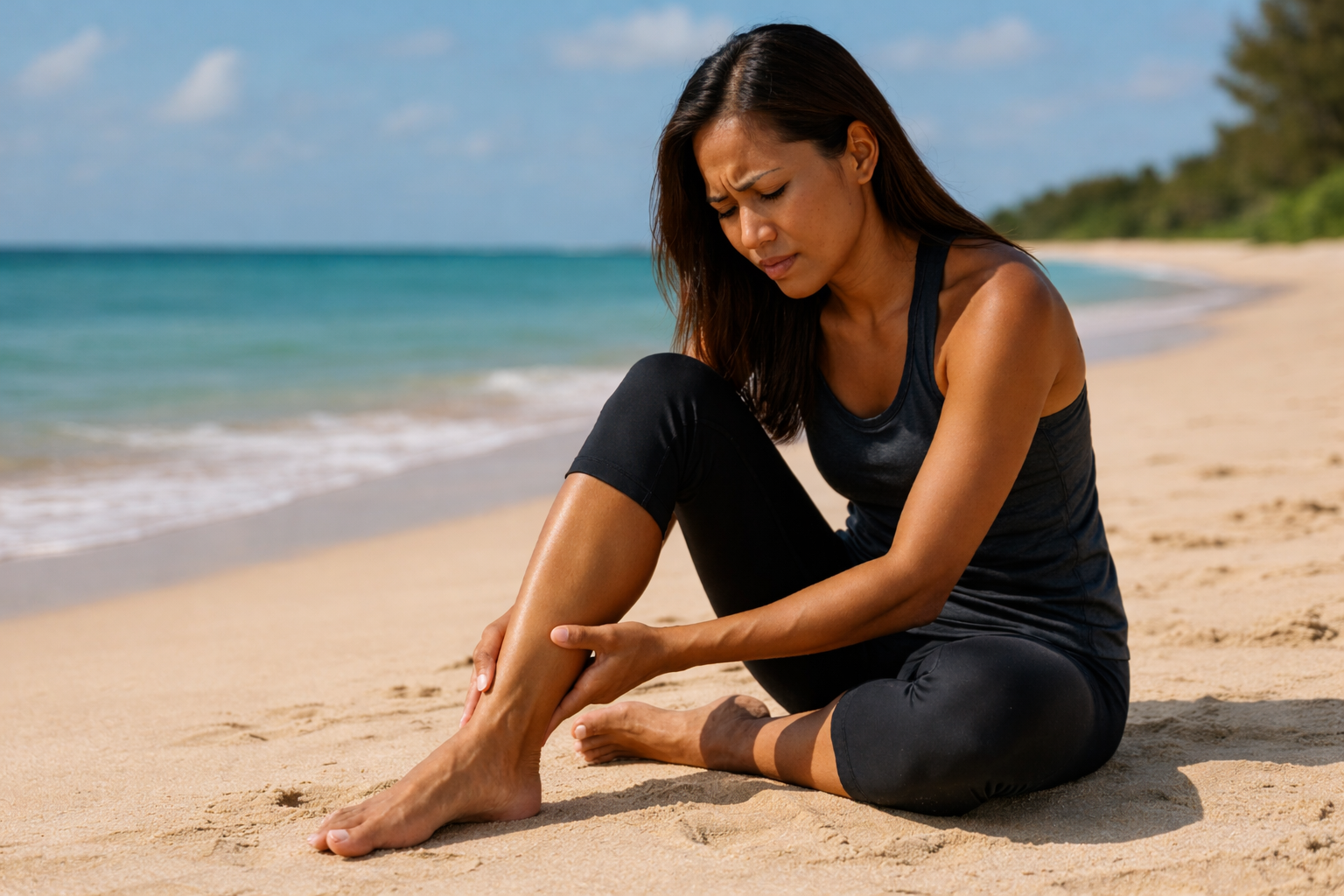
Easing the first steps of the day
Morning stiffness is one of the most familiar parts of Achilles pain. Some people find it helps to move the ankle gently up and down a few times before getting out of bed, keep a pair of supportive shoes or slippers right beside the bed rather than walking barefoot, and take the stairs slowly for the first few minutes. Avoid sleeping with the feet pointed hard downward under tight bedding, which some people notice makes the first steps worse.
The patience problem
Tendons adapt slowly. Many people need several weeks to a few months of consistent, gradual loading before they notice real change, and it is common to have small setbacks along the way. That can be discouraging, particularly if running or sport is a big part of your life or your work involves being on your feet. It can help to measure progress by function, such as how many calf raises you can do or how stiff you are in the morning, rather than by whether the pain has vanished completely.
If your symptoms are slow to improve, your clinician may suggest imaging, other forms of therapy, or a referral to a specialist. These are worth discussing rather than trying to push on alone.
Returning to the things you love
- Build back gradually, increasing only one thing at a time: distance, speed or hills, not all three
- Keep up strength work even after the pain eases
- Warm up before activity and avoid sudden jumps in training
- Replace running shoes when they're visibly worn
- Listen to next-morning stiffness; it's often the most honest signal
In a nutshell
Achilles pain usually means the tendon is overloaded, not broken. Reducing aggravating activity, gradual strengthening, sensible footwear and patience help many people. A sudden pop, or not being able to push off, needs same-day assessment.
To get a clearer picture of your heel and ankle symptoms, try our free Pain Check-Up. For more conversations about sore feet and ankles, visit the ankle, foot and heel pain groups.
Working your way back?
Our Achilles pain group is full of people sharing rehab progress, footwear finds and honest setbacks.
Join the Achilles Pain GroupReviewed by the ItHurts editorial team · Last reviewed 18 October 2026 · General information, not medical advice. If you are worried about your symptoms, talk to a doctor.