


Not all low back pain starts in the spine
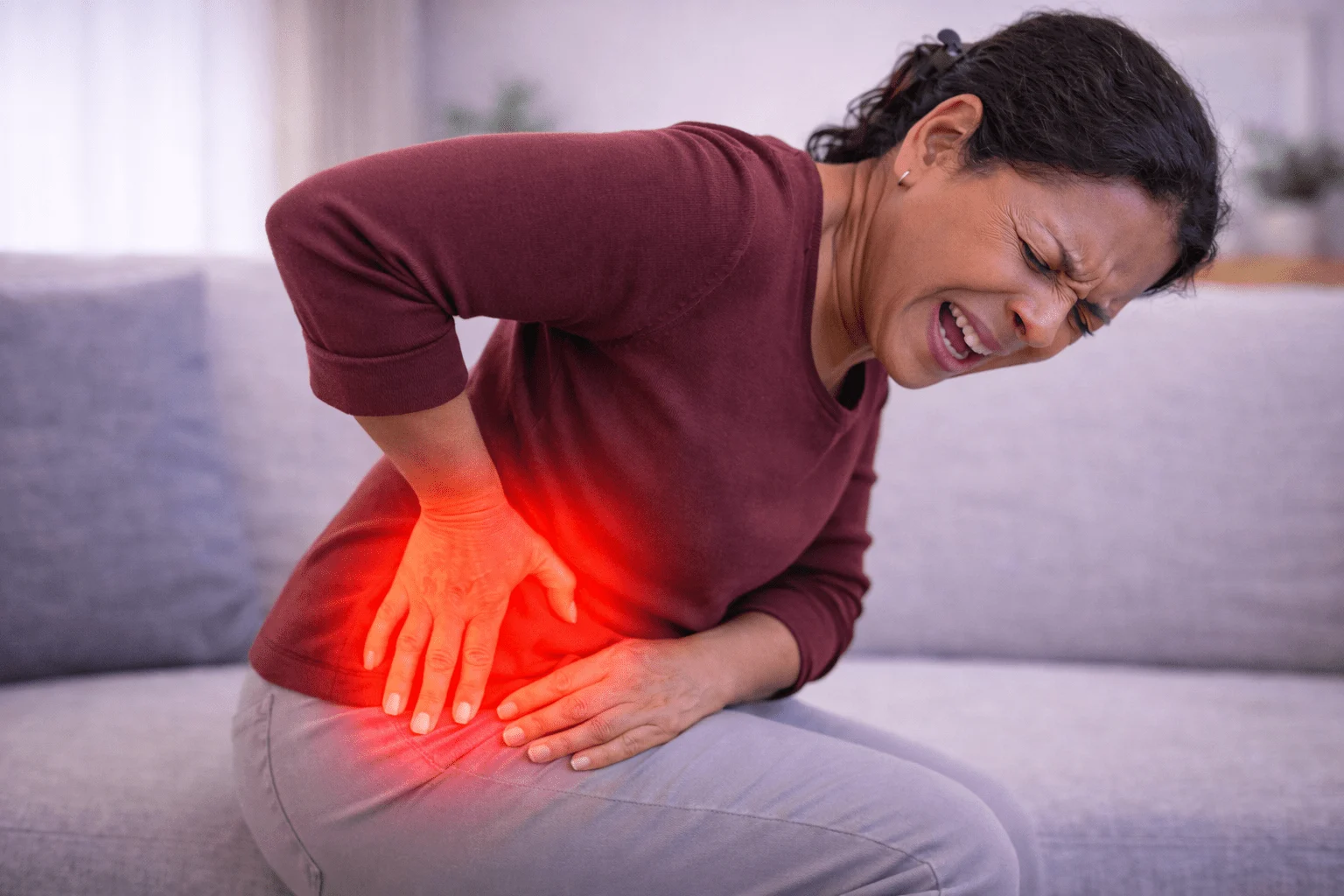
If your pain sits low, on one side, roughly where the dimple above your buttock is, and it flares when you climb stairs, roll over in bed or stand on one leg to pull on your jeans, the sacroiliac joint may be involved. SI joint pain is often lumped in with general lower back pain, but it has its own patterns, and knowing them can help you describe your symptoms and find what helps.
It can be frustrating, partly because it is hard to pin down. Several other problems, including disc and hip issues, can feel very similar. A clinician's assessment is the best way to know what you're dealing with.
Where the SI joint is and what it does
You have two sacroiliac joints, one on each side, where the sacrum (the triangular bone at the base of the spine) meets the pelvis. They are held together by strong ligaments and move only a little. Their job is to pass the weight of your upper body down to your legs and absorb some of the shock of walking.
Pain can come from the joint itself, the ligaments around it, or the muscles that support it. It may be described as the joint moving too much, too little, or simply being irritated.
Things that commonly set it off
- Pregnancy and the months after birth. Hormonal changes loosen pelvic ligaments, and weight and posture shift.
- Falls or impacts, such as landing on your buttocks or a car accident
- Repetitive, one-sided loads, such as running, carrying a child on one hip, or certain sports
- Changes in how you walk, for example after a leg injury, or with a leg length difference
- Arthritis, including wear-and-tear changes and inflammatory types such as ankylosing spondylitis
- Previous lower back surgery, which can change how load passes through the pelvis
How SI joint pain tends to feel
- Pain in the lower back or buttock, usually on one side, below the waistline
- Ache that can spread into the groin, hip or back of the thigh, usually not below the knee
- Worse with stairs, standing on one leg, getting in and out of a car, or turning in bed
- Stiffness after sitting for a long time
- Sometimes a feeling of the pelvis being unstable or "giving way"
A note on inflammatory back pain: if you are younger than 45 and have low back or buttock pain with morning stiffness that lasts more than about half an hour and improves with movement, ask your doctor whether an inflammatory condition should be considered.
Warning signs to act on
Seek emergency care straight away if you have new loss of bladder or bowel control, or numbness around the genitals, buttocks or inner thighs.
See a doctor promptly if you have:
- Pain after a significant fall or accident
- Numbness, tingling or weakness in a leg
- Fever, chills or feeling unwell with the pain
- Unexplained weight loss, or a history of cancer
- Pain that is severe at night, or getting steadily worse
- No improvement after a few weeks of sensible self-care
Day-to-day changes that ease the load
- Change position often. Long sitting or standing stiffens the area; aim to move every half hour or so.
- Sit evenly. Keep both feet flat and weight even across both buttocks. Crossing your legs often pulls on the joint.
- Get into the car in one move. Sit down first, then swing both legs in together.
- Take stairs one at a time during a flare, leading with the less painful side going up.
- Sleep with support. On your side with a pillow between your knees, or on your back with a pillow under them. When rolling over, keep your knees together.
- Try heat or cold. Many people find warmth eases stiffness and a wrapped cold pack calms a flare. Use whichever feels better, for about 15 to 20 minutes.
- Supportive footwear. Very worn or unsupportive shoes can add strain.
Building strength around the joint
Because the SI joint relies on surrounding muscles for support, strengthening is a central part of care for many people. A physical therapist can tailor a program, but gentle starting points that are often suggested include pelvic tilts, glute bridges, side-lying leg lifts and walking. Start small, keep movements smooth, and stop anything that causes sharp pain. Some people are also offered a pelvic support belt for a time, especially during pregnancy.
If home care isn't enough, a doctor may discuss medicines, manual therapy, injections into the joint, or in a small number of cases a procedure to stabilize it. These are individual decisions to make with your care team.
Living with it
People with SI joint pain often say the unpredictability is the hardest part: fine one day, catching on a step the next. Keeping a simple log of what you did on bad days can reveal patterns, such as a long drive, a new workout or carrying a toddler on the same hip. Pacing, rather than pushing through or stopping altogether, tends to work best over time. If you're pregnant or recently gave birth, mention the pain at your next appointment; pelvic girdle pain is common, and help is available.
Where this leaves you
SI joint pain comes from the link between the spine and pelvis and is often eased by moving regularly, sitting evenly, sleeping with support and steady strengthening. Get checked promptly for any red flags, and ask for a proper assessment if the pain is lingering.
Our free Chronic Pain Check-Up can help you narrow down where your pain is coming from. You'll find others comparing exercises and flare plans in the back and neck pain groups.
Sources
Living with SI joint pain?
Our SI joint pain group brings together people who understand the stairs, the car seats and the sleepless nights.
Join the SI Joint GroupReviewed by the ItHurts editorial team · Last reviewed 18 October 2026 · General information, not medical advice. If you are worried about your symptoms, talk to a doctor.