


When a walk around the store becomes a plan
For many people with lumbar spinal stenosis, the hardest part is not constant pain but what happens as they move through the day. A walk that used to be easy now brings heaviness, aching or tingling in the buttocks and legs after a few minutes. Standing in line becomes something to dread. Then, after sitting down or leaning forward for a short while, things ease again.
This article focuses on that everyday side of spinal stenosis: how to walk, stand, sit and sleep with less discomfort, how to stay active, and what to discuss with your doctor. It is not a full guide to the condition, and the advice from your own doctor or physical therapist should come first.
A quick word on why posture matters so much
Spinal stenosis means the spaces inside the spine, where the spinal cord and nerves travel, have become narrower. In the lower back, this is most often linked to age-related changes such as thickened ligaments, bulging discs and arthritis in the small spinal joints. When you stand upright or lean back, those spaces narrow a little more. When you bend forward or sit, they open slightly. That is why many people find their symptoms depend so much on position, and why small adjustments in how you move can make a noticeable difference.
The shopping-cart effect
Many people with lumbar stenosis notice they can walk much farther when leaning on a shopping cart, walker or stroller. The slight forward lean opens the spinal canal and takes pressure off the nerves. You can use this to your advantage:
- Use a cart in stores even for small shops.
- Consider walking poles or, if your doctor or therapist suggests it, a rolling walker with a seat so you can rest whenever you need to.
- Walk uphill rather than downhill when you have a choice; walking downhill tends to involve leaning back.
- Try a stationary bike or recumbent bike, where the seated, forward position is often much more comfortable than walking.
Walking in shorter stretches
Rather than pushing through until your legs give out, many people do better breaking walks into planned segments. Walk until you notice early symptoms, then sit or lean forward for a minute or two before continuing. Knowing where benches are on a familiar route can make outings feel less stressful. Over weeks, some people find their comfortable distance gradually increases with regular activity.
Standing without the ache
- Rest one foot on a low step, stool or the rail under a counter. This tilts the pelvis slightly and can ease the lower back.
- Shift your weight and change position often instead of locking your knees.
- In the kitchen, open a low cupboard door and rest a foot on the shelf while you work.
- Sit for tasks you would usually stand for, such as ironing, chopping vegetables or brushing your teeth.
- Wear supportive, cushioned shoes on hard floors.
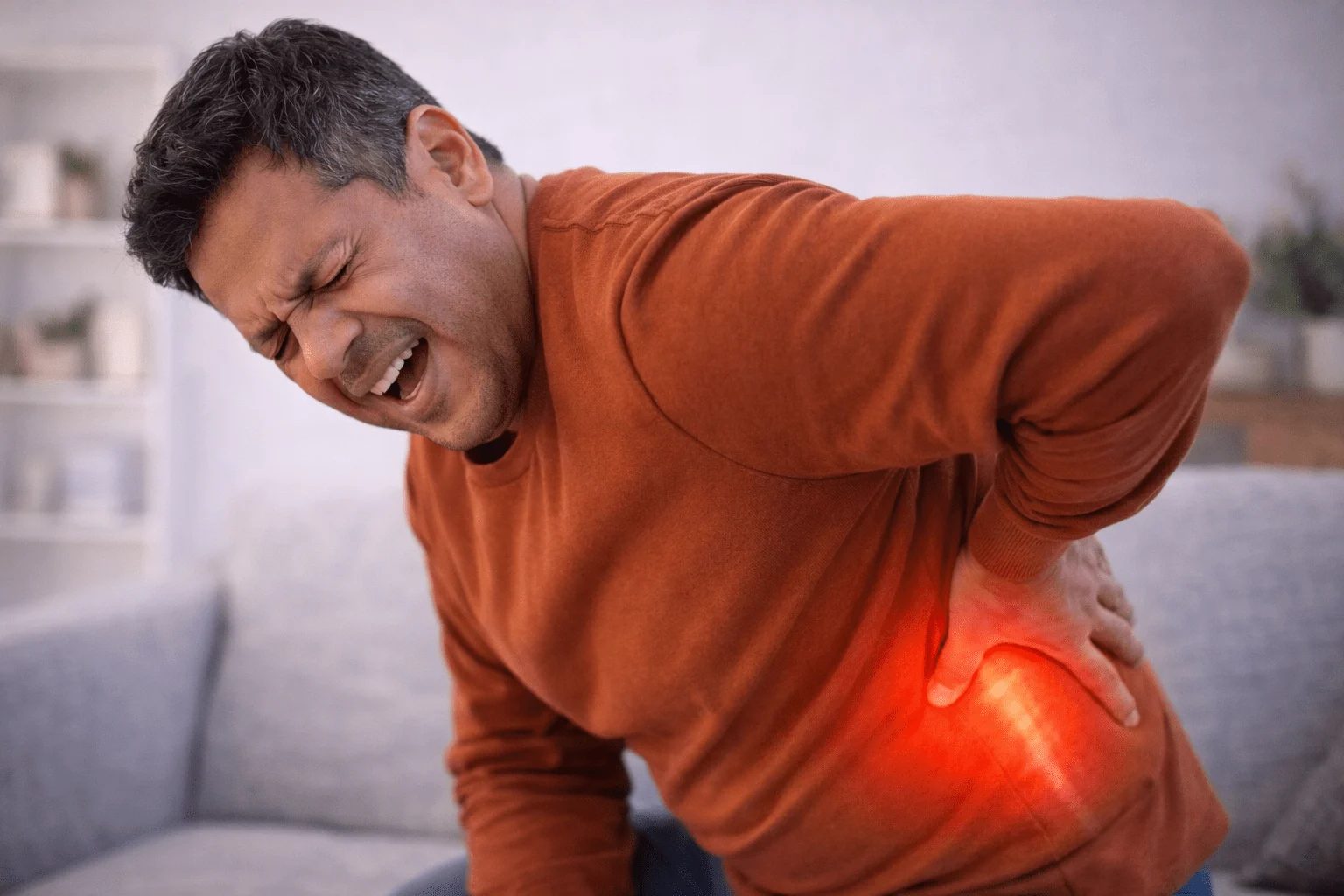
Sitting, driving and getting up
Sitting is often the most comfortable position with lumbar stenosis, but long periods in one chair can still stiffen the back. Choose a chair with good support that lets your feet rest flat, and get up for short movement breaks. When driving long distances, plan stops. To get up from a chair, scoot to the edge, place your feet under you, and push up with your legs and arms rather than twisting.
Finding a comfortable sleeping position
Lying flat on the back with legs straight can be uncomfortable because it extends the lower spine. Positions many people prefer:
- On your side with knees gently bent and a pillow between them.
- On your back with pillows under your knees to keep them bent.
- Reclined, in an adjustable bed or with a wedge, if that suits you better.
Sleeping on your stomach usually arches the lower back and tends to be the least comfortable.
Staying active safely
It can be tempting to move less to avoid symptoms, but staying active supports strength, balance, mood and general health. Exercise programs from a physical therapist often focus on core and hip strength, flexibility, and positions that open up the spine. Many people enjoy cycling, water walking or swimming, which put less load on the back. Start gently, build gradually, and stop if an activity brings on new weakness or numbness.
Questions worth bringing to your doctor
- How far is it safe for me to walk, and should I push through mild symptoms?
- Would a referral to physical therapy help?
- Is a walker, cane or other aid a good idea for me?
- What symptoms should make me call you right away?
- What options are available if daily life keeps getting harder?
It also helps to keep a simple record of how far you can walk before symptoms start and how long they take to ease. Changes over time are useful information for your care team.
Red flags not to ignore
Call your local emergency number or go to the emergency department if you have:
- New loss of bladder or bowel control, or trouble passing urine
- Numbness in the groin, inner thighs or around the buttocks (the "saddle" area)
- Rapidly worsening weakness in one or both legs, or foot drop
See a doctor promptly if back pain comes with fever, unexplained weight loss, a history of cancer, or follows a fall or injury, or if your symptoms are steadily getting worse. Stenosis in the neck can also affect hand dexterity, balance and walking, so mention any clumsiness or unsteadiness.
The bottom line
Spinal stenosis often responds to position, which means practical changes such as leaning on a cart, walking in planned segments, resting a foot while standing, and choosing supportive sleep positions can make daily life easier. Stay as active as you safely can, work with your care team on a plan, and act quickly on bladder, bowel or sudden weakness symptoms.
To track your symptoms between appointments, try the free Chronic Pain Check-Up.
Sources
- MedlinePlus (US National Library of Medicine): Spinal Stenosis
- NHS inform: Spinal stenosis
- NIAMS (US National Institutes of Health): Spinal Stenosis
Connect With Others
Find back and neck pain groups where people share how they stay active with spinal stenosis.
Browse Back and Neck GroupsReviewed by the ItHurts editorial team · Last reviewed 18 October 2026 · General information, not medical advice. If you are worried about your symptoms, talk to a doctor.