


A pain you notice every time you sit down
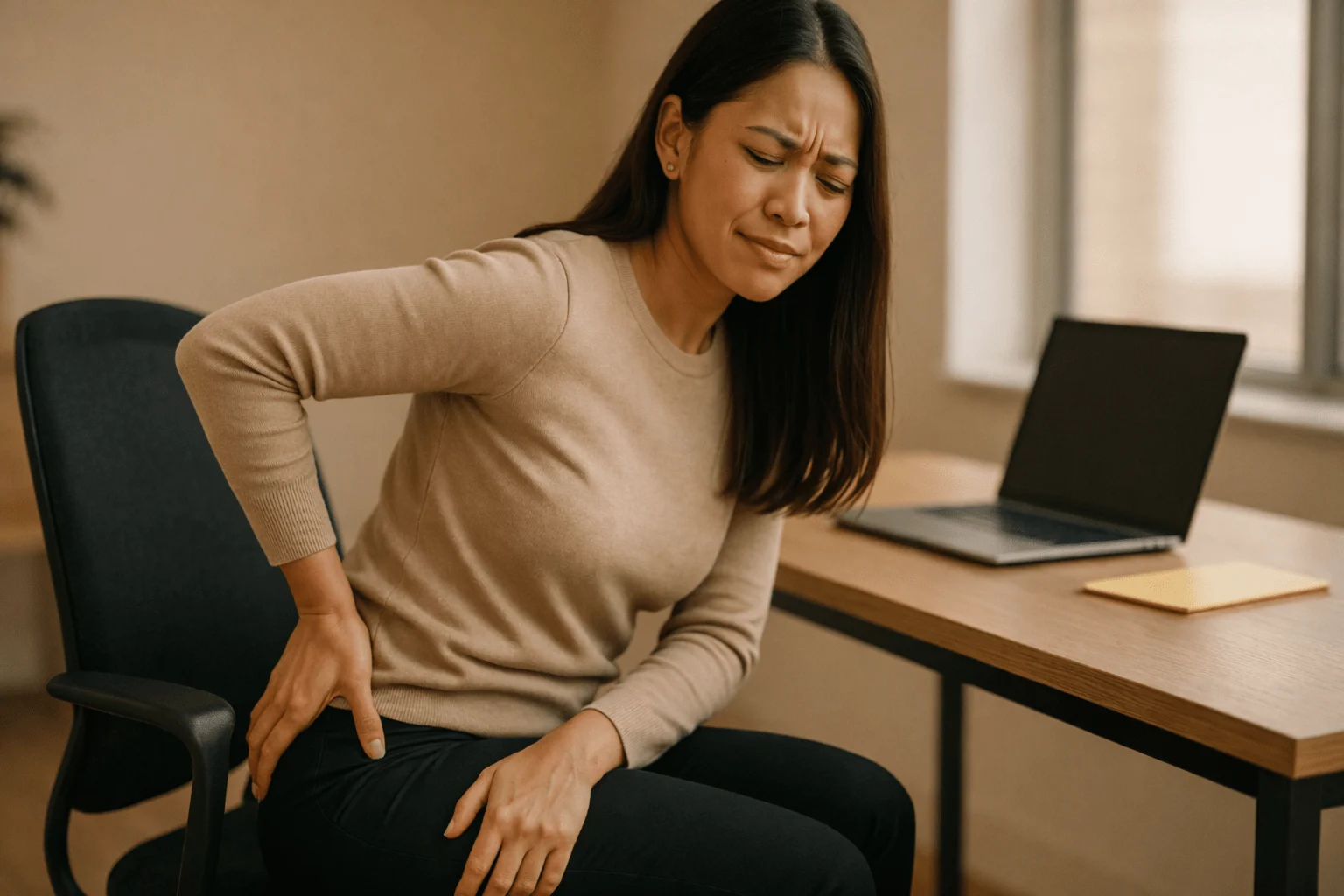
You lower yourself into the car seat, shift to one side, then the other, and still can't get comfortable. Buttock pain has a way of turning ordinary moments into small negotiations. Sitting through a meeting, driving to work, getting up from the couch or lying on your side at night can all become harder than they should be.
It is also one of those problems people tend to keep quiet about. That's a shame, because buttock pain is common, it usually has an understandable cause, and there is a lot you can do to make daily life easier while you figure out what is going on.
What sits in that part of the body
The buttock is not just padding. It is a busy crossroads of strong muscles, deep joints and important nerves, which is why pain here can feel so different from one person to the next.
- The gluteal muscles (gluteus maximus, medius and minimus) power walking, climbing stairs and standing up from a chair.
- The piriformis is a small, deep muscle that helps rotate the hip. The sciatic nerve runs very close to it.
- The sciatic nerve travels from the lower back through the buttock and down the back of the leg.
- The sacroiliac (SI) joints connect the base of the spine to the pelvis on each side.
- The hip joint, tendons and bursae (small fluid-filled cushions) sit nearby and can refer pain into the buttock.
- The tailbone (coccyx) at the very bottom of the spine can be bruised or irritated, especially by sitting.
Common causes and the patterns they tend to follow
Only a clinician can tell you which of these applies to you, but knowing the usual suspects can help you describe your symptoms clearly.
- Muscle strain. Often follows a new workout, a long hike, heavy lifting or a sudden burst of activity. It usually feels sore and achy, and tends to ease over days to a couple of weeks.
- Sciatica from the lower back. An irritated nerve root in the spine can send pain into the buttock and down the leg, sometimes with tingling or numbness. Many people notice it more when sitting or bending.
- Piriformis-related pain. A deep ache in the middle of one buttock that may get worse with long sitting, climbing stairs or crossing your legs.
- SI joint irritation. Pain low in the back and upper buttock, often on one side, that can flare when rolling over in bed, standing on one leg or getting out of a car.
- Hip problems and gluteal tendon irritation. Pain on the outer hip or buttock that is sore to lie on and may be worse after walking.
- Tailbone pain. Sharp or bruised pain right at the bottom of the spine when sitting, especially when leaning back or standing up.
- Skin or local causes. A boil, cyst, abscess or pilonidal problem near the top of the buttock crease can cause a tender, swollen, warm spot.
When to see a doctor or get urgent help
Most buttock pain is not dangerous, but some signs need prompt attention. Get urgent medical care, or call your local emergency number, if you have:
- New trouble controlling your bladder or bowels, or numbness in the groin, genitals or inner thighs
- Weakness in a leg or foot that is getting worse, or a foot that drags or slaps when you walk
- Severe pain after a fall, accident or other injury
- Fever, chills, or a hot, red, swollen lump in the buttock area
- Pain with unexplained weight loss, or a history of cancer
- Pain that wakes you at night and does not ease with any change of position
Book a regular appointment if the pain has lasted more than a few weeks, keeps coming back, is getting steadily worse, or is stopping you from working, sleeping or moving the way you need to.
What many people find helps at home
These are general, low-risk steps. They are not a substitute for a proper assessment, and if anything makes your pain clearly worse, stop and check with a clinician.
- Break up sitting. Try to stand, shift or take a short walk every 30 to 45 minutes. Long, unbroken sitting is one of the most common triggers.
- Experiment with cushions. A firmer seat often feels better than a soft sofa. Some people find a wedge or a cushion with a cut-out at the back helps, especially with tailbone pain.
- Keep moving gently. Short, easy walks usually help more than full bed rest. Let pain guide you: mild discomfort is often fine, sharp or rising pain is a signal to ease off.
- Heat or cold. Some people prefer an ice pack wrapped in a cloth in the first day or two after a strain, others prefer gentle heat for stiff, tight muscles. Use whichever feels better, for around 15 to 20 minutes, and never sleep on a heating pad.
- Gentle stretches. Lying on your back and slowly bringing one knee toward the opposite shoulder, or a gentle figure-four stretch, can feel good for tight hip muscles. Go slowly and avoid anything that sends pain down the leg.
- Check your sleep position. A pillow between the knees when lying on your side, or under the knees when on your back, can take pressure off the hips and lower back.
- Look at your wallet and phone. Sitting on a thick wallet or phone in a back pocket presses on the area. It is a small change that some people find surprisingly helpful.
Over-the-counter pain relievers are worth asking a pharmacist or doctor about, especially if you take other medicines or have stomach, kidney, liver or heart conditions.
What a clinician may do
Expect questions about when the pain started, what you were doing, and whether it spreads into your leg. A physical exam often includes checking how your hips and back move, testing strength and reflexes, and pressing on specific spots. Imaging is not always needed at first; many people are started on a plan of activity changes and guided exercise, with scans saved for red flags or pain that does not improve.
A physical therapist can be particularly useful for muscle, joint and nerve-related buttock pain, because they can tailor strengthening and stretching to what is actually going on.
Living with it day to day
Ongoing buttock pain can wear you down. People who live with it often describe small strategies that add up: keeping a cushion in the car, choosing aisle seats so they can stand easily, setting a phone reminder to get up, or planning longer drives with stops built in.
It also helps to track your pain for a week or two. Note what you did, how long you sat, and how you slept. Patterns often appear, and a simple log makes appointments far more productive.
And it is worth saying: needing to adjust how you sit or move is not weakness. It is sensible management of a real problem.
The bottom line
Buttock pain usually comes from muscles, nerves, joints or the tailbone, and many cases ease with time, movement and small daily changes. Watch for the red flags above, get checked if the pain lingers or keeps coming back, and don't let embarrassment stop you from asking for help.
You don't have to figure this out alone
If you'd like a clearer picture of your symptoms, try the free ItHurts Chronic Pain Check-Up. You can also read and share experiences in our pelvic, hip and groin Chronic Pain Groups.
Join the Buttock Pain GroupReviewed by the ItHurts editorial team · Last reviewed 18 October 2026 · General information, not medical advice. If you are worried about your symptoms, talk to a doctor.